Comic Books That Owned Their Era
Comic books do not move through history evenly. A few issues arrive at exactly the right moment, hit exactly the right nerve, and end up owning a stretch of the timeline. They become shorthand for an age. Mention the Golden Age and most collectors do not need a list. Mention the Silver Age and the room already knows which books are walking in.
That is what this article is about: the issues that owned their period of the comic book timeline, from the Golden Age through the Modern Age. Not simply great books. Not merely expensive books. The books that became the face of their era, then kept that job for decades. This is also very much in the spirit of The Collector Hub’s collector-first, market-aware style.
Golden Age: when the genre learned how to fly
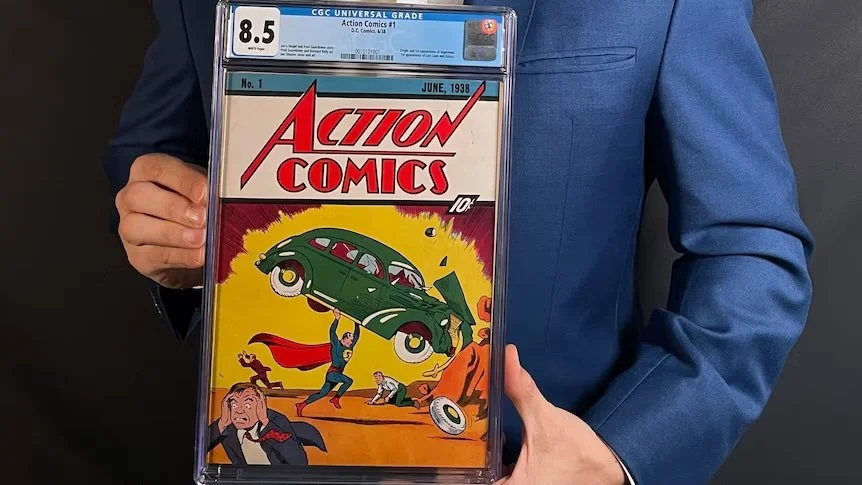
The Golden Age is generally dated from 1938 to 1956, and there is no cleaner starting gun than Action Comics #1. The issue is cover-dated June 1938, introduced Superman, and is widely treated as the beginning of the superhero era. In April 2024, a CGC 8.5 copy sold at Heritage for $6 million.
Why does Action Comics #1 own the Golden Age? Because it is more than a key. It is the template. Before it, comics were still becoming comics. After it, the superhero was no longer an experiment. He was the business.
If Action #1 is the birth certificate, Detective Comics #27 is the coronation of the next great pillar. Batman’s first appearance is cover-dated May 1939, and Heritage reported a record-tying $1.74 million sale for a copy in March 2023.
These two books more or less split the Golden Age throne. Superman gave the medium its most important icon. Batman proved the formula was not a one-off. One was bright, mythic, impossible. The other was brooding, urban, and just human enough to feel dangerous. If you were building the Golden Age from scratch, you would start with these two and work outward.
Silver Age: the rebirth era
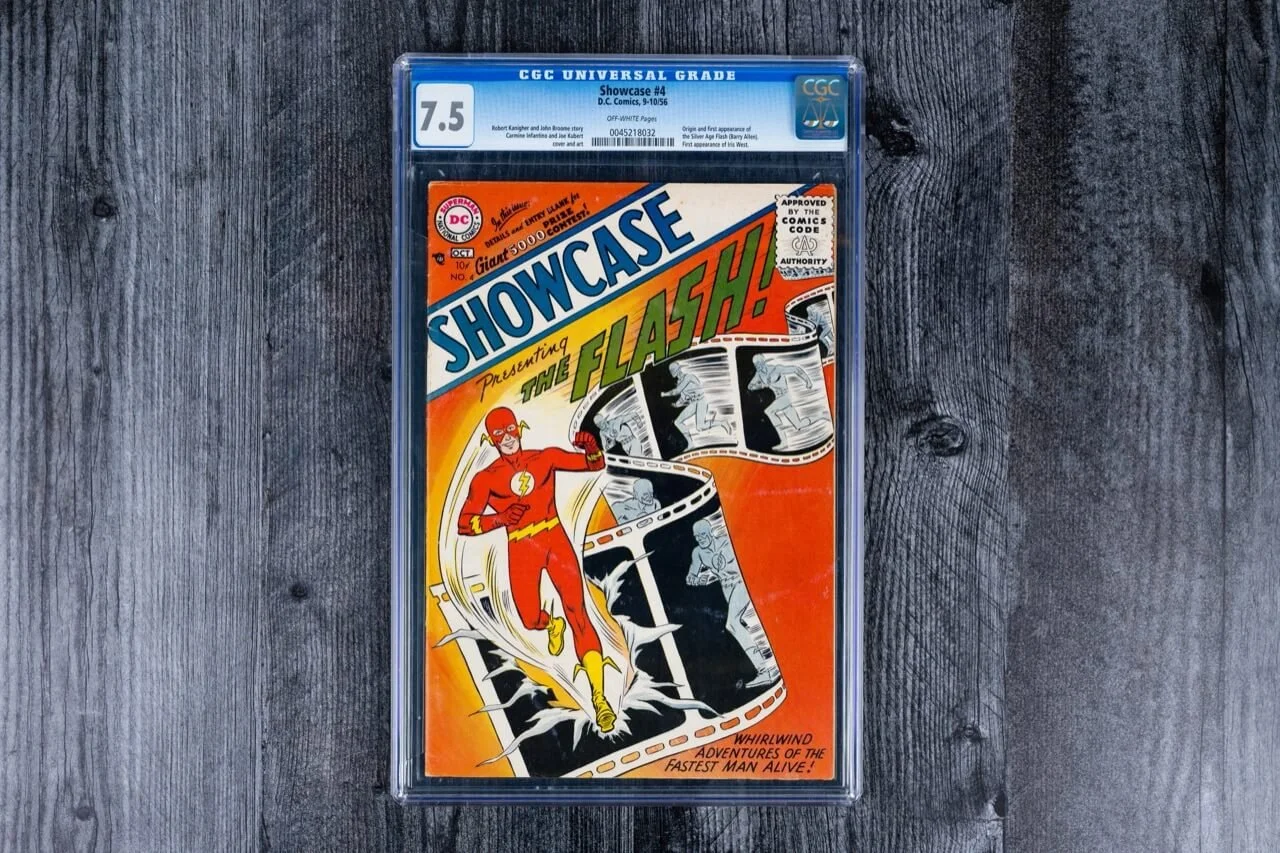
The Silver Age is commonly placed from 1956 to 1970, and if the Golden Age began with a bang, the Silver Age began with a reboot. Showcase #4, cover-dated October 1956, introduced Barry Allen and is widely recognized as the issue that kicked off the Silver Age revival. A CGC 9.6 copy sold at Heritage for $900,000 in January 2024.
This is one of those books whose importance goes beyond the character on the cover. Showcase #4 did not just reintroduce the Flash. It showed publishers that superhero concepts could be rebuilt for a new audience. Cleaner design. More science fiction. More modern energy. The Silver Age did not simply appear; it was tested, then validated.
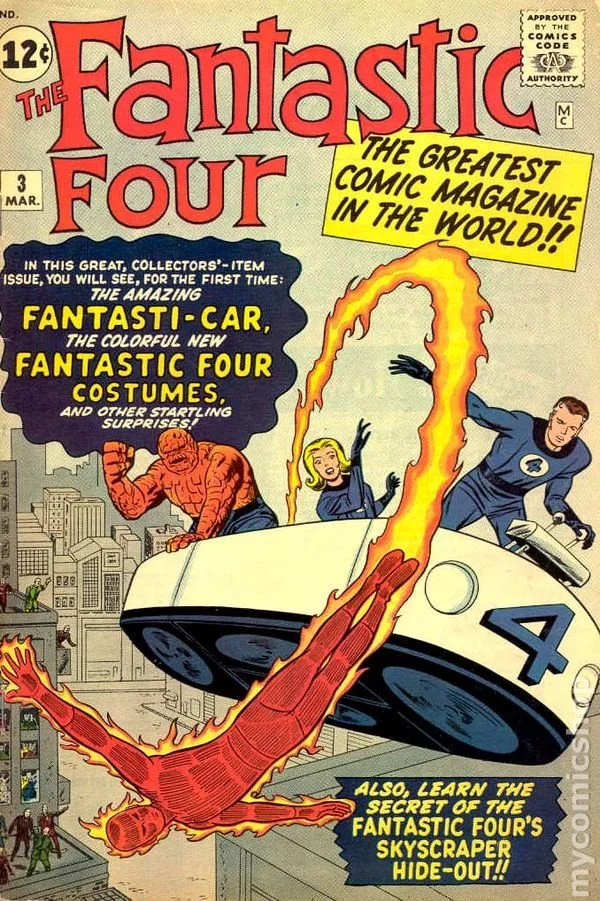
Marvel then took that open lane and drove a truck through it. Fantastic Four #1, cover-dated November 1961, introduced Marvel’s first family and began the company’s superhero expansion in earnest.
But if one Silver Age Marvel book has become the era’s popular king, it is Amazing Fantasy #15. Cover-dated August 1962, it introduced Spider-Man, and Heritage reported a $3.6 million sale for a CGC 9.6 copy in September 2021 after earlier noting a 9.4 copy sold for $454,100 in 2016.
That is what owning an era looks like. Showcase #4 may start the Silver Age conversation, but Amazing Fantasy #15 often ends it. Spider-Man was the Silver Age distilled into one idea: a superhero with real problems, real guilt, and a world that did not automatically love him back. Collectors never really stopped rewarding that formula.
Bronze Age: when comics grew up a little
The Bronze Age is generally dated from 1970 to 1985. This is the era where superhero books got moodier, stranger, and more connected to the real world. Horror rose. Antiheroes got traction. Social issues stepped into frame. And the keys from this period often feel less polished and more combustible.
One book that absolutely owns this era is The Incredible Hulk #181, cover-dated October 1974, with Wolverine’s first full appearance. Heritage’s archives show that a CGC 9.8 copy sold for $72,000 in November 2025, while mid-grade copies continue to trade actively as true market staples.
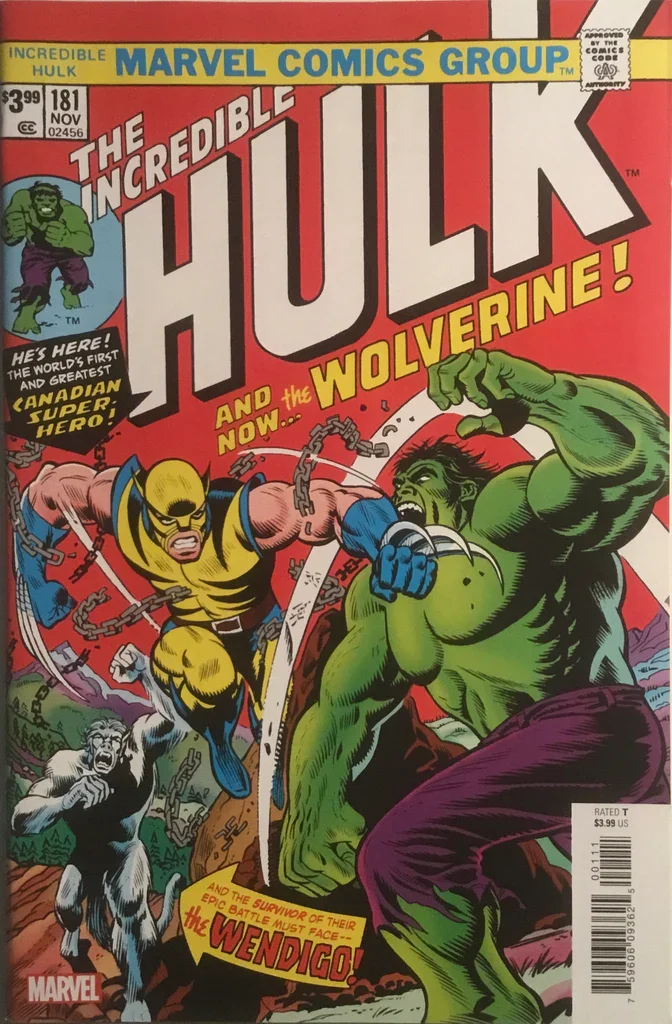
There are bigger Bronze Age books in pure scarcity terms, and there are books with stronger social-history credentials, but Hulk #181 has the rare advantage of being important, liquid, famous, and loved by collectors who are not usually chasing Bronze Age books. That matters. Plenty of keys are admired. Fewer are constantly hunted.
Then there is Giant-Size X-Men #1, cover-dated 1975, the launchpad for the new X-Men team that would eventually dominate mutant collecting for decades. Heritage records show a CGC 9.8 copy sold for $25,200 in September 2025, with lower grades still pulling strong numbers.
This is one of those books that gets stronger the more you think about what came after it. It is not merely a key. It is the hinge between old X-Men and the franchise machine the title would become. Some books are valuable because they are firsts. Others because they are turning points. Giant-Size X-Men #1 is both.
Copper Age: independent heat and black-and-white thunder
Collectors love arguing where the Bronze Age ends and where the Copper Age begins, but 1984 is a very persuasive line in the sand. That is where Teenage Mutant Ninja Turtles #1 enters the chat, cover-dated May 1984. Heritage has noted that near-mint copies of the debut have sold for as much as $90,000.
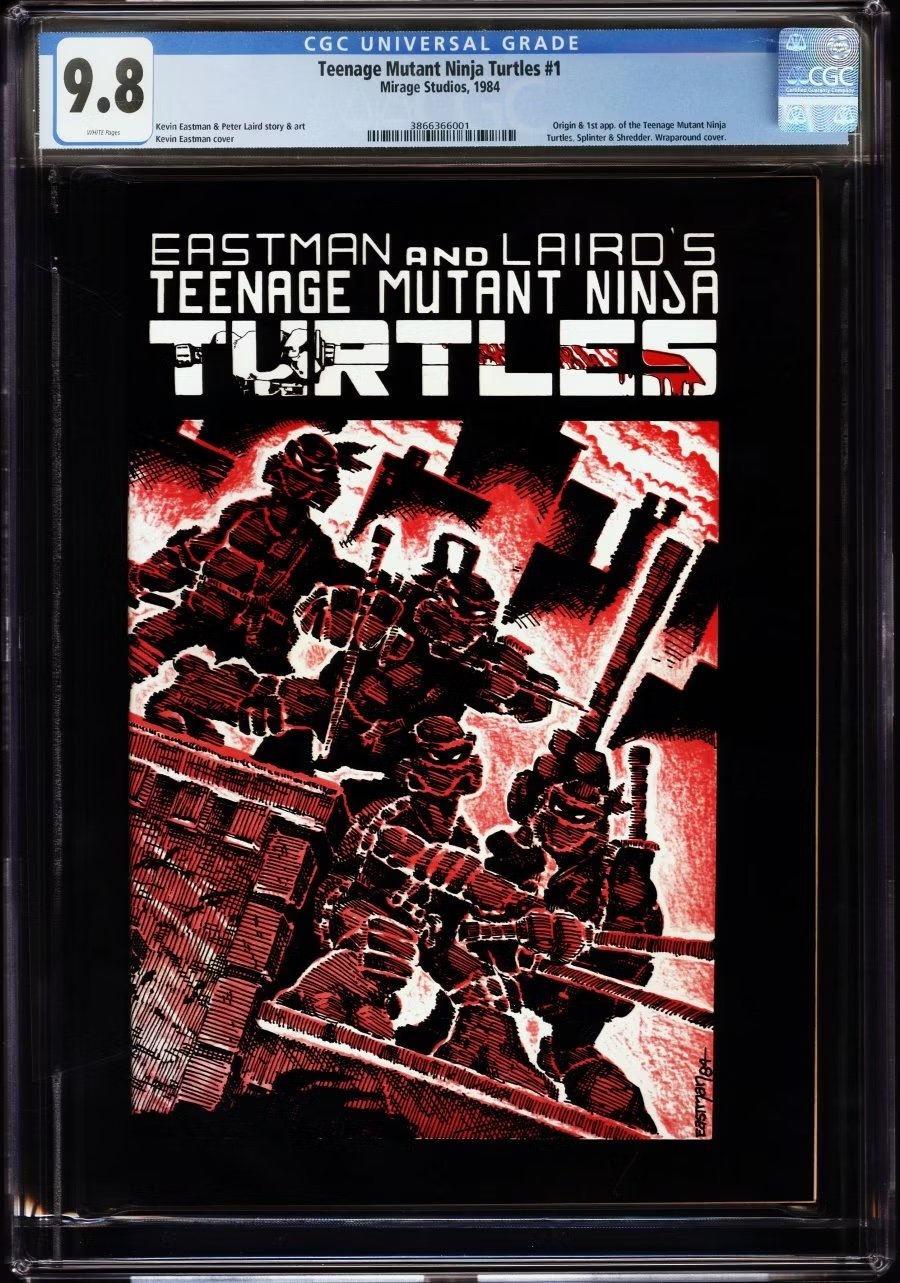
This book owned its period because it proved that a black-and-white independent comic could break out in a way that felt almost disrespectful to the established order. It was weird, self-aware, low-budget, creator-driven, and impossible to ignore once the market caught on.
That is a big part of what the Copper Age represents in hindsight: a shift in where power could come from. Not just the Big Two. Not just polished superhero universes. Sometimes the era belongs to the book that kicks the door open for everybody else.
Modern Age: image, speculation, and the forever-keys
The Modern Age is commonly dated from 1985 onward. That is a long span, so no single issue can own all of it. But a handful of books own slices of it so completely that they function like era markers.
The Amazing Spider-Man #300, cover-dated May 1988, is one of them. It marks Venom’s first full appearance and has become one of the most recognized late-1980s keys in the hobby. Heritage’s records show CGC 9.8 copies selling for about $4,200 in January 2023 and around $2,135 in January 2026, which is a useful reminder that even iconic books move with the market.
That last point matters. A book can own an era without being immune to gravity. In fact, the books that really own an era often teach you the most when prices cool. Demand remains. Recognition remains. Liquidity remains. What changes is the market’s level of excitement.
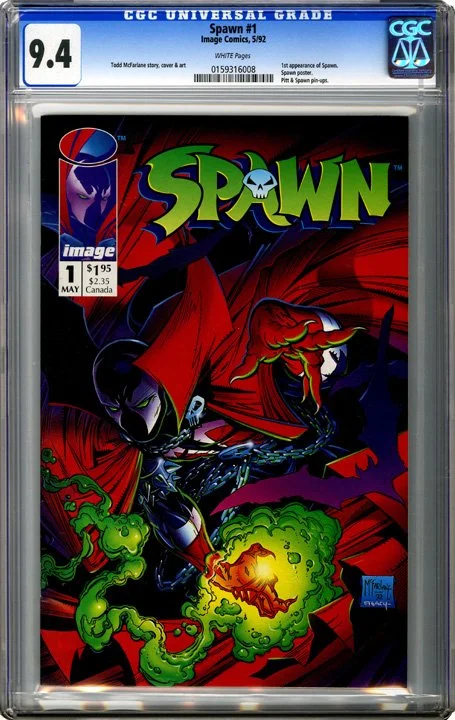
You could also make a case for Batman Adventures #12, New Mutants #98, or even Spawn #1 as emblematic Modern Age books for different reasons. But ASM #300 has that rare crossover status: character key, cover key, nostalgia key, and entry-point grail all at once. That is a dangerous combination in the best possible way.
So which books really owned their age?
If we are being brutally selective, the shortlist looks something like this:
Gold Age: Action Comics #1 and Detective Comics #27.
Silver Age: Showcase #4 and Amazing Fantasy #15.
Bronze Age:Hulk #181 and Giant-Size X-Men #1.
Copper Age:Teenage Mutant Ninja Turtles #1.
Modern Age:Amazing Spider-Man #300.
That does not mean these are the only important books. Far from it. It means these are the books that feel bigger than their issue number. They became symbols. They became reference points. They became the books that collectors use to explain an era to other collectors.
And that, really, is how you know a comic owned its time. It stops being just a comic and starts becoming a category.