Green Lantern: A Legacy Forged in Light
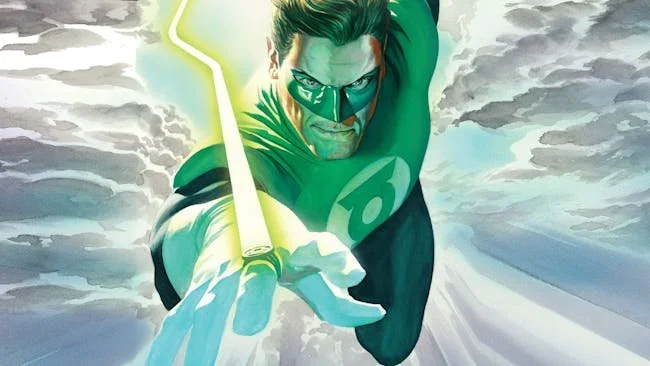
If you’ve ever looked at a glowing green ring and thought, “Wait… what is this guy’s deal?”, you’re not alone. Green Lantern is one of DC Comics’ oldest and most creatively rich superheroes, but also one of its most rebooted, reinterpreted, and, at times, misunderstood. From cosmic cop to troubled everyman, Green Lantern’s evolution mirrors the larger trends in superhero storytelling—shifting from mysticism to sci-fi to mature, gritty narratives.
Let’s light up the Lantern’s history.
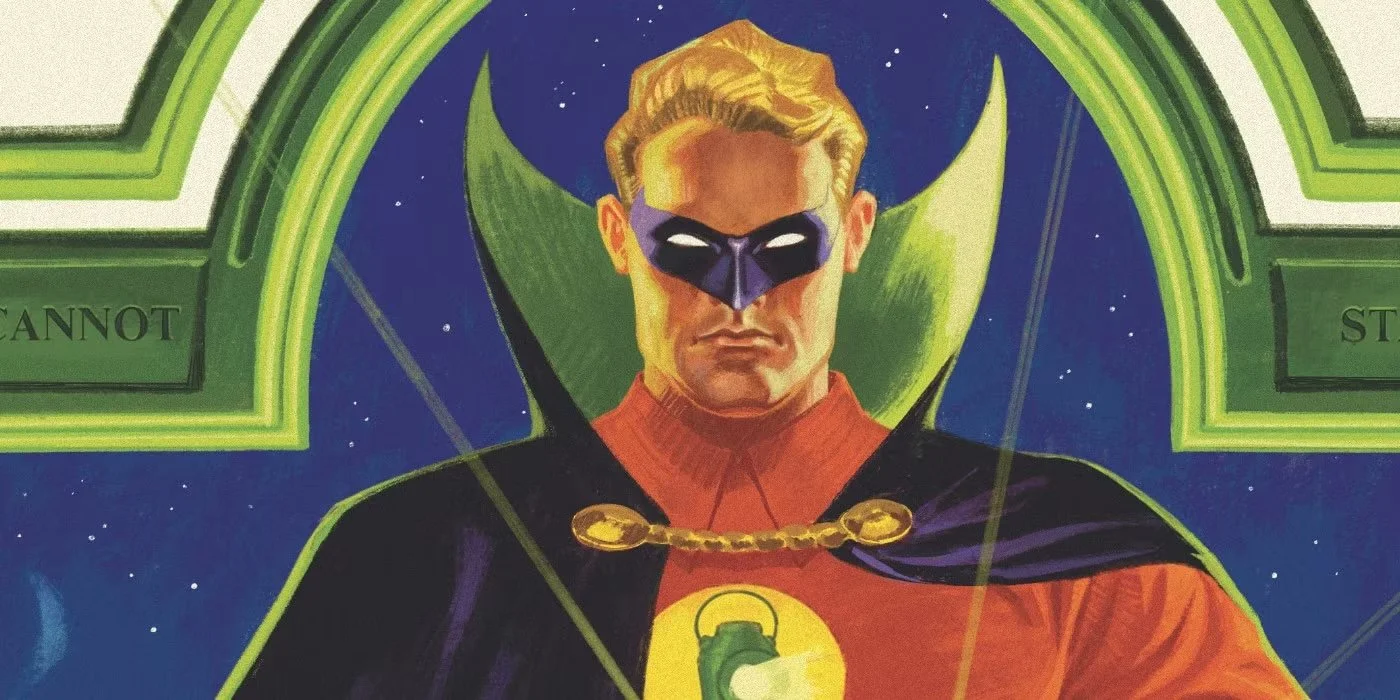
The Golden Age: Alan Scott (1940)
The first Green Lantern, Alan Scott, debuted in All-American Comics #16 (1940), created by Bill Finger and Martin Nodell. Unlike later Lanterns, Scott’s powers weren’t based on alien tech or cosmic law. His ring was powered by a magical green flame tied to an ancient lantern. In essence, he was more fantasy than sci-fi—a common thread in Golden Age heroes.
He fought gangsters, saboteurs, and supervillains with willpower-fueled constructs. But it was the source of that power—a mystical artifact and a recurring need to “charge” the ring—that laid the conceptual foundation for what came later.

Silver Age Reinvention: Hal Jordan (1959)
In the 1950s, science fiction was the future. Literally.
Enter Hal Jordan, a fearless test pilot who became Earth's Green Lantern after alien Abin Sur crash-landed on Earth and passed on his ring. Debuting in Showcase #22 (1959), Hal was the poster child for the Cold War era’s optimism in technology and space exploration. The mystical lantern became a power battery. Magic became “hard science fiction.”
Hal joined the Green Lantern Corps, an intergalactic police force founded by the Guardians of the Universe on the planet Oa. This was where the mythos exploded—thousands of Green Lanterns from across the universe, each wielding rings powered by sheer will. It was epic. It was cosmic. And it was cool.
Bronze Age Complexity: From Hero to Human
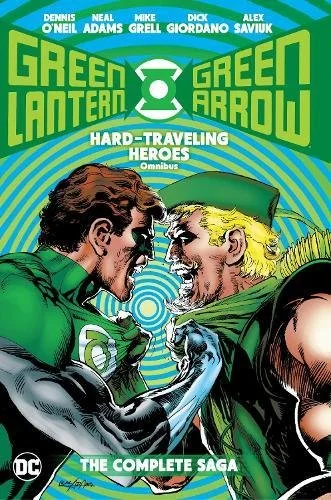
By the 1970s, superheroes got a little more introspective. Green Lantern was no exception.
In the seminal Green Lantern/Green Arrow run by Dennis O’Neil and Neal Adams, Hal Jordan teamed up with the fiery social crusader Green Arrow.
The series ditched aliens for real-world problems—racism, poverty, addiction (Speedy, we’re looking at you). Hal Jordan struggled with moral ambiguity, bureaucracy, and what justice actually meant.
In short: the Lantern got real.
The Fall (and Rise) of Hal Jordan

The 1990s weren’t kind to Hal.
In the Reign of the Supermen aftermath, Hal’s hometown was destroyed. Grieving and unhinged, he wiped out the Green Lantern Corps, absorbed the Central Power Battery, and became the villain Parallax. It was dramatic. It was divisive. And it was very '90s.
Fans were stunned. DC responded with a new Earth Lantern: Kyle Rayner. A struggling artist handed the last power ring, Kyle brought heart, creativity, and relatability. He wasn’t chosen for fearlessness—he was chosen because he could feel fear and rise above it.
And it worked. For a while, Kyle was the Green Lantern.
The Lantern Corps Expand (2000s Onward)
The early 2000s marked a Green Lantern renaissance.
Writer Geoff Johns resurrected Hal Jordan, retconned the Parallax arc as possession by a fear entity, and gave us the Sinestro Corps War—an all-time great modern superhero event. Johns introduced the Emotional Spectrum, birthing an entire rainbow of Corps:
Red (Rage)
Orange (Avarice)
Yellow (Fear)
Green (Will)
Blue (Hope)
Indigo (Compassion)
Violet (Love)
Black (Death)
White (Life)
This mythology added depth to the franchise, paving the way for standout storylines like Blackest Night and Brightest Day.
On Screen: A Flicker, Not a Flame

You knew this part was coming.
Green Lantern (2011), starring Ryan Reynolds as Hal Jordan, was supposed to launch a new DC film universe. Instead, it crashed harder than Abin Sur’s spaceship. Critics cited its rushed story, flat villain (Parallax again), and uninspired visuals. It made Lanterns a punchline. Even Reynolds mocks it now.
But it wasn’t all bad—Mark Strong’s Sinestro was pitch-perfect. And while the film failed, it signaled that the Lanterns deserved another shot. A better one.
TV and the Future of Green Lantern
Green Lantern has fared better in animation, with appearances in Justice League Unlimited, Green Lantern: The Animated Series (2011), and more. The animated John Stewart—a former Marine—especially resonated with fans, often becoming their definitive Lantern.
As of 2026, a long-in-development Green Lantern TV series is in production, rumored to feature both Hal Jordan and John Stewart in a cosmic buddy-cop format. If done right, this could finally give Lantern the prestige presence he deserves.
Legacy and Influence
Green Lantern’s strength has always been in its versatility. Whether it’s Alan Scott’s mysticism, Hal Jordan’s space-epic adventures, John Stewart’s military grit, Guy Gardner’s hot-headed bravado, or Jessica Cruz’s battle with anxiety, the Lantern Corps has been a mirror for humanity’s strengths—and flaws.
The ring doesn’t demand perfection. Just will.
There’s something timeless about the idea of a person, armed with nothing but willpower, facing down cosmic darkness. Green Lantern stories may shift in tone and cast, but they always come back to one thing:
“In brightest day, in blackest night…”
Yeah. You know the rest.