The 1950s Are the Most Competitive Decade Nobody Talks About
Comic markets are easy to understand when one title dominates. There is a clear winner, a clear story and usually a recognisable book or character sitting behind it.
The 1950s aren’t giving us that kind of market.
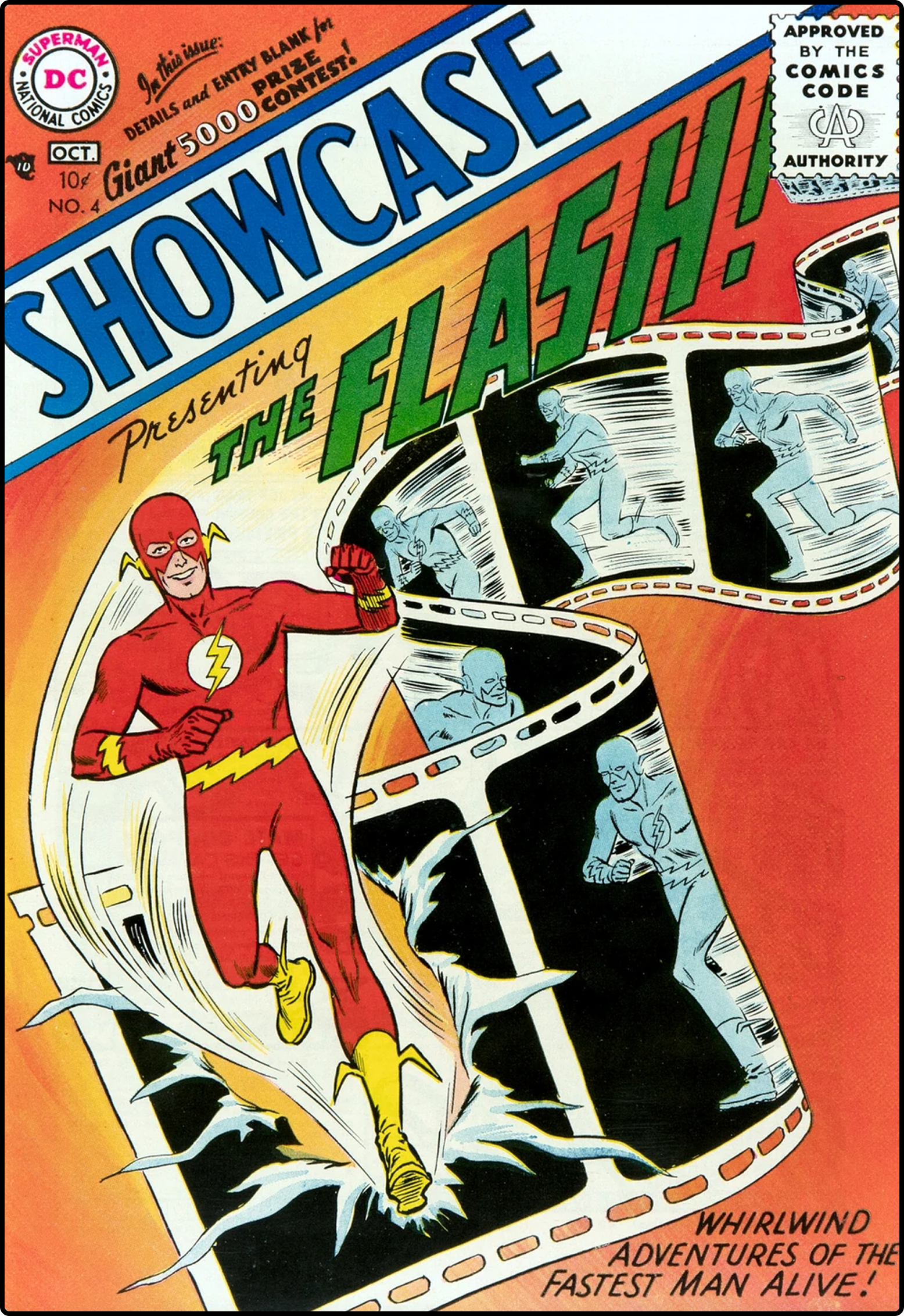
During the September 22–October 5 reporting period, the decade’s five highest-selling titles finished remarkably close together. Showcase led with $52,548, followed by Cinderella Love at $51,601, Action Comics at $49,252, Weird Mysteries at $45,384 and Crime SuspenStories at $43,096.
Together, those five titles generated $241,881. But the interesting part isn’t the total. It’s how evenly the money was distributed.
Just $9,452 separated first place from fifth.
Source: GPAnalysis.com, sales recorded from September 22 to October 5, 2026.
A $9,452 Photo Finish
The five highest-selling titles of the 1950s finished within less than $10,000 of each other during the September 22–October 5 reporting period.
separated the decade's entire Top Five.
Showcase didn't even control a quarter of the decade's Top Five sales.
The competition is the story.A Market Without a Runaway Winner
The competition becomes even clearer when you look at the gaps between the titles. Only $947 separated Showcase and Cinderella Love, while Action Comics trailed the leader by just $3,296.
As a share of the decade’s Top Five sales, Showcase accounted for approximately 21.7%, Cinderella Love 21.3%, Action Comics 20.4%, Weird Mysteries 18.8% and Crime SuspenStories 17.8%.
No title controlled even a quarter of the money.
That’s very different from a market where one book or franchise drives much of the activity. Understanding the 1950s requires looking at the entire field rather than simply following the leader.
And that field is unusually diverse.
Showcase sits at the top, closely tied to the transition toward DC’s Silver Age superhero revival, but almost level with it is Cinderella Love. Action Comics follows, then Weird Mysteries and Crime SuspenStories.
Superheroes are competing with romance, horror and crime, and none has established a decisive financial advantage.
That diversity may be the decade's most interesting part. The $241,881 generated by its Top Five wasn’t dependent on one franchise or one collecting category having an exceptional fortnight. Collector spending was spread across very different parts of the 1950s market.
What Collectors Bought Most Tells a Different Story
Then we get to volume, and the picture changes almost completely.
The decade's most-traded title was Space Adventures, followed by Action Comics, Out of this World, Batman, and Detective Comics.
Compare that with the five sales leaders, and there is remarkably little overlap.
Action Comics is the only title appearing in both Top Fives.
Showcase led sales but didn’t make the volume Top Five. Neither did Cinderella Love, Weird Mysteries or Crime SuspenStories. Meanwhile, Space Adventures led transaction volume without appearing among the five biggest titles by sales.
That effectively gives us two different versions of the 1950s market. One group of titles generated activity, while another attracted the largest amount of collector spending.
It’s an important distinction. A title doesn’t need enormous transaction volume to attract significant money, just as being traded frequently doesn’t automatically make it the decade’s financial leader.
The individual issues tell a similarly varied story. The Flash #105 was the most-traded issue, followed by Crime SuspenStories #22, Action Comics #252, Showcase #22 and Weird Science-Fantasy #29.
Once again, collectors were moving between superheroes, crime, horror and science fiction rather than concentrating around one obvious corner of the market.
The Decade Between Two Eras
Perhaps some of this variety comes from where the 1950s sit in comic history.
The decade exists between two periods that are much easier to define. The Golden Age superhero boom was behind it, while the Silver Age superhero expansion was beginning to emerge towards the end of the decade. Between those two eras was a much broader comic landscape, and the collector market represented in this fortnight’s data still reflects some of that variety.
It also means the decade behaves differently from markets built around a dominant title.
If one title accounted for half of the Top Five sales, the story would be straightforward. Follow that title, and you would understand much of what happened.
Here, removing the leader barely changes the picture.
Take Showcase away, and Cinderella Love is only $947 behind. Behind that, Action Comics is another $2,349 away. Weird Mysteries and Crime SuspenStories remain close enough that the entire Top Five fits inside a range of less than $10,000.
No single title holds the decade together. Instead, the 1950s show another kind of market strength: depth without dependence.

The Competition Is the Story
The 1950s didn’t produce the fortnight's largest sales total. They didn’t deliver their biggest individual transaction, and no title dominated the overall market the way Amazing Spider-Man did for volume.
But those aren’t the only ways to identify an interesting market.
Showcase finished first, yet its advantage over Cinderella Love was less than $1,000. Fewer than $10,000 separated all five of the decade’s highest-selling titles. The sales and volume rankings barely overlapped, while collector money stretched across superheroes, romance, horror, crime and science fiction.
There is no obvious winner here.
And that’s precisely why the 1950s deserve attention.
In a market that often celebrates whichever book sells for the most money or whichever title changes hands most often, this decade offers something different. Its strength isn’t concentrated at the top. It’s spread across the field.
Sometimes dominance tells us where the market is strongest.
In the 1950s, the competition is the story.