The Modern Age of Comic Books: The Era Collectors Still Cannot Quite Agree On
The Modern Age of comic books is supposed to be the easy one. It is the era we are living in, the era many collectors grew up with, and the era where third-party grading, online auctions, movie announcements, social media speculation, and sales data all became part of the hobby conversation.
And yet, it may be the hardest era to understand.
Most collectors place the beginning of the Modern Age around 1985, although Heritage’s own auction categories often use “Modern Age: 1980–present,” which is a reminder that comic book “ages” are useful labels rather than scientific borders. The usual 1985 starting point makes sense because the mid-1980s changed the tone of mainstream comics. Watchmen, The Dark Knight Returns, Teenage Mutant Ninja Turtles, independent publishing, darker storytelling, creator-driven books, direct-market shops, and collector-focused marketing all arrived close enough together to make the hobby feel different.
The Golden Age gave us the superhero. The Silver Age rebuilt the superhero. The Bronze Age complicated the superhero. The Modern Age turned the superhero, the variant cover, the slab, the movie rumour, the census count, and the auction result into one connected collecting ecosystem.
The books that still matter
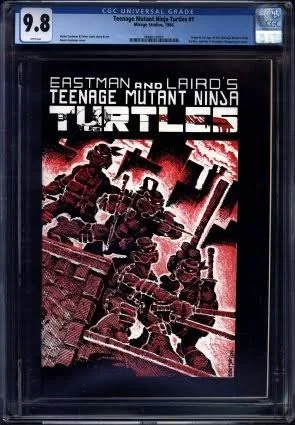
A short list of Modern Age keys usually begins with Teenage Mutant Ninja Turtles #1 from 1984. Strictly speaking, that date makes some collectors call it Copper Age, but in the market it behaves like the grandparent of modern independent keys. It has the right ingredients: small print run, black cover, first appearance, independent origin, global pop-culture reach, and decades of collector demand.
Then there is Amazing Spider-Man #300, the first full appearance of Venom. It is not rare in the way TMNT #1 is rare, but it is liquid. Collectors understand it, dealers can move it, and buyers have decades of sales to compare. That matters. A rare book with no recent sales can be hard to price. A common key with constant sales can become the market’s comfort food.
New Mutants #98 brought Deadpool into comics in 1991. Batman Adventures #12 gave collectors Harley Quinn’s first comic-book appearance. Spawn #1 became the poster child for Image Comics and the 1990s direct-market boom. Ultimate Fallout #4 introduced Miles Morales as Spider-Man in 2011, making it one of the most important post-2000 Marvel keys. The Walking Dead #1 and Invincible #1 proved that modern independent comics could become television brands, streaming brands, and long-term collector books rather than just Wednesday purchases.
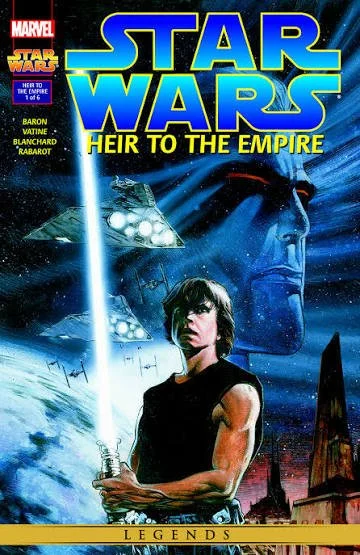
The list keeps moving. NYX #3 for X-23, Edge of Spider-Verse #2 for Spider-Gwen, Something Is Killing the Children #1, Saga #1, Department of Truth #1, Venom #3 for Knull, Star Wars: Heir to the Empire #1, and the many store variants, ratio variants, and incentive covers around them all sit somewhere inside the modern collector conversation.
The question is not whether all of these books are important. Some clearly are. The better question is whether the market has already priced that importance correctly.
Highest sales and highest auction moments
When modern collectors talk about a six-figure Modern Age comic, the conversation usually returns to Teenage Mutant Ninja Turtles #1. CGC reported that a CGC 9.8 copy sold through ComicConnect for $245,000 in September 2021, calling it the highest price ever paid for that comic at the time. A later ComicConnect sale was reported at $250,000 in December 2021.
At Heritage Auctions, the visible archive shows a Teenage Mutant Ninja Turtles #1 CGC 9.8 record of $192,000, sold on June 19, 2022. Heritage’s more recent archive also shows how even major books can retreat from peak moments: signed CGC 9.8 copies sold for $87,000 in September 2024 and $84,000 in November 2024. That is not a failure of the book. It is the market reminding everyone that “record price” and “current price” are not the same thing.
For New Mutants #98, Heritage lists a record price of $24,000 for a CGC 9.9 copy. Recent 9.8 sales in 2025 and 2026 were much lower, including several four-figure results, which is exactly why collectors should separate character popularity from population size and grade scarcity.
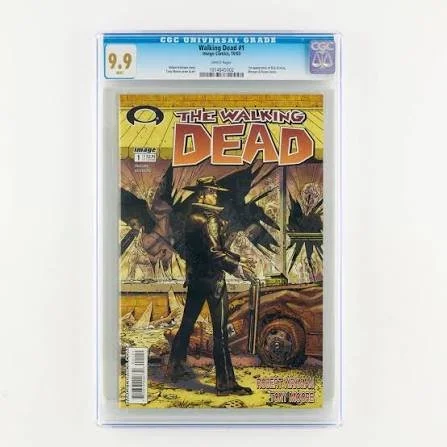
The Walking Dead #1 has a Heritage record of $18,000 for a CGC 9.9 copy sold in November 2020. Invincible #1 has a Heritage record of $7,930, with visible 9.8 sales in the few-thousand-dollar range. Those numbers may look modest next to TMNT, but they are still important because they show how modern independent comics can become blue-chip books when the story survives outside the comic shop.
Ultimate Fallout #4 is another modern test case. Heritage described a CGC 9.8 copy as the first appearance of Miles Morales as the new Spider-Man and noted that, as of July 2024, there were 4,338 CGC 9.8 copies and none higher. That is the modern market in one sentence: an important first appearance, huge demand, and a large high-grade census count all pushing and pulling on price at the same time.
Modern books can produce serious sales, but they still live far below the Golden Age ceiling. A Superman #1 from 1939 sold for $9.12 million at Heritage in November 2025, setting the overall comic-book record. That comparison is useful. Modern comics may be culturally powerful, but scarcity still belongs to the older ages.
What collectors are doing now
Modern Age collectors are becoming more selective.
During the 2020–2021 boom, a lot of collectors chased heat. First appearances, movie rumours, cameo appearances, ratio variants, store exclusives, newsstands, Mark Jewelers inserts, Canadian price variants, direct editions, second prints, error copies, and anything that could be called “undervalued” all took turns under the spotlight.
The market has since become more sober. ICv2 reported that U.S. and Canadian consumer sales of comics and graphic novels were about $1.94 billion in 2024, up 4% from 2023, but also noted that 2023 had been a reset year after rapid COVID-era growth. In other words, comics did not disappear after the boom; the easy money did.
Collectors are now doing more of three things.
First, they are checking data before buying. The Collector Hub has previously noted that at the start of 2024 the CGC Census contained 10,212,987 graded comics, while GPA had recorded 5,766,497 sales and 4,053,288 different CGC serial numbers with at least one GPA-recorded sale. That means recorded sales are extremely useful, but they are not the entire market. Private sales, repeat sales of the same slab, books cracked out of holders, and books graded but never sold all complicate the picture.
Second, collectors are favouring books with enough sales history to make fair market value easier to judge. As The Collector Hub’s buying guide notes, books with moderate to high CGC census counts often sell frequently, making GPAnalysis interpretation more straightforward. That does not mean “common” is better than “rare.” It means a collector can make a more informed bid when the book has repeated, recent, comparable sales.
Third, collectors are treating movie and streaming announcements with more caution. A film announcement can still move a book, but the old formula of “character appears, price goes up forever” has been tested too many times. Some buyers now prefer to purchase before the announcement, sell into the trailer, or avoid the movie chase entirely and focus on books they would still want if the show was cancelled tomorrow.
Movies still matter, but differently
Movies remain part of Modern Age collecting because modern comics and modern screen culture grew up together.
Deadpool is a clean example. Reuters reported in 2024 that Rob Liefeld’s original cover artwork for New Mutants #98 was being offered through Heritage with a $7.5 million asking price, helped by the character’s box-office success and Ryan Reynolds’ ongoing association with the role. Even when the comic itself is not reaching Golden Age levels, the character can push original art, signed books, newsstand copies, and high-grade slabs into separate collecting lanes.
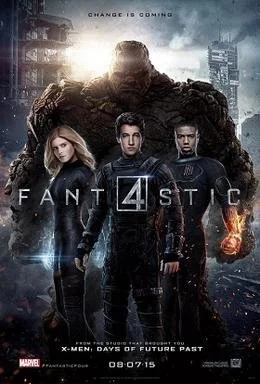
Marvel’s current film slate keeps several Modern Age books in view. Marvel’s official movie page lists Spider-Man: Brand New Day for July 31, 2026 and Avengers: Doomsday for December 18, 2026, while The Fantastic Four: First Steps sits in the 2025 release window. Those projects keep collectors watching Spider-Man, Fantastic Four, Doctor Doom, Avengers, and related modern first appearances.
DC has its own modern collector fuel. DC’s official blog states that Supergirl is based on Tom King and Bilquis Evely’s Supergirl: Woman of Tomorrow and was due in theatres on June 26, 2026. That is exactly the type of adaptation that can send collectors back to a relatively recent comic series rather than a 1950s or 1960s first appearance.
But there is a warning label attached. Superhero films no longer guarantee automatic collector confidence. Recent box-office discussion around Supergirl has already raised the familiar question of superhero fatigue, and collectors are aware that not every adaptation creates lasting comic demand.
The card game crossover
One of the more interesting modern developments is that comic collecting is no longer sealed off from trading card games.
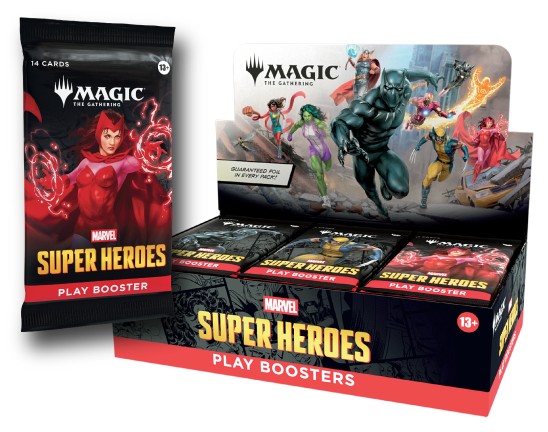
Magic: The Gathering | Marvel Super Heroes released on June 26, 2026, bringing Marvel characters into one of the biggest trading card game ecosystems in the world. Wizards of the Coast described the set as a way to bring the Marvel Universe to the battlefield, and earlier preview material highlighted Fantastic Four, Avengers, Thunderbolts, and Commander decks as part of the crossover.
That matters because card collectors and comic collectors now overlap more than ever. A collector who buys Miles Morales comics may also buy Marvel trading cards. A Magic player may become curious about Doctor Doom comics after playing a Doom card. A Spider-Man collector may chase slabs, original art, lenticular covers, sketch cards, and booster boxes. The modern collector is not always choosing between comics and cards. Many are building character-based collections across formats.
The same idea appears in reverse with Yu-Gi-Oh!. The franchise began as manga, became a trading card game, and then became a wider media machine of anime, cards, video games, tournaments, and collectibles. Konami’s official site describes Yu-Gi-Oh! as a universe based on a card game and notes that the franchise includes manga and television series.
For comic collectors, that is the lesson. The collectible is not always the comic. Sometimes the comic is the first doorway into the collectible universe.
So, is the Modern Age worth collecting?
Yes, but not blindly.
The Modern Age has too many copies of some books, too many variants of others, and too many collectors who learned the hard way that “limited” does not always mean rare. But it also has characters and stories with genuine cultural weight: Venom, Deadpool, Harley Quinn, Miles Morales, Spawn, the Turtles, Invincible, The Walking Dead, Spider-Gwen, X-23, and many more.
The best modern collectors are not simply chasing what is hot. They are asking better questions.
Is this the first appearance, or just the first cameo? Is this the cover everyone remembers? Is the 9.8 census already too large? Are there newsstand, second print, variant, or signed copies that behave differently? Does the character matter outside a single movie cycle? Are recent sales repeatable, or was one buyer simply willing to pay a record price on the right day?
That last question may be the most important one. A record sale is exciting. A stable market is more useful.
The Modern Age is not the age where every book is rare. It is the age where every collector has more information than ever before, and still has to decide what the information actually means.