The Unsung Heroes of Comic Books: Forgotten Characters, Overlooked Keys and Heroes Who Deserved Better
Superman can fly.
Batman has approximately seven billion dollars' worth of vehicles parked underneath his house.
Spider-Man has appeared on enough T-shirts, lunchboxes, films, cartoons, video games and cereal boxes to ensure that even people who have never opened a comic book know exactly who Peter Parker is.
But what about everyone else?
Comic book history is filled with heroes who arrived, fought the good fight, occasionally saved civilisation and then quietly disappeared while somebody with better timing, a better costume or a much larger marketing department marched past them.
Some were historically important.
Some were genuinely good characters.
Some were wonderfully strange.
And some simply had the misfortune of being created in an industry where there are only so many seats at the superhero dinner table — and Batman apparently reserved half of them.
For collectors, these forgotten characters can be particularly interesting.
We spend enormous amounts of time discussing first appearances, keys, scarcity and value. But popularity and historical importance don't always travel together. Neither do rarity and value. As we've discussed before on The Collector Hub, a genuinely scarce comic isn't automatically desirable, while an extremely common comic can remain expensive because thousands of collectors want one.
The same applies to characters.
So let's give a few forgotten heroes their moment in the spotlight — and, while we're at it, look at the comic books that introduced them.
Because sometimes the interesting book isn't the one everyone is already chasing.
The Shield — Captain America Before Captain America
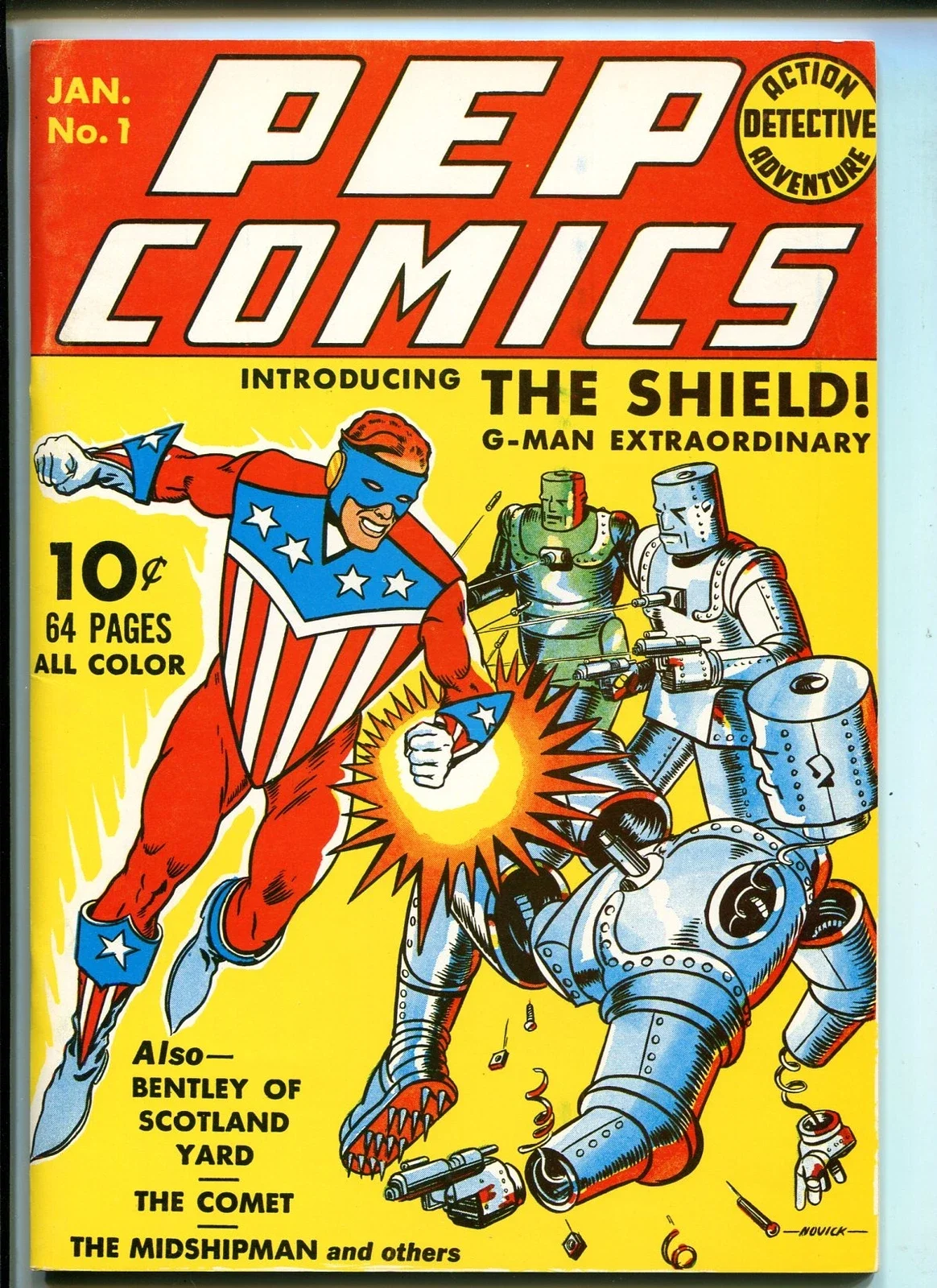
First appearance: Pep Comics #1 — January 1940
Ask someone to picture the classic patriotic superhero and the answer is almost automatic.
Captain America.
Fair enough. Steve Rogers has certainly earned the recognition.
There's just one small problem.
The Shield got there first.
The Shield debuted in Pep Comics #1 in 1940 and is recognised by the Grand Comics Database as America's first patriotic comic-book superhero.
Which means that before Captain America was famously punching Hitler, another red-white-and-blue superhero was already defending the United States.
And here's the wonderfully comic-book part.
Pep Comics would eventually become closely associated with Archie.
So one of the foundations of the patriotic superhero came from the same publishing lineage that would become famous for Archie Andrews worrying about whether to take Betty or Veronica to the dance.
Comic books are magnificent.
The Collector's Angle
Pep Comics #1 isn't some secret dollar-bin discovery waiting for collectors to wake up. It's an early Golden Age comic with genuine historical significance.
But The Shield raises a much broader collector question.
How much should historical importance matter when the character himself is no longer particularly popular?
Collectors routinely pay enormous premiums for the first appearances of characters whose cultural importance is obvious.
But what happens when a character helped establish the template and then somebody else perfected it?
The Shield may never compete with Captain America for popularity. That's probably impossible.
But historically?
He deserves considerably more attention than he receives.
And sometimes collecting history rather than popularity is where things become interesting.
Wesley Dodds — The Sandman Before The Sandman
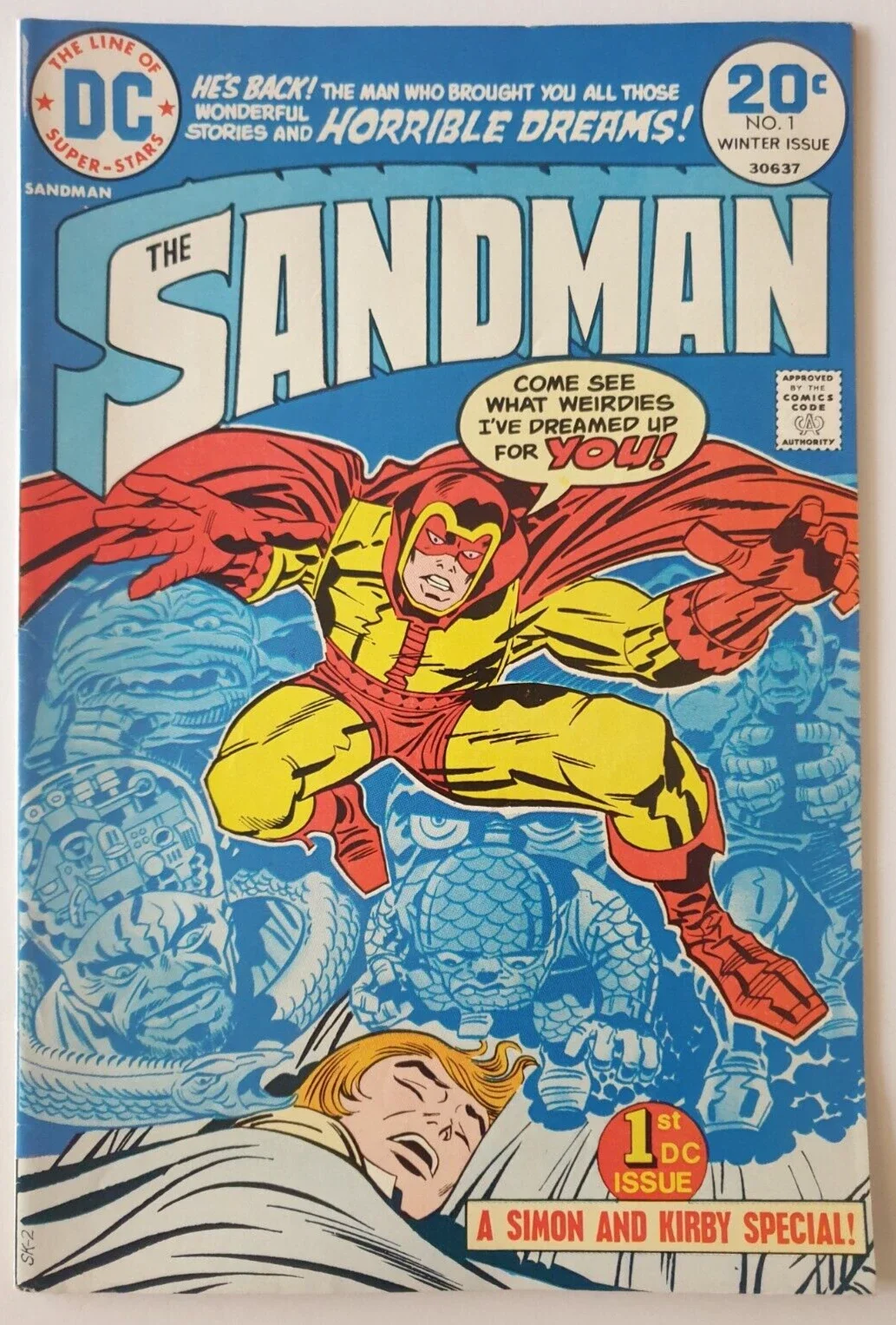
First published appearance: New York World's Fair Comics [1939]
Now this is where comic collecting becomes fun.
Mention Sandman today and most readers immediately think of Neil Gaiman's Morpheus.
Poor Wesley Dodds.
Long before Morpheus arrived, Dodds wandered the streets wearing a suit, fedora and gas mask while carrying a gas gun.
No cape.
No cosmic armour.
No giant glowing symbol on his chest.
Just an extremely suspicious-looking gentleman creeping around at night with knockout gas.
You have to admire Golden Age comics.
Wesley Dodds' first published appearance was in the 1939 New York World's Fair Comics. Adventure Comics #40, dated July 1939, is often strongly associated with his debut, but the World's Fair story reached print first.
That distinction is exactly the sort of thing collectors love arguing about.
Apparently even in 1939 we couldn't make first appearances straightforward.
The Collector's Angle
Wesley Dodds presents a fascinating case because collectors don't merely have to decide whether they like the character.
They have to decide what first means.
First story produced?
First story published?
First regular-series appearance?
First cover?
Welcome to comic collecting.
The 1939 World's Fair book has the publication-order claim, while Adventure Comics #40 remains an important early Sandman appearance and the beginning of his run in that title.
And this gets to something we've previously explored on The Collector Hub: perhaps the "earliest appearance" isn't always the book a particular collector wants most. Favourite artist, favourite title, an important storyline or simply a great cover can be equally legitimate collecting goals.
There is no rule saying everybody's collection needs to look identical.
Thankfully.
Otherwise we'd all just own the same twenty comics in different grades.
Doctor Mid-Nite — The Hero Who Never Needed Centre Stage
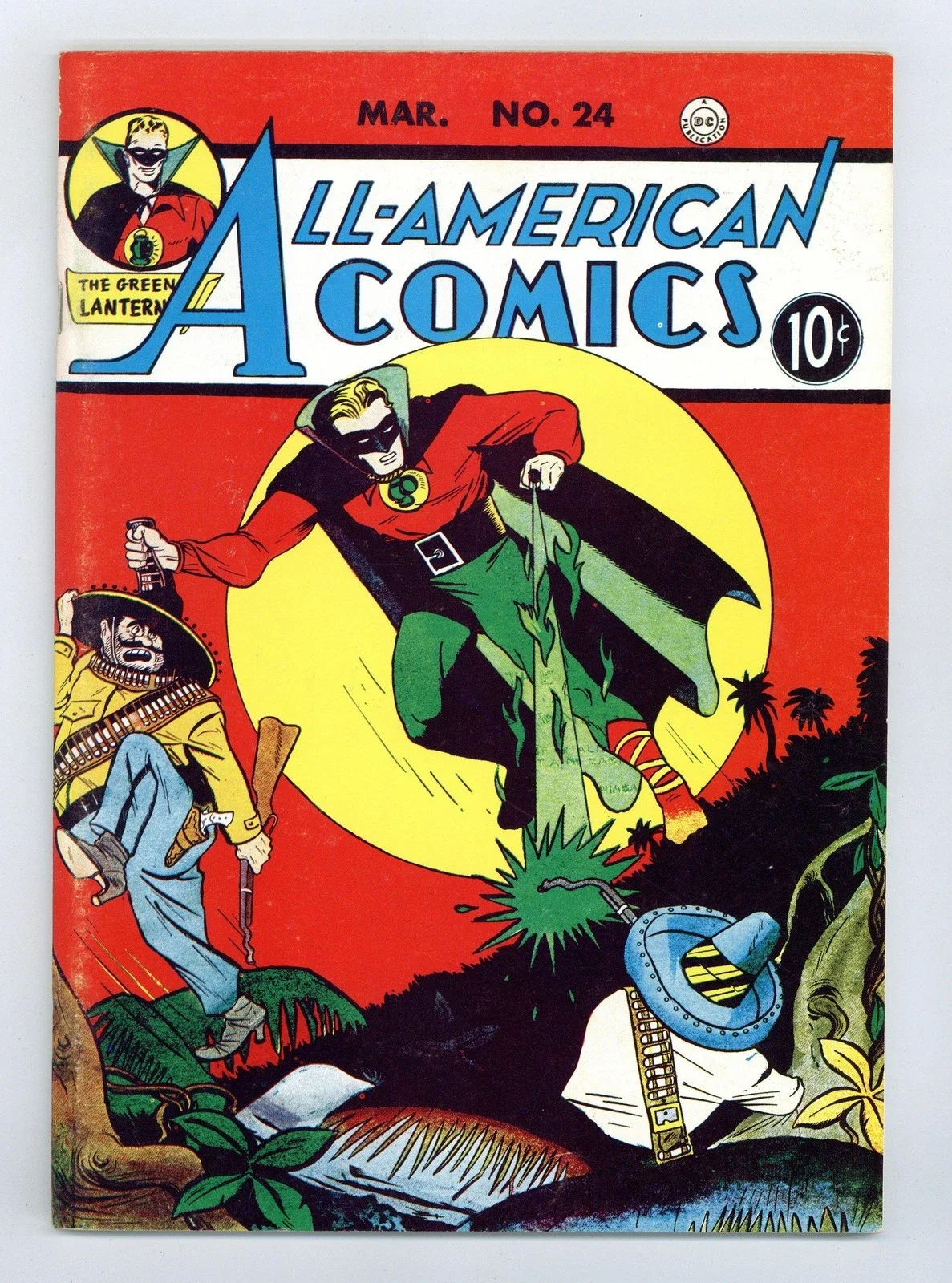
First appearance: All-American Comics #25 — April 1941
Doctor Mid-Nite might be the perfect example of an unsung hero.
His alter ego, Dr Charles McNider, was a physician who lost his normal eyesight but discovered he could see in darkness, ultimately becoming Doctor Mid-Nite. His origin appeared in All-American Comics #25 in 1941.
He later became part of the Justice Society of America.
And therein lies the problem.
Team books are wonderful places to create forgotten characters.
Someone gets the dramatic cover.
Someone gets the villain.
Someone gets the romance.
Someone delivers the heroic speech.
And somebody stands near the back quietly ensuring the team actually functions.
Doctor Mid-Nite never had Superman's powers, Batman's marketing department or Wonder Woman's cultural presence.
But perhaps that's precisely why he remains interesting.
The Collector's Angle
All-American Comics #25 represents the kind of Golden Age key that can easily be overshadowed because the character isn't currently carrying a major franchise.
Yet the book has something collectors frequently say they want: an actual Golden Age first appearance with historical relevance.
The important warning, however, is this:
Obscure does not automatically mean undervalued.
And low CGC numbers don't automatically mean only that many copies exist.
As we've discussed on The Collector Hub, census data becomes much more useful as a proxy for surviving copies when the comic is valuable enough that owners have a strong financial reason to submit copies. Less valuable books can be dramatically underrepresented.
That's a lesson worth remembering throughout this article.
Rare, scarce, uncommon, expensive and desirable are five different words.
Collectors occasionally treat them as one.
Ragman — Seriously, How Is This Character Not Bigger?
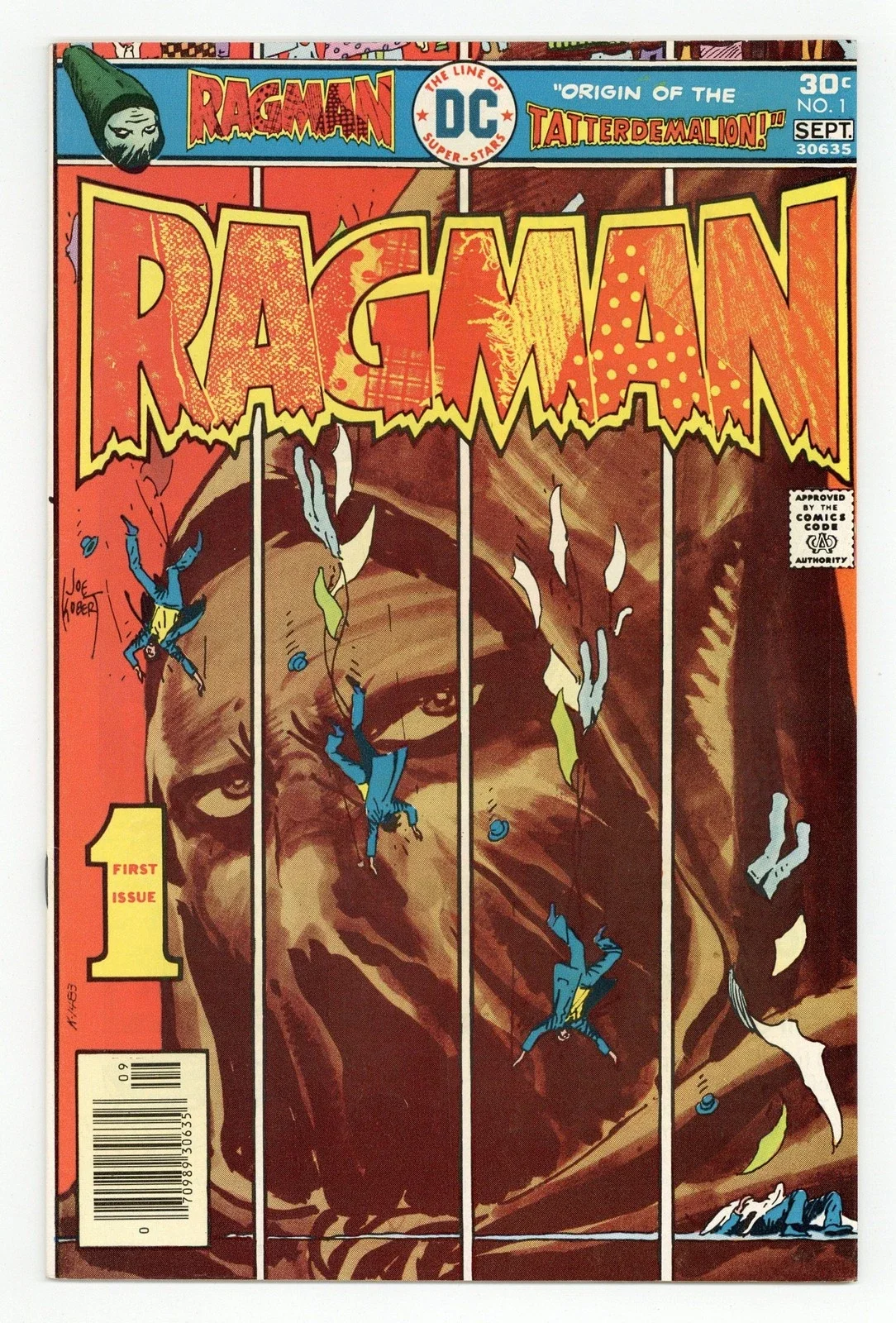
First appearance: Ragman #1 — August–September 1976
Now we move from forgotten to genuinely puzzling.
Ragman.
Even the name sounds like something whispered in an alleyway five minutes before something terrible happens.
Rory Regan debuted in Ragman #1 in 1976, in a series mixing superheroics with darker and supernatural elements.
And visually, the character has almost everything modern comic readers supposedly like.
Dark costume.
Street-level atmosphere.
Supernatural mythology.
Tragedy.
A distinctive silhouette.
An identity that doesn't require explaining why another member of the Bat-family has decided to dress as a nocturnal mammal.
So why isn't Ragman bigger?
Perhaps he's never received the definitive creative run that permanently changes a character's trajectory.
That's often all it takes.
One writer.
One artist.
Twenty or thirty memorable issues.
Suddenly a character everyone ignored becomes "criminally underrated", followed shortly afterwards by thousands of collectors claiming they always loved him.
Funny how that works.
The Collector's Angle
From a collecting perspective, Ragman #1 has one major advantage over some of our Golden Age examples.
It's wonderfully uncomplicated.
First issue.
First appearance.
Character on the cover.
Title character inside.
Thank you, DC.
Collectors appreciate this sort of cooperation.
The book also comes from the Bronze Age rather than the Golden Age, making the hunt fundamentally different from chasing something like Pep Comics #1 or All-American Comics #25.
Does that make Ragman #1 a future financial winner?
No idea.
And anyone guaranteeing that outcome probably has a copy they'd like to sell you.
But as a character-driven collectible, it's exactly the sort of comic I find interesting: recognisable enough to have history, obscure enough that discovering it still feels like discovering something.
Jack of Hearts — Perhaps Too Much Comic Book for One Character
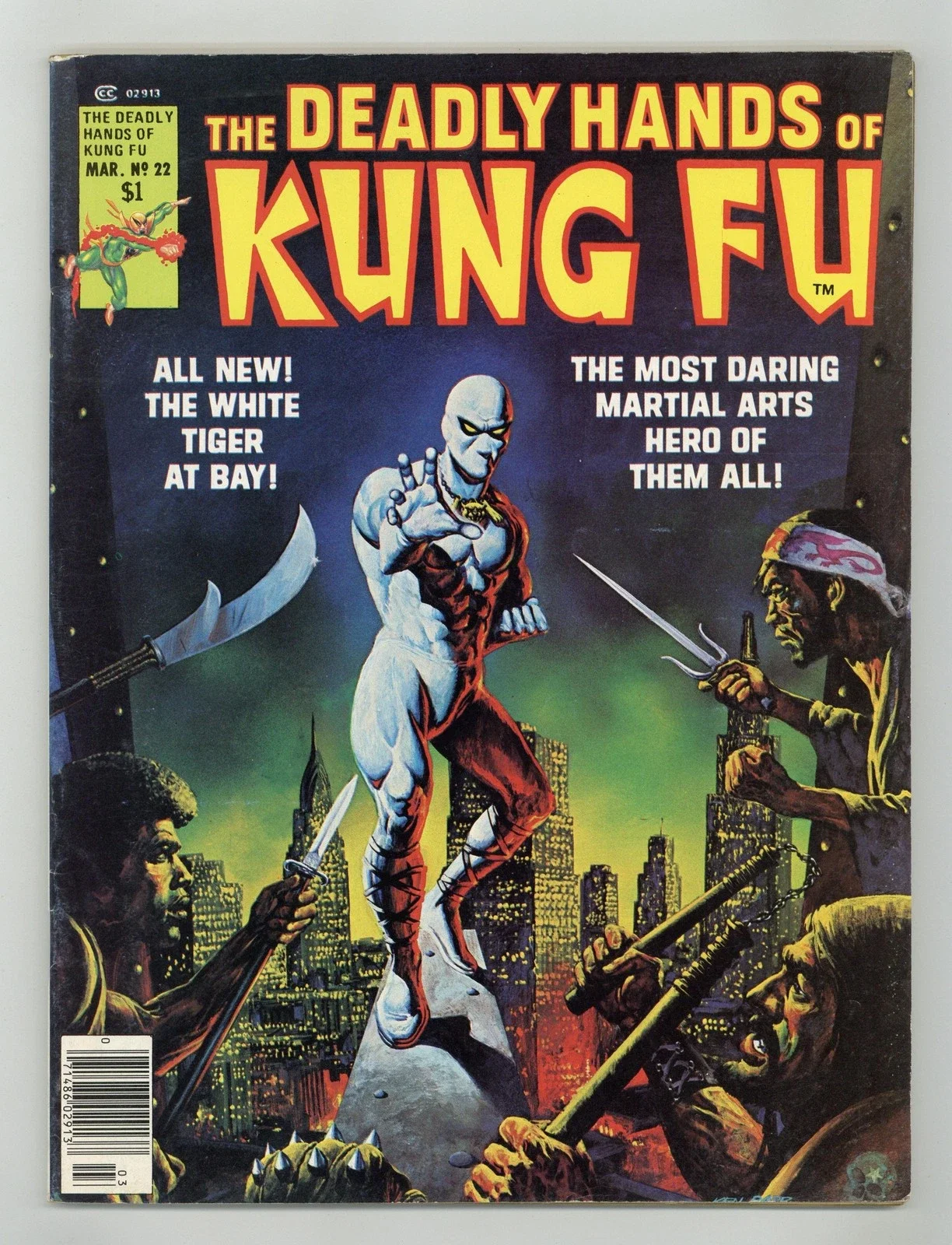
First appearance: The Deadly Hands of Kung Fu #22 — March 1976
If understatement is your thing, Jack of Hearts may not be.
Look at that costume.
Now look again.
There's a lot going on.
Jack Hart first appeared in The Deadly Hands of Kung Fu #22 in 1976.
Even his first appearance feels wonderfully strange.
You wouldn't necessarily expect to go searching through a title called The Deadly Hands of Kung Fu to find the debut of a colourful cosmic Marvel hero.
And that is exactly why collecting comics remains more interesting than simply reading a list of the fifty most expensive books.
Jack of Hearts has the visual design.
He has the power.
He has the tragedy.
He has decades of Marvel history.
And somehow he has spent most of his existence hovering just outside the big leagues.
The Collector's Angle
This is one of my favourite types of first appearance.
The hidden-in-another-title first appearance.
Compare that with Darkhawk or Ragman, where the first issue practically holds up a sign saying:
"IMPORTANT CHARACTER DEBUT HERE."
Jack of Hearts makes you work for it.
That can give a first appearance an appealing sense of discovery, particularly for collectors who enjoy characters rather than merely established market keys.
And frankly, if Marvel ever decides Jack of Hearts deserves a major revival, Deadly Hands of Kung Fu #22 is always going to be where the story began.
Whether that ever translates into significantly greater demand is another question entirely.
History creates significance.
Collectors create demand.
The two are not always the same thing.
Speedball — Remember When Superheroes Were Allowed to Be Fun?
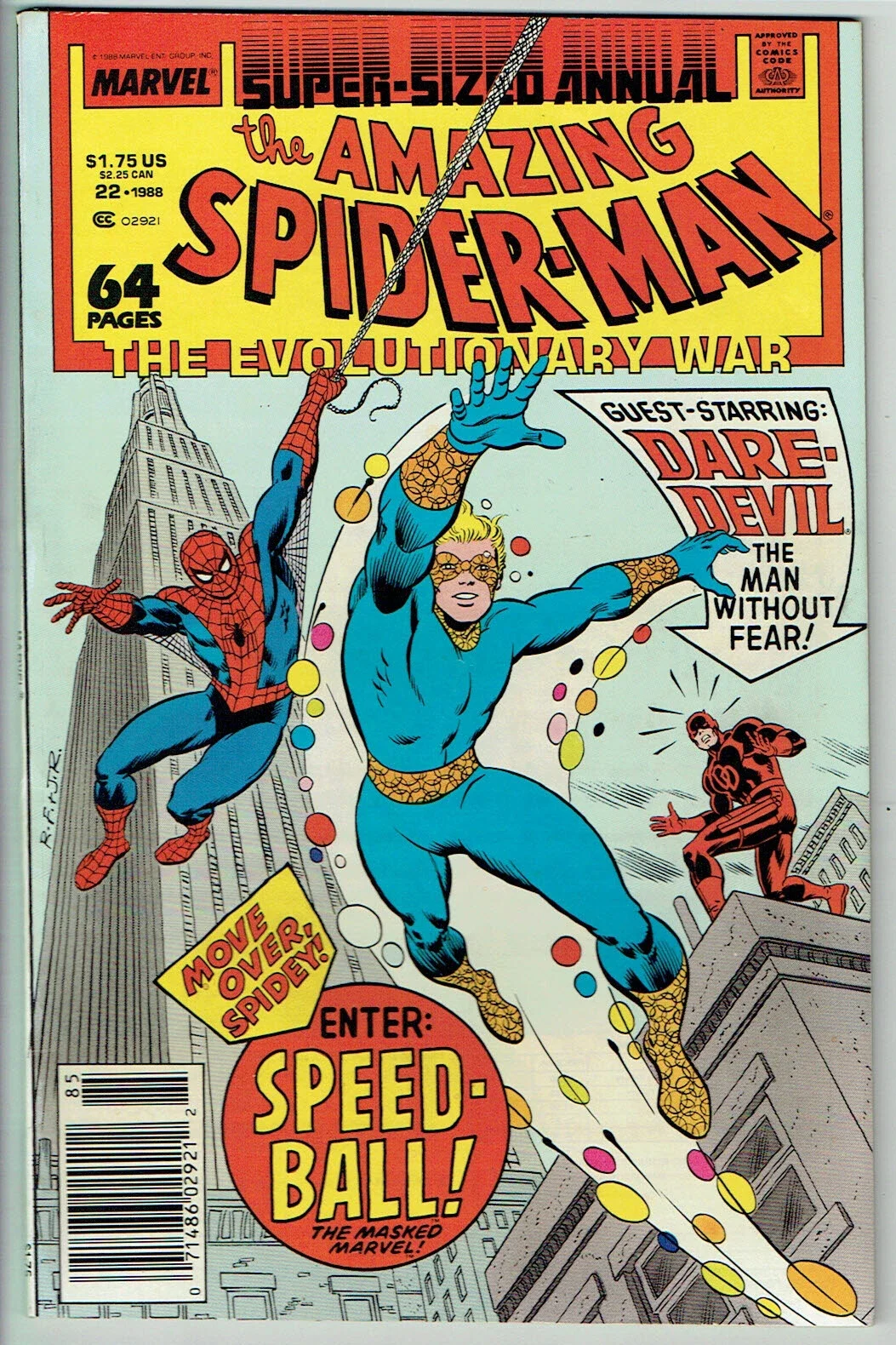
First appearance: The Amazing Spider-Man Annual #22 — 1988
Speedball is Robbie Baldwin, a character created by Steve Ditko and Tom DeFalco who first appeared in The Amazing Spider-Man Annual #22.
His power?
He bounces.
Essentially.
And it was glorious.
There was a time when a superhero could simply have brightly coloured kinetic powers, bounce around the page and enjoy himself without immediately confronting seventeen layers of generational trauma.
Speedball later moved into significantly darker territory.
Because comics occasionally become embarrassed by fun.
Bright costume?
Make it black.
Jokes?
Remove them.
Happy supporting cast?
Kill somebody.
Nobody has a beard?
Give somebody a beard.
Eventually, however, the pendulum swings back and we remember superheroes are also allowed to be entertaining.
The Collector's Angle
Amazing Spider-Man Annual #22 has an interesting advantage: Speedball's debut occurs under the Spider-Man umbrella.
That means collectors aren't necessarily buying an isolated obscure title. They're buying a Spider-Man book that also happens to contain the first appearance of another Marvel hero.
To me, that's the kind of secondary key worth knowing even if you have absolutely no expectation of financial fireworks.
Not every first appearance needs to become Amazing Fantasy #15.
Sometimes it's simply enjoyable knowing you've got the place where the character started.
Remember collecting for enjoyment?
I believe it used to be quite popular.
Darkhawk — The '90s Hero Who Almost Made It
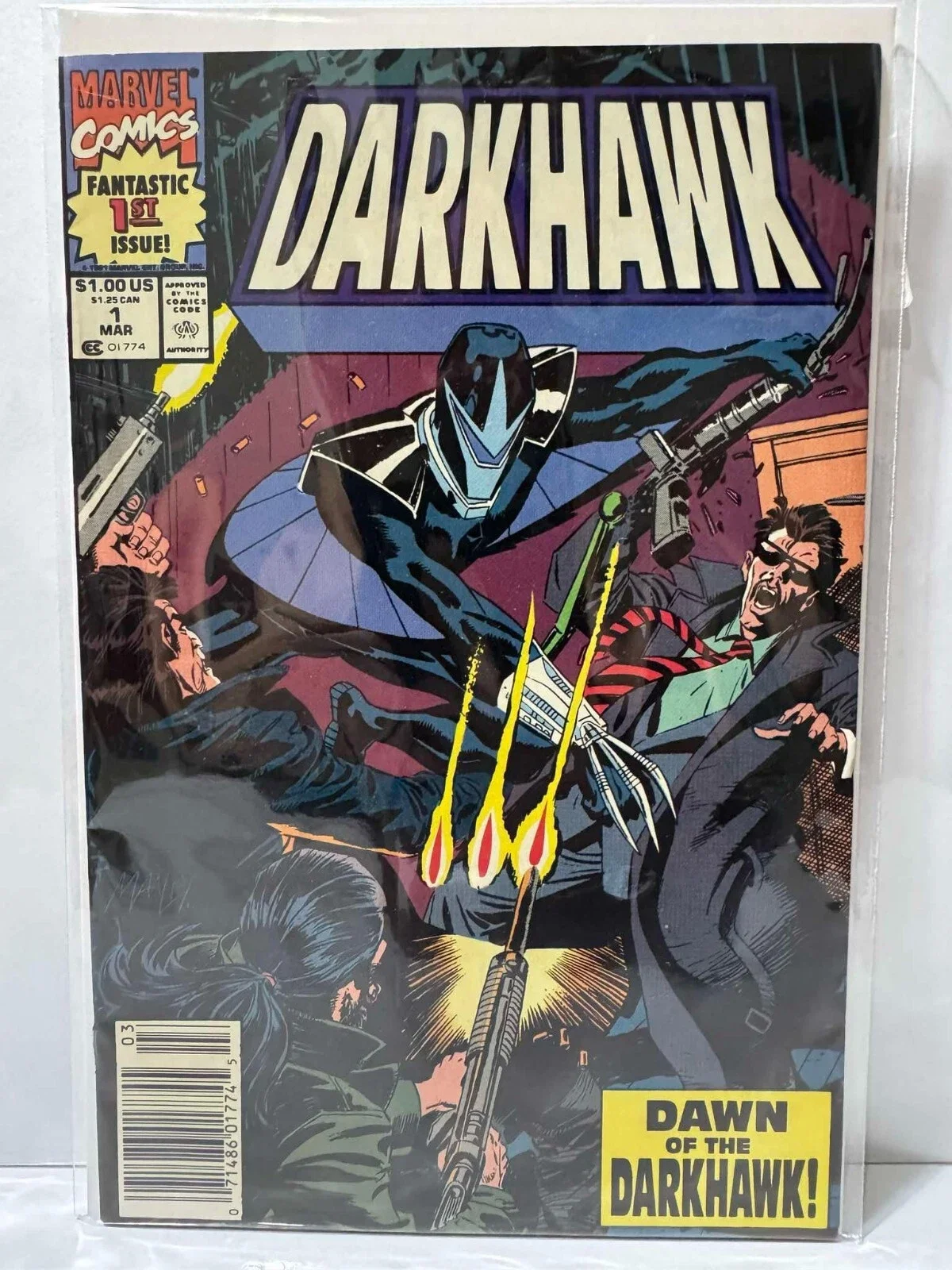
First appearance: Darkhawk #1 — March 1991
Now we're entering dangerous territory for collectors of a certain age.
Say "Darkhawk" to someone who spent time in comic shops during the early 1990s and watch their face.
They remember.
Christopher Powell debuted as Darkhawk in Darkhawk #1 in March 1991 after discovering a mysterious amulet that transformed him into the armoured hero.
Darkhawk had everything a 1990s character needed.
Armour.
Mystery.
Aliens.
Teenage angst.
Sharp bits.
Probably enough anatomical impossibility in certain panels to satisfy the decade.
Marvel itself has described Darkhawk as one of its more popular heroes created during the 1990s, and his original solo run reached fifty issues.
That's hardly failure.
But Darkhawk never quite made the final leap into Marvel's permanent upper tier.
The Collector's Angle
Darkhawk #1 is another beautifully straightforward first appearance.
And because it's a 1991 comic, collectors need to resist one temptation in particular:
Looking at a CGC census number and assuming that represents the surviving population.
For comics from the 1980s onwards, census numbers can be poor proxies for actual supply because enormous numbers of perfectly nice copies remain raw and have never had a financial reason to be graded. That's a point we've made before on The Collector Hub, particularly when looking at books such as Spawn #1 and New Mutants #98.
So if someone announces that a 1990s comic is "rare" because there aren't many copies in one particular CGC grade?
Do some homework.
A little research goes a long way when the word rare starts appearing in capital letters.
Darkhawk's collecting appeal isn't that Darkhawk #1 is some lost relic.
It's that an entire generation genuinely remembers the character.
Nostalgia is a powerful thing.
Just ask anyone currently paying money for toys they weren't allowed to open in 1992.
Sleepwalker — Marvel Got Weird, and We Should Be Thankful
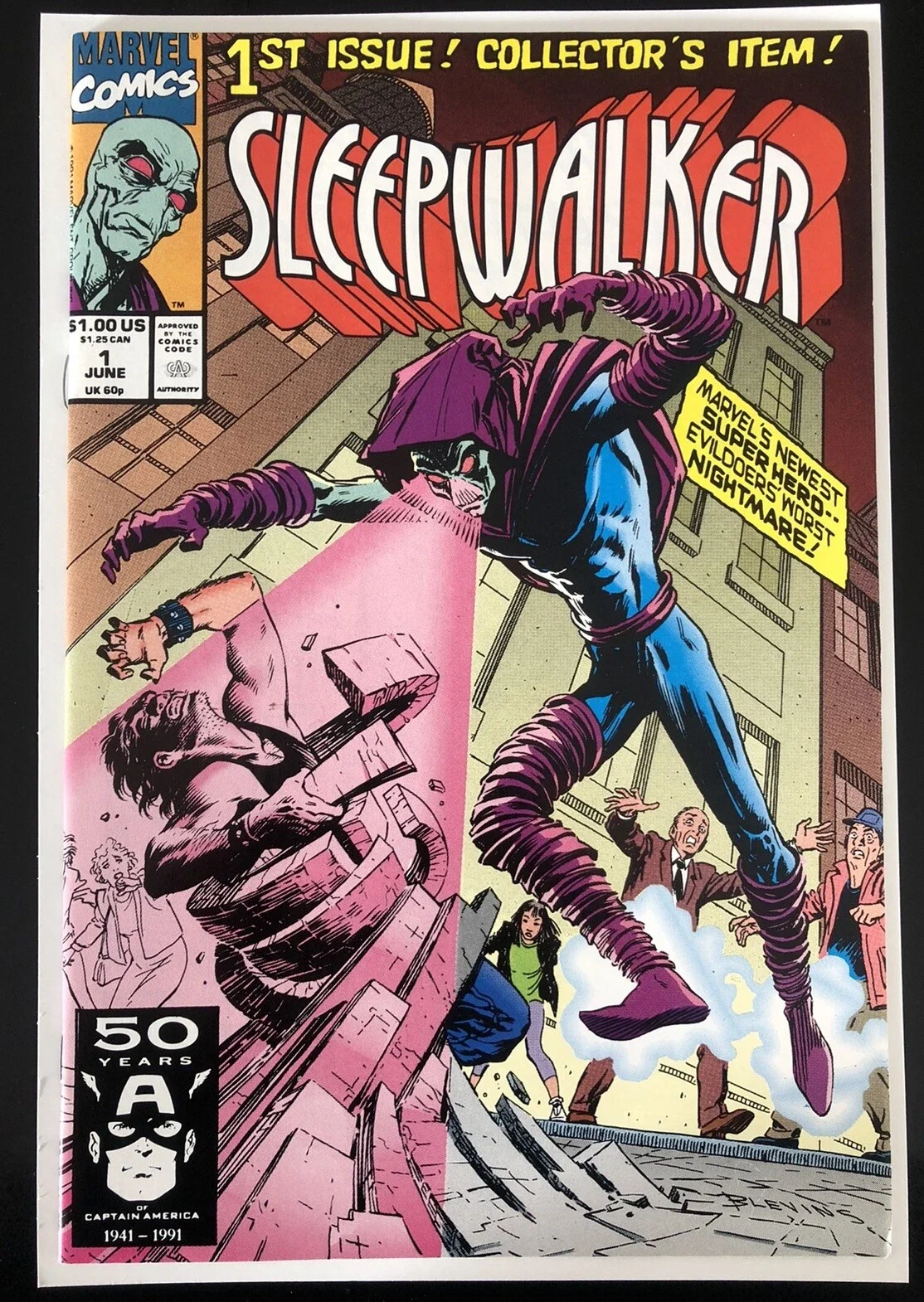
First appearance: Sleepwalker #1 — June 1991
Then there is Sleepwalker.
A strange green guardian associated with the dream world who becomes linked with university student Rick Sheridan. Marvel describes Sleepwalker as a member of the "dream police", protecting the dream dimension from dangerous entities.
Try pitching that today.
"Okay, he's green."
Fine.
"He's from the dream dimension."
All right.
"He's essentially dream police."
Right.
"Can we just make him another Spider-Man?"
No.
And thank goodness nobody did.
Sleepwalker debuted in his own series in June 1991.
He is precisely the sort of character comics need.
Weird.
Specific.
A little ridiculous.
And completely sincere about it.
The Collector's Angle
Again, Sleepwalker #1 could hardly make life easier for a collector.
First issue.
First appearance.
Character on cover.
Done.
But Sleepwalker offers another sort of collecting appeal: nostalgia without universal recognition.
Nearly everyone knows Spider-Man.
A smaller group knows Sleepwalker.
But the people who remember Sleepwalker often really remember Sleepwalker.
That's an interesting type of fandom because it creates personal significance without requiring mass-market importance.
Would I interpret that as an automatic investment thesis?
Absolutely not.
There are warehouses of comics from the 1990s that would very much appreciate you making that mistake.
But as a character key?
It's fun.
And fun remains a perfectly legitimate reason to own a comic book.
What Forgotten Heroes Teach Us About Collecting
Here's where all of this becomes more interesting than simply producing another list of obscure superheroes.
Collectors are constantly being told what matters.
First appearance.
Highest grade.
Low census.
Rare variant.
Movie announcement.
New television series.
Record sale.
Sometimes those things genuinely matter.
Sometimes they matter because everybody has agreed that they matter.
Those aren't necessarily the same thing.
The Collector Hub's "thousandth collector" experiment raised a question I think applies perfectly here: does your collection actually reflect the characters, artists and stories you love, or are you spending most of your money chasing books you've been told are prizes?
That's worth thinking about.
Because obscure characters offer a different way to collect.
You can chase history rather than hype.
You can hunt unusual first appearances.
You can build complete runs.
You can collect favourite covers.
You can follow one forgotten character across forty years of guest appearances.
And occasionally you might discover that the comic nobody at the show is talking about is the comic you're happiest to bring home.
That's not a failure of collecting.
That's the whole point.
The Unsung-Hero First Appearance Map
For collectors who want the short version:
The Shield — Pep Comics #1 (January 1940). One of the most historically significant early patriotic superhero debuts.
Sandman / Wesley Dodds — New York World's Fair Comics [1939], his first published appearance; Adventure Comics #40 followed.
Doctor Mid-Nite / Charles McNider — All-American Comics #25 (April 1941).
Ragman / Rory Regan — Ragman #1 (August–September 1976).
Jack of Hearts / Jack Hart — The Deadly Hands of Kung Fu #22 (March 1976).
Speedball / Robbie Baldwin — The Amazing Spider-Man Annual #22 (1988).
Darkhawk / Chris Powell — Darkhawk #1 (March 1991).
Sleepwalker — Sleepwalker #1 (June 1991).
Final Thoughts — Go Digging
The great thing about comic books is that the archaeology never ends.
For every Superman, there are dozens of forgotten heroes.
For every Wolverine, there's a character whose series quietly disappeared while collectors were busy looking somewhere else.
For every Batman...
Actually, DC probably just published another Batman comic while you were reading this paragraph.
Some forgotten characters deserved to disappear.
Let's acknowledge that.
Not every cancelled superhero is an undiscovered masterpiece. Sometimes you read three issues of an old series and realise the marketplace may have made a perfectly sensible decision.
But others simply missed their moment.
The Shield deserves attention because he arrived before the patriotic superheroes who eclipsed him.
Wesley Dodds reminds us that superhero comics once owed considerably more to pulp fiction.
Doctor Mid-Nite demonstrates that not every hero needs to dominate the room.
Ragman feels perpetually one great creative run away from discovery.
Jack of Hearts remains gloriously excessive.
Speedball reminds us superheroes are allowed to be fun.
Darkhawk represents an entire generation of collectors.
And Sleepwalker reminds us that comics should occasionally be completely, unapologetically weird.
Most importantly, their first appearances remind us of something collectors sometimes forget.
A key comic doesn't need to be everybody's key comic.
The hobby has room for the person chasing Amazing Fantasy #15 and the person delighted to find a sharp copy of Sleepwalker #1.
Collect what you like.
Learn the history.
Understand the supply.
Check actual sales before convincing yourself you've discovered the next big thing.
And be particularly suspicious whenever someone insists a comic is "rare" while simultaneously having twelve copies available for sale.
Then go digging.
The next time you're flipping through a back-issue box and encounter a character you've barely heard of, don't automatically put the comic back.
Open it.
Find out who the character was.
Find out why somebody once thought that hero deserved a comic book.
Maybe you'll discover a terrible comic.
Maybe you'll discover your new favourite character.
Either way, that's considerably more interesting than buying something simply because everybody else already told you to want it.