From The Beatles and KISS to Prince, MF DOOM, Kendrick Lamar and the Marvel Cinematic Universe, comic books and music have shared a remarkable relationship. But who influenced whom, and how did two seemingly different forms of entertainment become so closely connected?
From the psychedelic sounds of the 1960s to modern hip-hop and blockbuster superhero movies, comic books and music have influenced one another for decades. Sometimes the connection is obvious. Other times, it is hiding in plain sight.
What do KISS, The Beatles, Prince, Kendrick Lamar and Spider-Man have in common?
Quite a lot, as it turns out.
At first glance, comic books and music might seem like two very different forms of entertainment. One tells its stories through illustrated panels and speech bubbles, while the other relies on sound, rhythm and lyrics. Yet both have spent decades creating larger-than-life personalities, building devoted fan bases and capturing the imagination of generations.
Consider the similarities. Superheroes have distinctive costumes, secret identities, dramatic origin stories and powerful enemies. Rock stars have stage personas, elaborate costumes, legendary rivalries and occasionally their own extraordinary origin stories.
For some musicians, becoming a superhero was simply the next logical step.
But the relationship goes considerably deeper than musicians dressing up in colourful costumes. Comic books have inspired songs, albums, music videos and entire musical identities. In return, music has helped define how superheroes look, sound and feel, particularly as their adventures have moved from printed pages to television and cinema.
Let's explore some of the most interesting connections between these two worlds
The Beatles Meet Marvel: When Pop Culture Entered the Comic Book
The relationship between popular music and superheroes stretches back further than many collectors might realise.
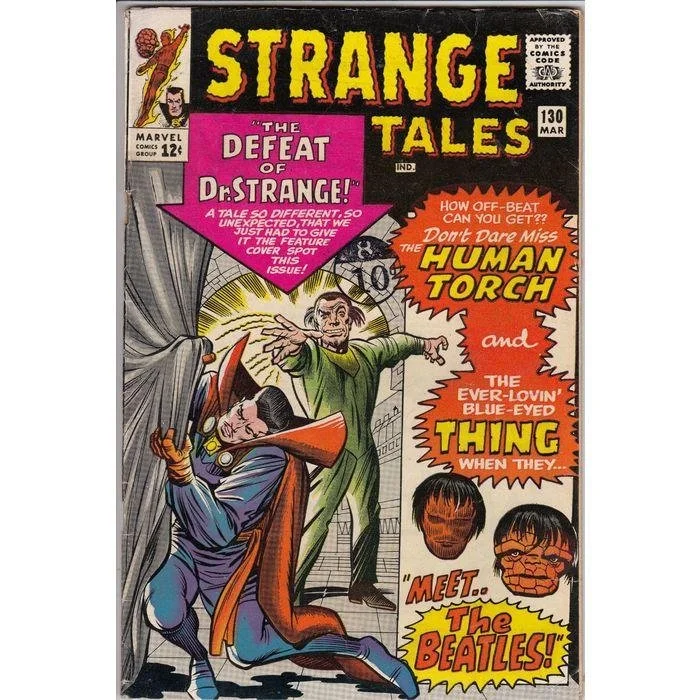
In March 1965, Marvel published Strange Tales #130, featuring a story titled "Meet the Beatles!" involving the Human Torch and the Thing.
At the height of Beatlemania, Marvel recognised that John Lennon, Paul McCartney, George Harrison and Ringo Starr were becoming cultural figures almost as recognisable as its fictional heroes.
The story follows Johnny Storm and Ben Grimm as they attempt to attend a Beatles concert, bringing together two of the biggest youth entertainment phenomena of the decade.
It may seem like a fairly ordinary celebrity appearance today, but consider the period. Marvel's superhero revolution was still relatively young, and the Beatles were transforming popular music.
Both were speaking directly to a younger generation, and both understood the appeal of rebellion, personality and imagination.
For collectors, Strange Tales #130 offers something unusual: a Silver Age Marvel comic that also represents a small piece of music history.
It is a reminder that a comic book does not necessarily need to introduce a major superhero to have historical significance.
Sometimes, its importance comes from the cultural moment it captures.
KISS: The Rock Band That Became a Superhero Team
If the Beatles demonstrated that musicians could appear in comic books, KISS took the idea considerably further.
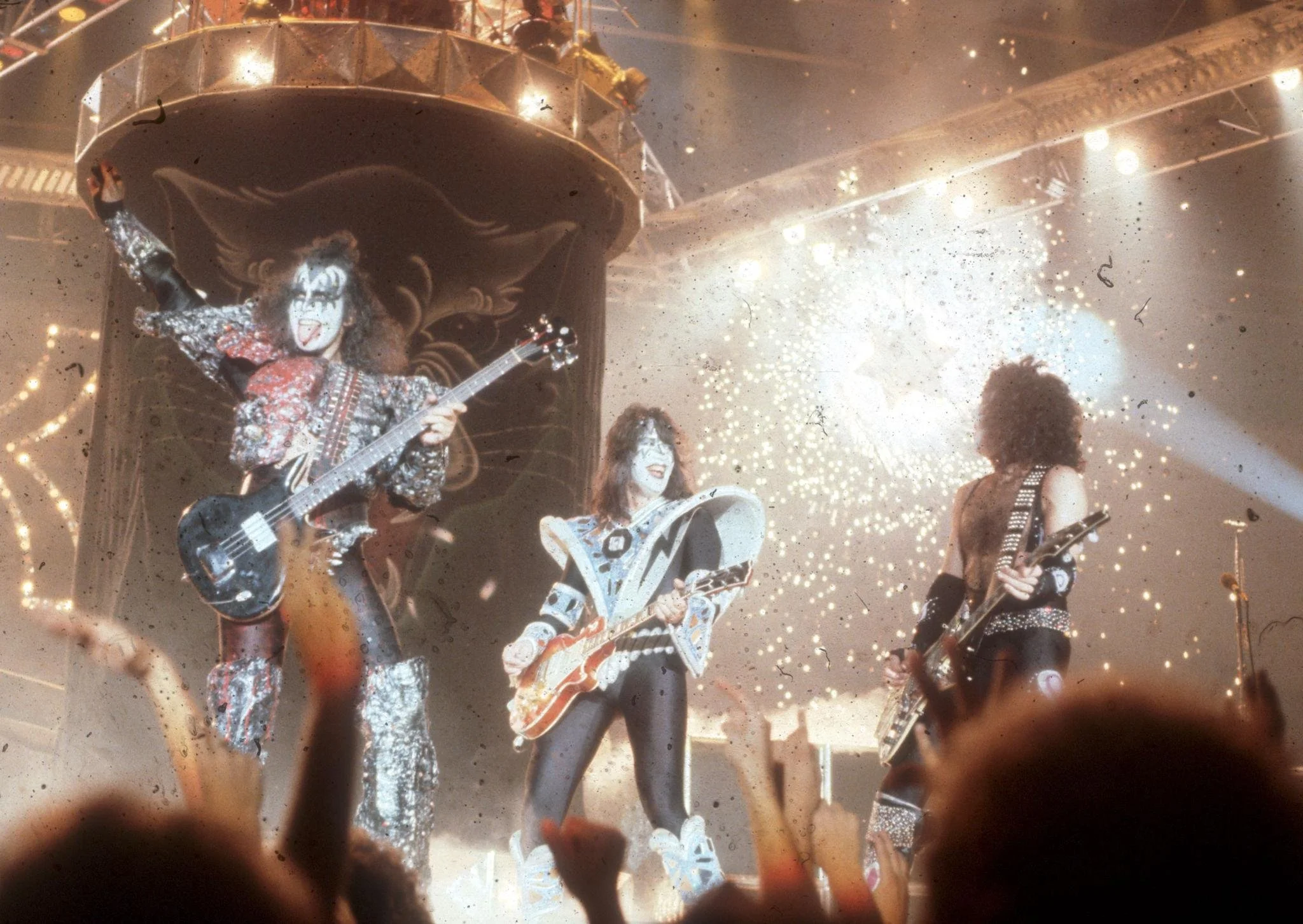
By the mid-1970s, KISS had developed a stage identity that looked remarkably similar to a superhero team.
Gene Simmons was the Demon. Paul Stanley was the Starchild. Ace Frehley was the Spaceman, and Peter Criss was the Catman.
They wore elaborate costumes, painted their faces, breathed fire and performed on stages filled with smoke and explosions.
Frankly, they looked as though they had escaped from the pages of a Marvel comic.
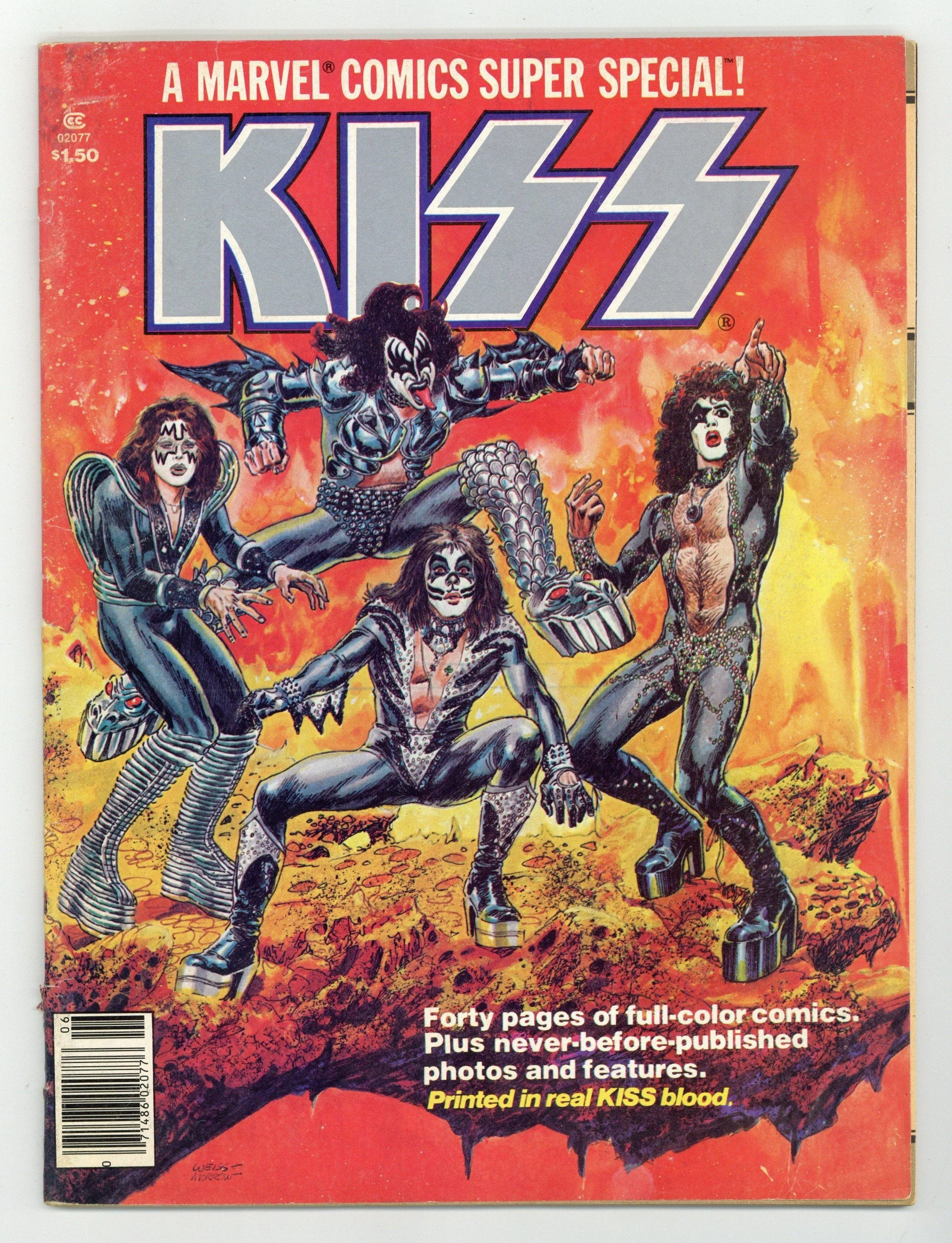
In 1977, Marvel published Marvel Comics Super Special #1, starring KISS in their own comic-book adventure.
The publication was more than a novelty. It was a recognition that the band's image had become powerful enough to exist beyond its music.
There was also the extraordinary publicity surrounding the comic's production. Members of KISS famously contributed samples of their blood, which were mixed into the red printing ink used for the publication.
It was an outrageous promotional idea, but entirely consistent with a band whose identity revolved around spectacle.
Marvel followed with another KISS special in 1978.
For collectors, the original 1977 special is particularly interesting because it appeals to two potentially overlapping audiences: comic-book collectors and KISS memorabilia enthusiasts.
And this raises a fascinating question.
When a musician appears in a comic book, should the issue be valued primarily as a comic-book collectible, or as a piece of music memorabilia?
Perhaps the answer is both.
The Rise of the Musical Superhero: Marvel's Dazzler
While KISS brought real musicians into comics, Marvel also explored the opposite approach by creating a superhero whose identity revolved around music.
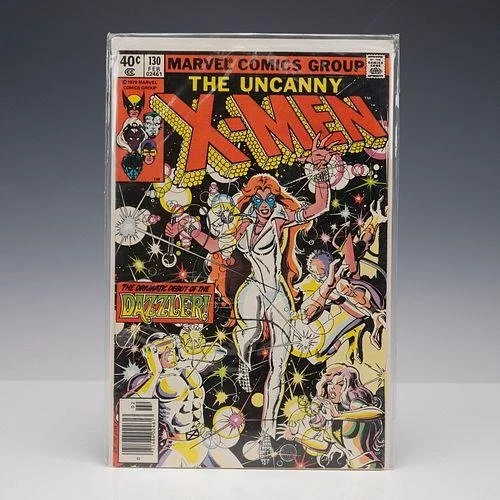
Dazzler, also known as Alison Blaire, made her first appearance in The Uncanny X-Men #130 in 1980.
Her mutant ability allowed her to convert sound into light, making her a particularly effective performer as well as a superhero.
The character emerged during the disco era, when music, fashion and nightlife had become defining elements of popular culture.
Dazzler was more than a character who happened to enjoy singing. Her musical career was fundamental to her superhero identity.
Marvel launched her solo series with Dazzler #1 in 1981, giving readers a character whose adventures could move between concert stages and superhero battles.
For comic-book collectors, Dazzler represents an interesting historical moment. Her creation reflects a period when publishers were experimenting with ways to connect comics with the wider entertainment industry.
Disco eventually faded from its commercial peak, but Dazzler survived.
That longevity suggests her appeal extended beyond the musical fashion that helped inspire her creation.
Batman, Prince and the Sound of Gotham City
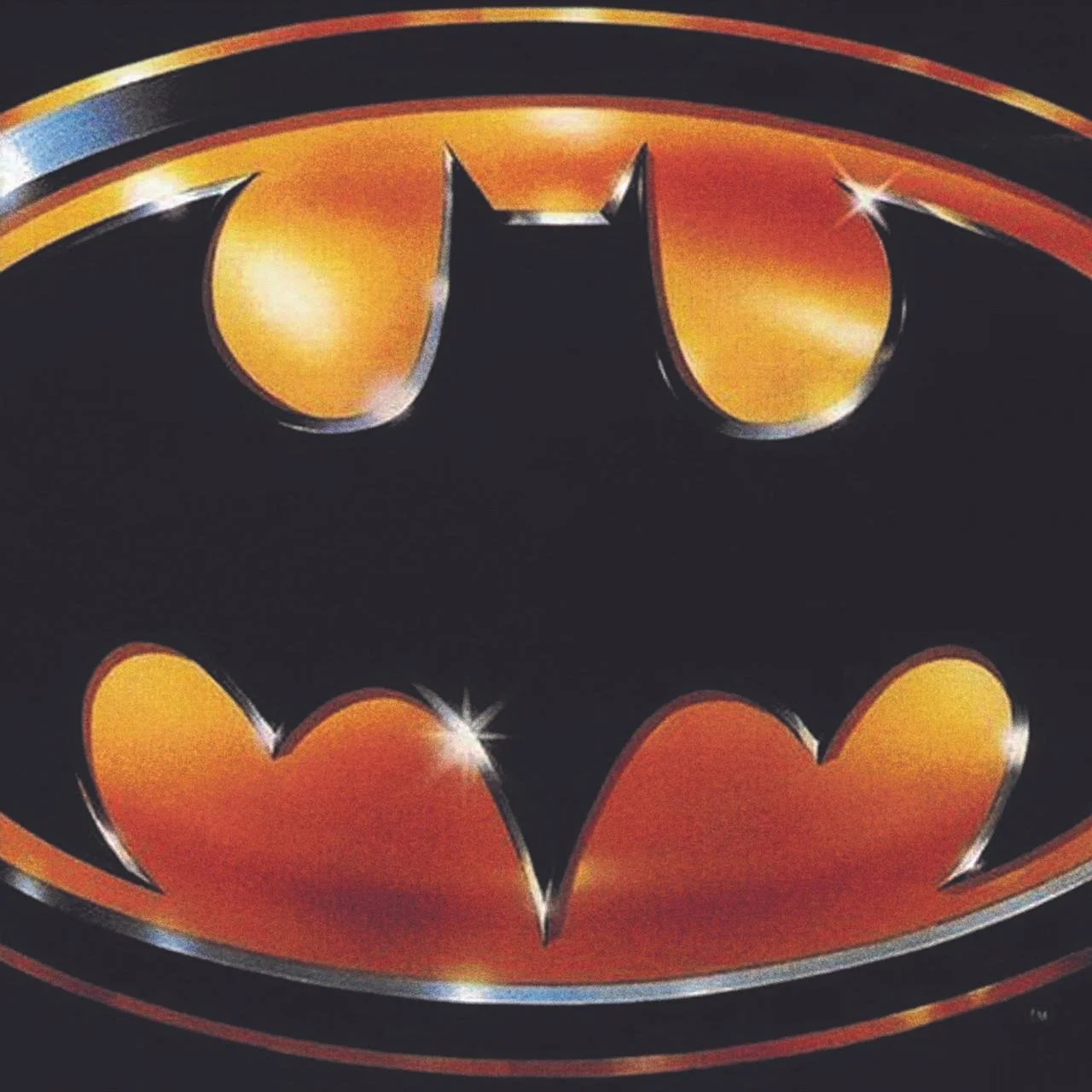
By the late 1980s, the relationship between comic books and music had developed into something considerably more commercially ambitious.
Tim Burton's Batman arrived in cinemas in 1989, bringing a darker interpretation of Gotham City's most famous resident to a mainstream audience.
And accompanying the film was one of the most distinctive superhero soundtrack projects of the decade.
Prince released his Batman album in June 1989, featuring music written for and inspired by the film.
The album included "Batdance", "Partyman" and "The Future", combining Prince's distinctive funk, rock and pop influences with the atmosphere of Burton's Gotham City.
"Batdance" became a major hit, while the soundtrack album reached number one on the US Billboard 200.
What makes this collaboration particularly interesting is that Prince did not merely contribute a song to the closing credits.
He created a musical interpretation of Batman's world.
The result brought together two established cultural identities: the mysterious, theatrical musician and the equally theatrical Dark Knight.
There was another musical dimension to the film, too. Danny Elfman's orchestral score provided Batman with a dramatic musical identity quite different from Prince's pop soundtrack.
Together, the two approaches demonstrated how music could influence the audience's perception of the same superhero.
Prince gave Gotham a contemporary edge. Elfman gave it a sense of gothic grandeur.
Both became part of the film's legacy.
And for collectors who remember the extraordinary Batman merchandising phenomenon of 1989, the soundtrack remains part of that wider cultural moment.
When Heavy Metal Met Iron Man
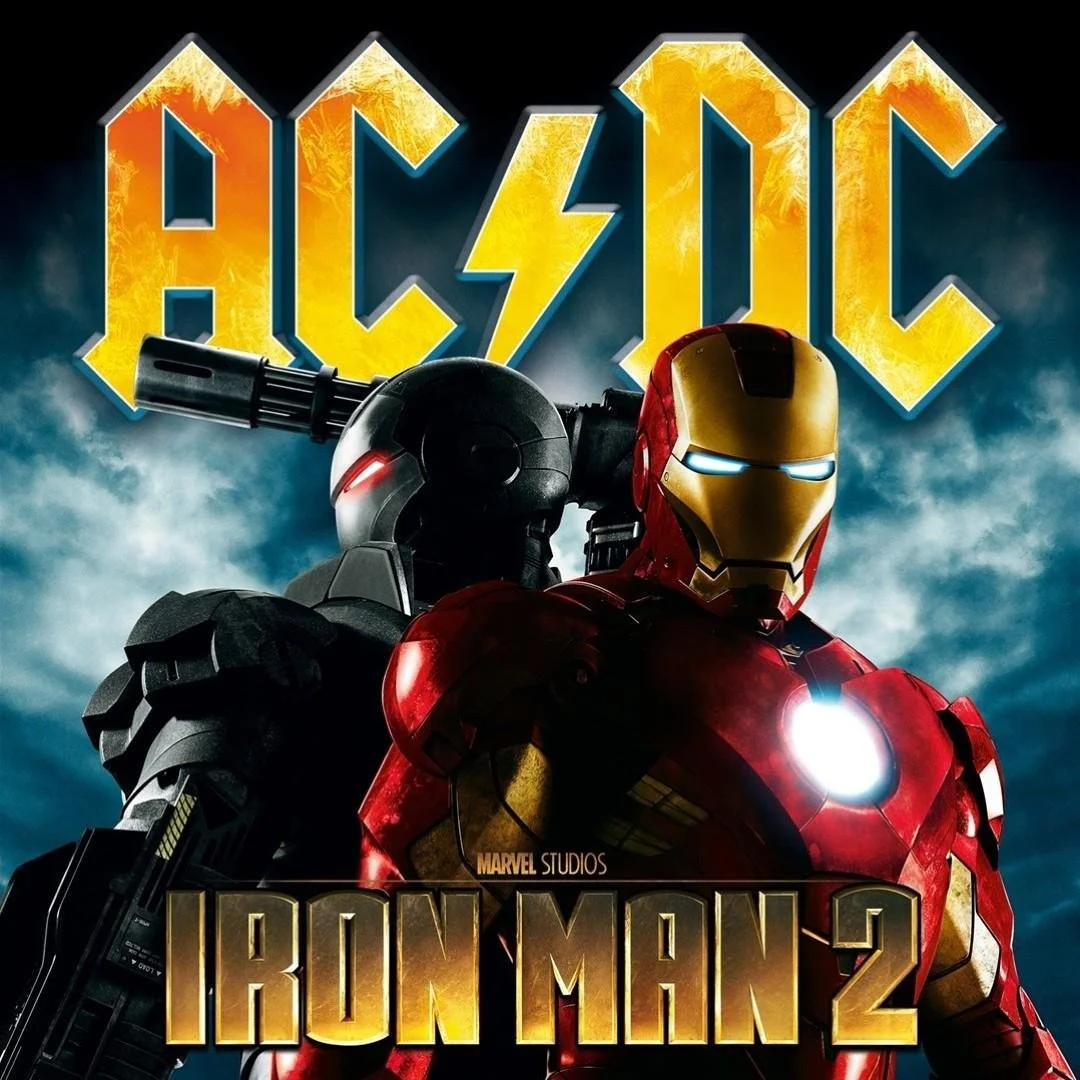
Some superhero and musical partnerships seem almost inevitable.
Take Iron Man and AC/DC.
Tony Stark is wealthy, technologically brilliant, rebellious and rarely short of confidence. AC/DC built its reputation on loud guitars, swagger and unapologetic rock 'n' roll.
Putting the two together made considerable sense.
For Iron Man 2 in 2010, Marvel Studios and Columbia Records released AC/DC: Iron Man 2, a compilation featuring songs from across the band's career.
Tracks such as "Shoot to Thrill", "Back in Black" and "Thunderstruck" helped associate AC/DC's sound with Iron Man's screen identity.
It was an effective pairing because the music did not simply accompany the action.
It reinforced Tony Stark's personality.
A character who operates a technologically advanced suit of armour might seem more naturally suited to electronic music. Instead, old-fashioned hard rock helped make him feel more human.
The contrast worked.
It also demonstrated how a familiar musical catalogue could reach an audience through a completely different entertainment franchise.
For younger viewers discovering AC/DC through Iron Man, the superhero became an introduction to decades of rock history.
And that is where the relationship becomes genuinely reciprocal.
Guardians of the Galaxy: When the Soundtrack Became Part of the Story
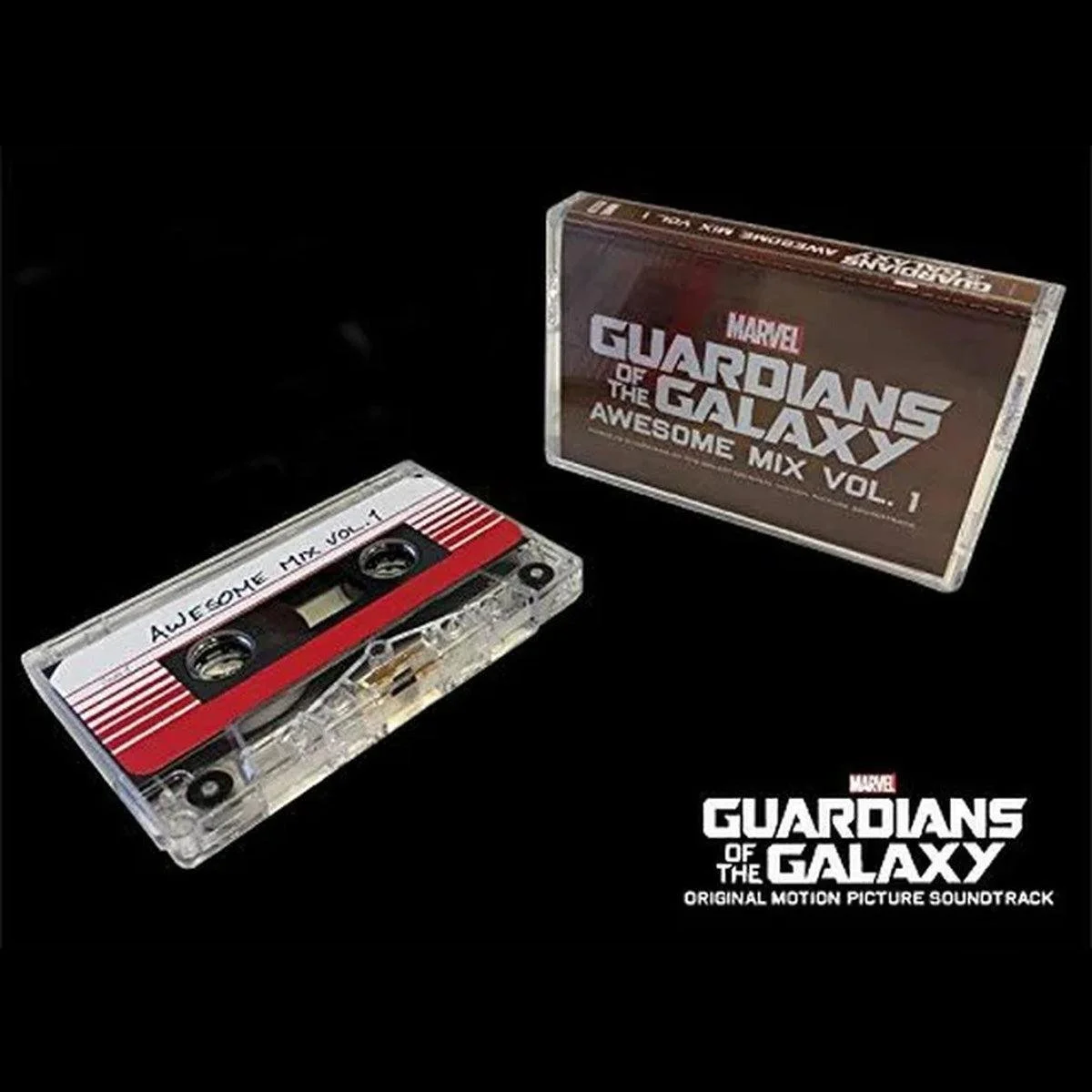
If Iron Man used music to establish personality, Guardians of the Galaxy made music central to its storytelling.
Released in 2014, the film featured an unusual soundtrack for a modern science-fiction blockbuster.
Rather than relying exclusively on contemporary hits, director James Gunn drew heavily from the popular music of the 1960s and 1970s.
Songs such as "Come and Get Your Love" by Redbone, "Hooked on a Feeling" by Blue Swede and "Cherry Bomb" by the Runaways became closely associated with the film.
But there was a reason for these selections beyond nostalgia.
Peter Quill's treasured mixtape, Awesome Mix Vol. 1, was a gift from his mother and represented his emotional connection to Earth.
Music became a link to his childhood, his family and the life he had lost.
Suddenly, these familiar songs carried a completely different meaning.
For audiences, the soundtrack was an essential part of understanding Star-Lord rather than simply background entertainment.
It also helped introduce older recordings to a new generation.
The success of Guardians of the Galaxy illustrates an important change in superhero cinema: popular music could become a storytelling device as valuable as costumes, visual effects or dialogue.
Hip-Hop and Comics: A Shared Language of Identity
Perhaps no musical genre has embraced superhero imagery quite like hip-hop.
The connection is particularly compelling because both cultures have long explored identity, transformation, personal mythology and the struggle for recognition.
Consider MF DOOM.
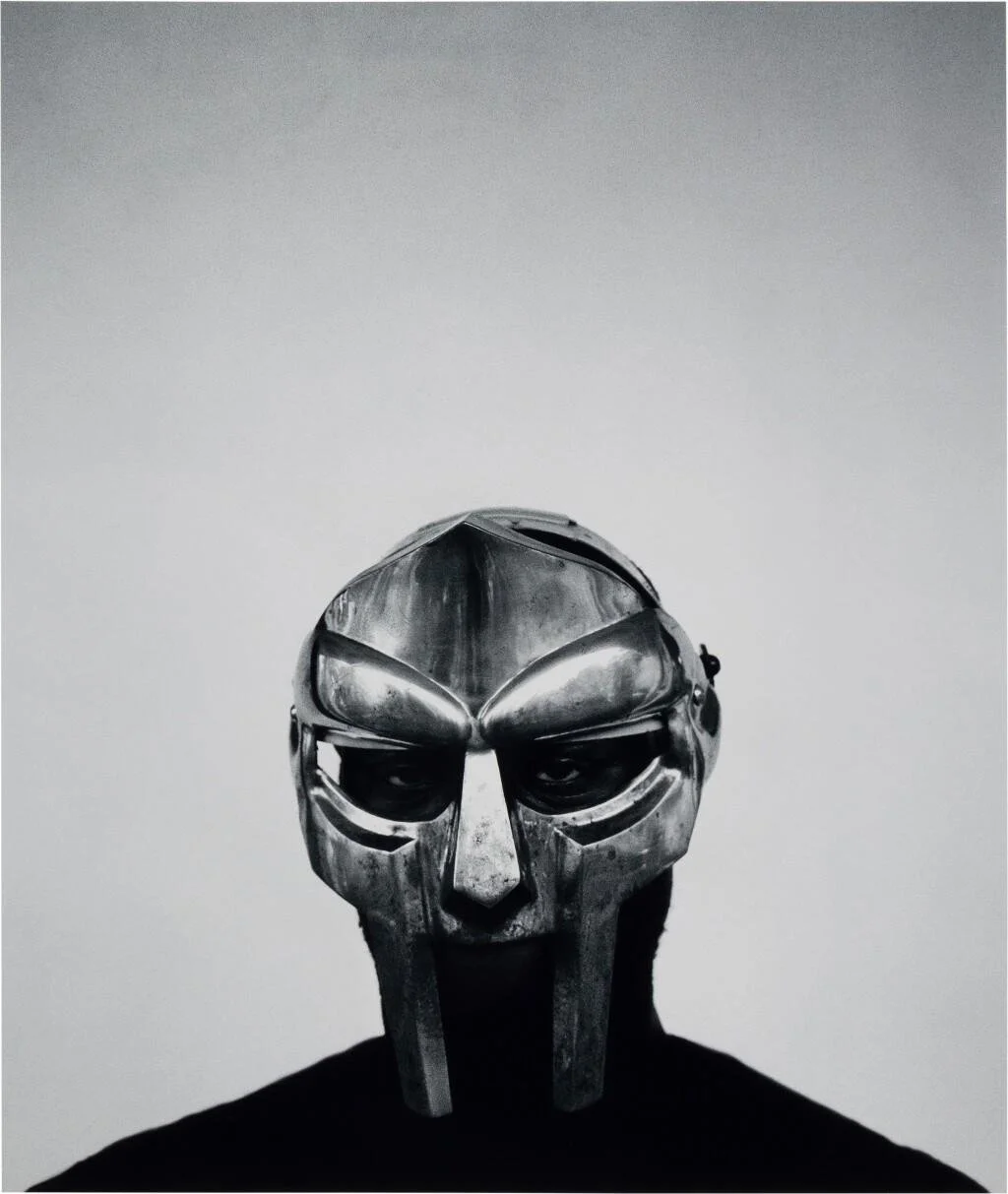
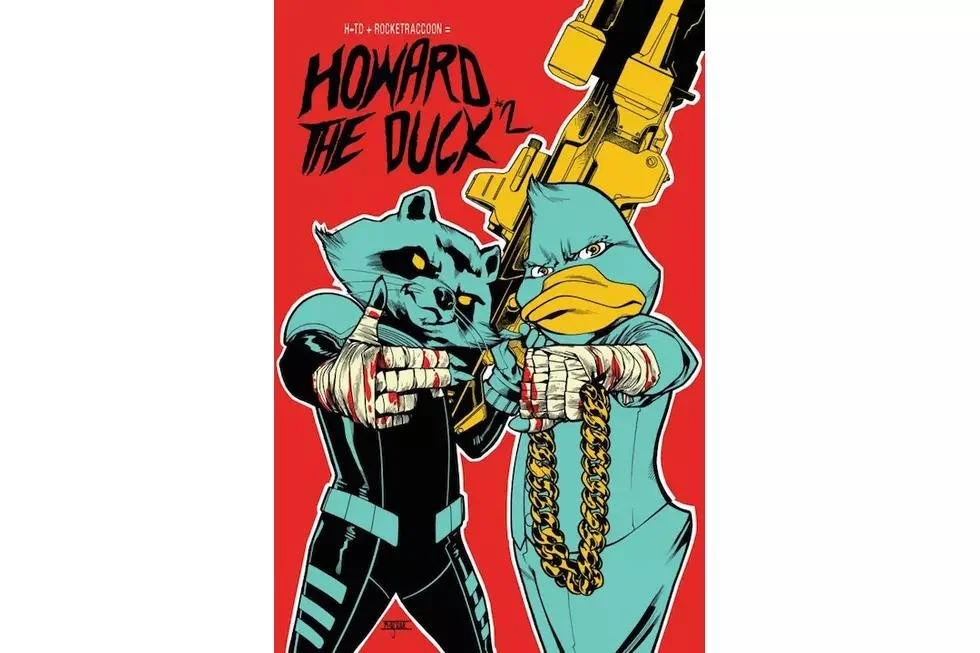
The late rapper developed an elaborate masked persona inspired in part by Marvel's Doctor Doom.
Like Victor von Doom, the musician created an identity built around mystery, intelligence, theatricality and villainous imagery.
His metallic mask became as important to his public persona as his distinctive lyrical style.
Rather than simply referencing comics in his music, MF DOOM effectively turned himself into a comic-book character.
And the relationship did not end there.
In 2015, Marvel launched a series of hip-hop variant covers paying tribute to famous album artwork.
These reimagined recognisable record covers using Marvel superheroes, connecting comic-book illustration with decades of hip-hop visual culture.
The project acknowledged something that had been apparent for years: hip-hop artists and comic-book creators shared an appreciation for powerful imagery, alter egos and mythology.
For collectors, the Marvel hip-hop variants occupy an interesting position.
Some buyers may seek them because of the featured superhero. Others may be drawn to the album artwork being referenced.
A collector of hip-hop memorabilia might value a particular cover for completely different reasons than a traditional Marvel collector.
The artwork becomes a meeting point between two collecting communities.
Black Panther and Kendrick Lamar: More Than a Movie Soundtrack

The release of Black Panther in 2018 represented another significant development.
Kendrick Lamar and Anthony "Top Dawg" Tiffith curated and produced Black Panther: The Album, a collection of music inspired by the film.
Featuring artists including SZA, The Weeknd, Future and Lamar himself, the soundtrack connected the fictional world of Wakanda with contemporary hip-hop and R&B.
The song "All the Stars", performed by Kendrick Lamar and SZA, became particularly associated with the film.
What made the project significant was the way the music complemented the film's themes of identity, heritage, responsibility and cultural pride.
The soundtrack stood as a substantial musical release in its own right, rather than simply a collection of songs attached to a superhero blockbuster.
Here, the influence worked in both directions.
The film provided musicians with a fictional world and themes to explore, while the music helped extend Black Panther's cultural presence beyond cinema and comics.
It was a reminder that superhero stories can provide a platform for music to address subjects much larger than the characters themselves.
Spider-Man: From Cartoon Theme to Modern Hip-Hop
Few superheroes have enjoyed as varied a musical history as Spider-Man.
The theme from the 1967 animated television series became one of the most recognisable superhero tunes ever written.
Its popularity extended far beyond the original programme, with later versions performed by artists including the Ramones, whose recording appeared on the 1995 album Saturday Morning: Cartoons' Greatest Hits.
The pairing made sense. Spider-Man's fast-paced, youthful energy suited the band's punk-rock approach.
Several decades later, Spider-Man: Into the Spider-Verse (2018) introduced a very different musical identity.
The animated film followed Miles Morales, a younger Spider-Man whose world was closely connected to contemporary urban culture.
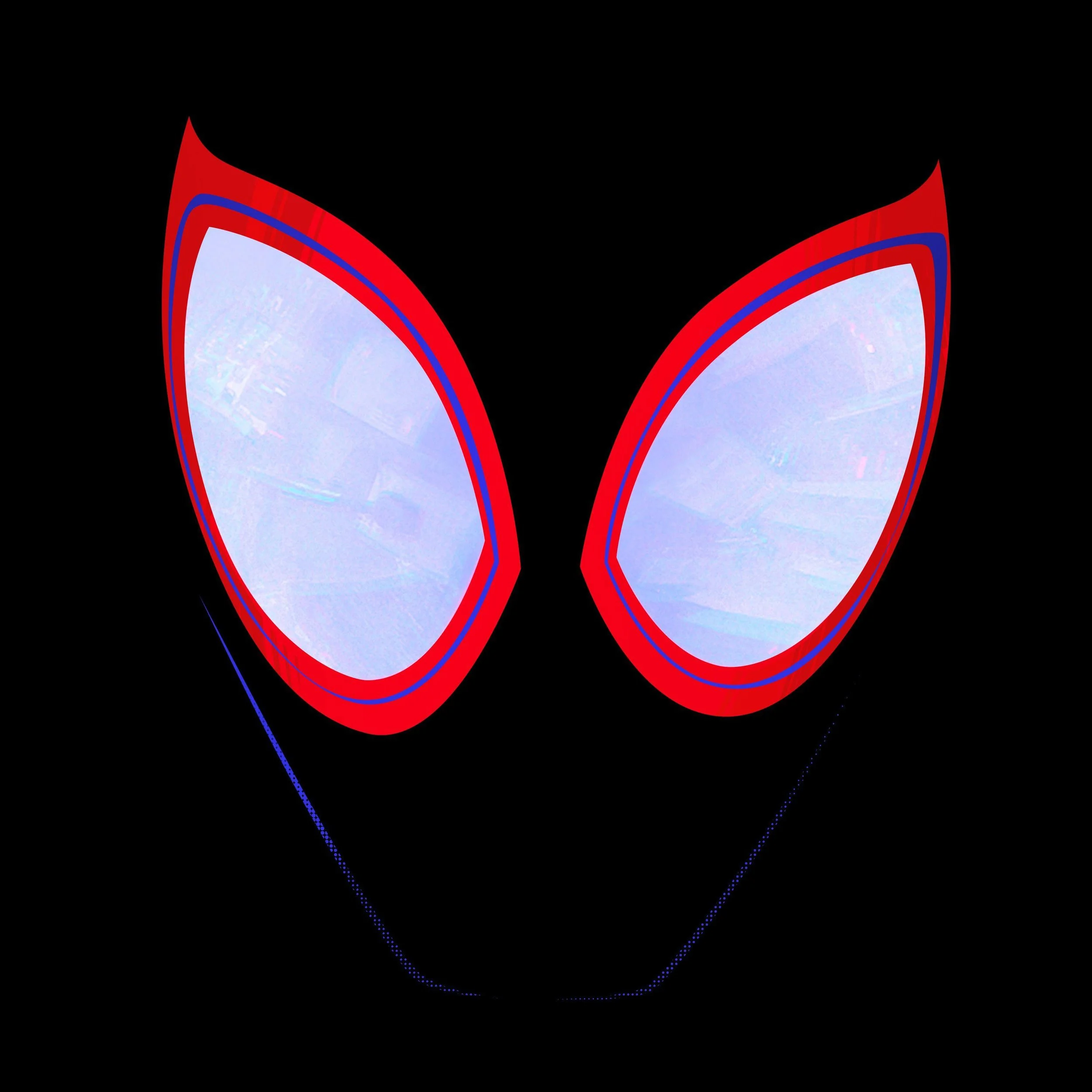
Its soundtrack featured Post Malone and Swae Lee's "Sunflower", alongside contributions from other hip-hop and contemporary artists.
The music felt natural to the character.
Unlike earlier superhero films that often used orchestral scores to communicate grandeur, Into the Spider-Verse embraced music that reflected the everyday life of its central hero.
The result was a Spider-Man who felt distinctly connected to his generation.
And that is perhaps one of the greatest strengths of the character.
Spider-Man can change with the times without losing the qualities that made him popular in the first place
When Musicians Become Comic-Book Creators
The relationship between comics and music has also produced creators who work successfully in both fields.
Gerard Way, best known as the frontman of My Chemical Romance, created The Umbrella Academy, which debuted through Dark Horse Comics in 2007 with artwork by Gabriel Bá.
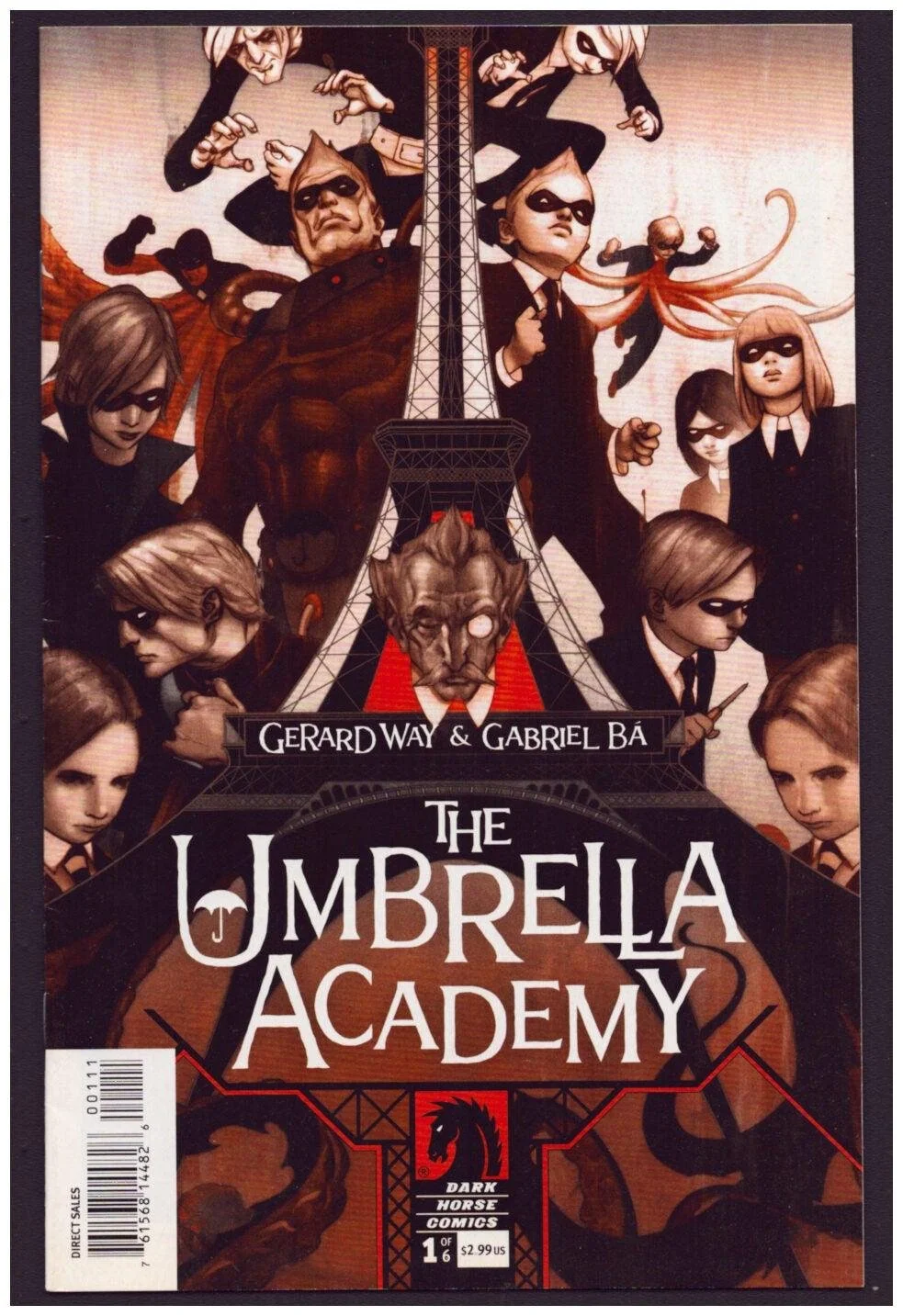
The series follows a dysfunctional family of superpowered individuals and eventually inspired the Netflix television adaptation.
Way also connected his musical and comic-book storytelling through Danger Days: The True Lives of the Fabulous Killjoys and the related comic series The True Lives of the Fabulous Killjoys.
Another compelling example is Claudio Sanchez of Coheed and Cambria.
The band's science-fiction concept albums are connected to The Amory Wars, an expansive comic-book narrative developed by Sanchez.
In this case, the music and comics are not separate products that happen to share a name.
They are different ways of experiencing the same fictional universe.
Listeners can explore the story through songs, while comic-book readers encounter its characters and events in illustrated form.
This is perhaps one of the clearest examples of music and comics developing together rather than one simply borrowing from the other.
The Collector's Perspective: More Than Just a Comic Book
For collectors, these crossovers raise some intriguing questions.
We generally understand why Amazing Fantasy #15, Fantastic Four #1 or Incredible Hulk #1 are important. Each occupies a recognised position in comic-book history.
But what about comics with significant musical connections?
Does Marvel Comics Super Special #1 appeal more strongly to a KISS fan than a Marvel collector?
Does the presence of the Beatles in Strange Tales #130 make the issue more appealing to someone who collects music memorabilia?
And could a particularly distinctive Marvel hip-hop variant attract interest from collectors who have never previously considered buying comic books?
The answer to each question is potentially yes.
However, it is important to distinguish cultural significance from financial value.
A comic book featuring a famous musician does not automatically become valuable. As with any collectible, demand, condition, scarcity and historical importance all play a part.
The crossover appeal may widen the potential audience, but it does not guarantee sustained collector demand.
This is where researching recorded sales can become particularly useful.
Rather than assuming that a comic with a musical connection deserves a premium, collectors can examine historical transactions, compare grades and consider whether interest is consistent or driven by a temporary event.
It is also worth remembering that not every culturally significant comic needs to be expensive to be worth collecting.
There is considerable enjoyment in owning a comic that connects two personal interests.
For a collector who grew up listening to KISS, watching Batman or discovering hip-hop through Marvel imagery, these publications may represent something more meaningful than their market value.
Final Thoughts: Two Worlds, One Imagination
Comic books and popular music have spent more than half a century borrowing from one another.
The Beatles helped bring contemporary music culture into the Marvel Universe. KISS transformed rock musicians into superheroes. Dazzler gave Marvel a character whose powers and identity revolved around music.
Prince helped define the sound of Batman's Gotham City, while AC/DC became closely associated with Tony Stark.
Guardians of the Galaxy demonstrated how old songs could acquire new meaning through superhero storytelling. Kendrick Lamar and the artists behind Black Panther: The Album showed how music could expand the themes of a comic-book adaptation.
Meanwhile, MF DOOM, Gerard Way and Coheed and Cambria demonstrated that the relationship could extend well beyond movie soundtracks and celebrity appearances.
And perhaps that is the most interesting aspect of all.
Both comic books and music allow people to escape the ordinary. Both create characters and personalities that become larger than life. Both can transport us to another time, another place or another world.
A great song can make us feel invincible.
A great superhero story can do exactly the same thing.
For collectors, the objects left behind — the comic books, vinyl records, movie soundtracks, posters and original artwork — are tangible reminders of those experiences.
Some may become valuable. Others may never command particularly impressive prices.
But their cultural significance is not always measured in dollars.
Sometimes, all it takes is the opening guitar riff of a favourite song or the sight of a familiar comic-book cover to remind us why we started collecting in the first place.
And when those two worlds come together, the result can be something rather special.