Comic Book Collecting in the Current Economic Climate: Why the Hobby Matters More Than Ever
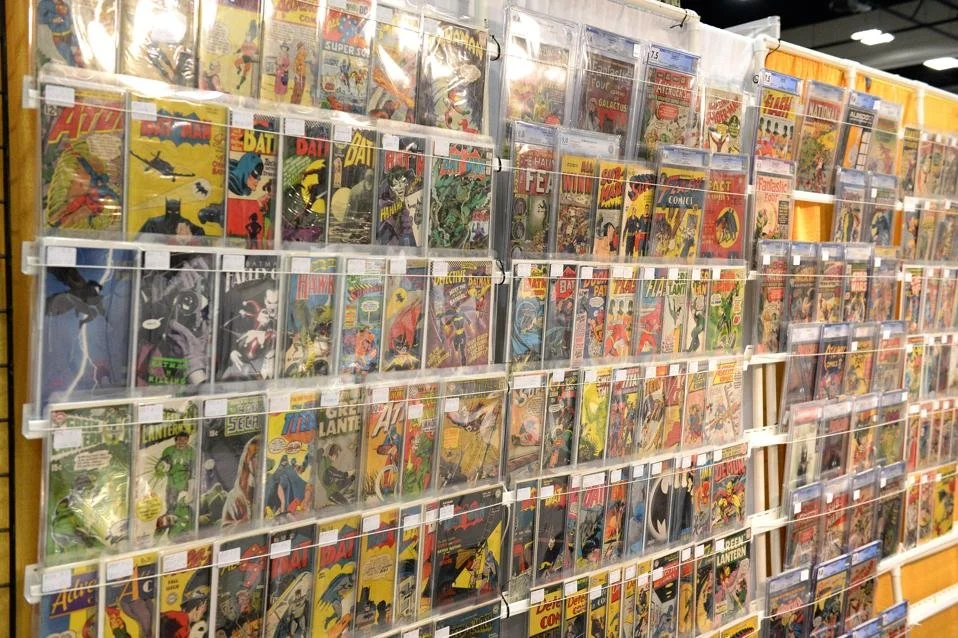
Have you ever looked at a comic book and thought, “I probably shouldn’t buy this right now”?
We have, and I’m guessing you have too.
In the best case scenario, passing on a book means you miss out on something you wanted. In the worst case scenario, buying the wrong book at the wrong price means you have thrown good money into a bad decision. That idea sits neatly alongside a previous Collector Hub article on buying CGC comics at a reasonable price, which opens with the familiar collector’s problem: paying too much, eating into future profits, or unknowingly putting money into the wrong book.
That question matters more today because the wider economy is not exactly rolling out the red carpet for discretionary spending.
In the United States, inflation is still biting. The U.S. Consumer Price Index was up 3.8% over the 12 months to April 2026, with energy up 17.9%, gasoline up 28.4%, food up 3.2%, and unemployment sitting at 4.3%. The economy is still growing, but not without pressure: U.S. real GDP increased at an annual rate of 2.0% in Q1 2026, while the BEA noted a deceleration in consumer spending and a PCE price index increase of 4.5%.
Europe is facing its own squeeze. The European Commission’s Spring 2026 forecast expects euro area GDP growth of just 0.9% in 2026, while euro area inflation is forecast at 3.0%, above the European Central Bank’s 2% target. EU unemployment is expected to sit at 6.0%, with euro area unemployment at 6.4%.
Asia remains the strongest growth engine globally, but even there, the story is not all clear skies. The IMF says emerging Asia is projected to slow by about half a percentage point to 4.9% growth in 2026, while inflation in emerging Asia is expected to rise from 1.1% in 2025 to 2.6% in 2026.
So, is now really the time to talk about the importance of comic book collecting?
Yes.
But not because comic books are guaranteed to make you rich. They are not. Not because every key issue is a safe haven asset. It is not. And definitely not because every collector with a long box is secretly sitting on a retirement plan. Most are not.
Comic book collecting matters right now because it teaches patience, discipline, research, budgeting and cultural memory at a time when many people are being pushed toward short-term thinking.
That may sound dramatic.
It isn’t.
Collecting forces us to slow down
Modern life is designed to make us react.
Prices move. Interest rates shift. Energy costs jump. Consumer confidence weakens. A movie rumour appears online and suddenly a book that nobody cared about last Tuesday becomes “undervalued” by Wednesday morning.
Comic book collecting, at its best, pushes against that.
A good collector does not simply ask, “What is everyone buying?” A good collector asks better questions.
Why this book?
Why this grade?
Why this character?
Why this price?
Why now?
That last question matters more in a tighter economy. When food, rent, energy and fuel are taking a larger bite out of household budgets, the lazy comic purchase becomes more expensive. Not because the sticker price changed, but because the opportunity cost did.
A $500 mistake in a booming economy is annoying.
A $500 mistake when everything else costs more is educational.
Painfully educational.
The current economy rewards knowledge, not excitement
When money is cheap, mistakes are easier to hide.
When money is tight, mistakes become visible.
That is why the most important comic book skill in the current climate is not hype detection. It is valuation discipline.
Buying a comic because it is old, rare, trending or “bound to be in the next movie” is not enough. It was never enough. Collectors need to understand grade, page quality, restoration, census numbers, sales history, character importance, cover appeal and liquidity.
This is where the hobby has changed for the better. The CGC Census and GPA recorded sales do not tell us everything, but they give collectors far more information than previous generations had. At the start of 2024, the CGC Census contained 10,212,987 graded comics, GPA had recorded 5,766,497 sales, and 4,053,288 different CGC serial numbers had at least one recorded GPA sale.
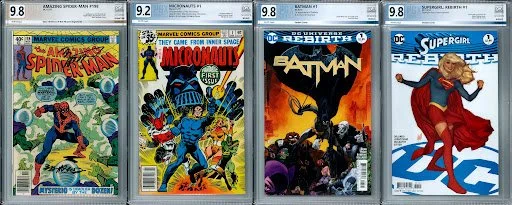
That is an enormous amount of market visibility.
But it also comes with a warning label.
A CGC book can sell privately, sell publicly multiple times, never sell at all, or even be removed from its slab while still appearing in the Census. The Collector Hub’s CGC Census and GPA recorded sales article makes exactly that point: even a few simple examples quickly complicate what can truly be known about every book and every sale.
In other words, data helps.
It does not do the thinking for you.
Global pressure makes local collecting smarter
The comic market may feel like its own little universe, but collectors live in the real economy.
An American collector is dealing with higher energy, food and shelter costs. A European collector is dealing with weak growth and stubborn inflation. An Asian collector may be in a region still growing faster than most of the world, but with inflation moving higher and global trade risks still present.
That matters because comic collecting is discretionary.
Nobody needs a CGC 9.6 copy of a Bronze Age key to survive. Nobody needs a Golden Age cover to pay the electricity bill. Nobody needs a minor first appearance because a streaming rumour has started circulating again.
But people do need joy. They do need hobbies. They do need communities. They do need things that make life feel bigger than bills, petrol, interest rates and grocery receipts.
That is the odd beauty of collecting in a difficult economy.
It becomes both less casual and more meaningful.
Less casual because collectors need to be smarter with their money.
More meaningful because the books they do choose to buy should matter.
Rarity still matters — but only with demand
Collectors love the word “rare.”
Sellers love it even more.
But rarity on its own is not enough. A rare book with no demand is just a lonely book. A common book with enormous demand may still be highly liquid. The magic happens when scarcity and demand meet in the same place.
The Collector Hub’s rarity article makes the point well: many Golden Age keys, including books like Action Comics #1, are 10, 50 or even 100 times rarer than Silver Age keys, while Showcase #4 is several times rarer than most Silver Age keys.
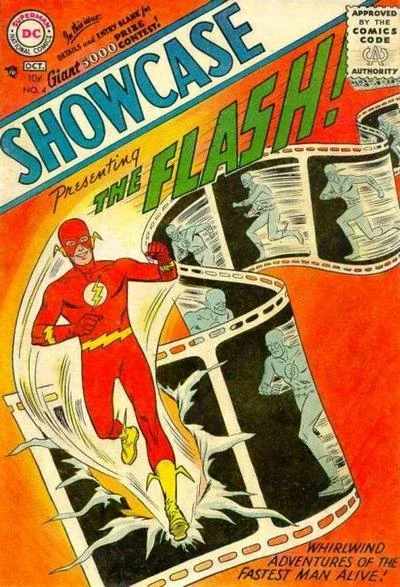
But the same article also lands on the more useful conclusion: rarity is not the end-all-be-all of collecting, and anyone thinking of comics as an investment should be skeptical when a seller leans too heavily on the word “rare.” A little research goes a long way in separating genuine scarcity from hollow marketing.
That advice feels tailor-made for the current economic climate.
When budgets are tighter, collectors cannot afford to be seduced by adjectives.
Rare. Hot. Undervalued. Investment-grade. Museum-quality.
Fine words.
Show me the sales.
The correction may be healthy
Nobody enjoys watching a book fall in value after purchase.
Let’s not pretend otherwise.
But a cooler market can be healthy for comic collecting. It punishes lazy speculation. It gives thoughtful collectors another chance at books that became irrationally expensive. It separates collectors from tourists.
During hot markets, speed is rewarded.
During slower markets, patience is rewarded.
That is better for the hobby.
It means collectors can spend more time comparing sales, watching census movement, studying grade spreads and understanding whether the book they want is genuinely scarce, temporarily fashionable, or simply over-promoted.
The current economy may not be ideal for quick flippers, but it can be excellent for collectors who are willing to build slowly.
This is where comic collecting becomes less like gambling and more like gardening.
You do not need to buy everything today.
You do not need to win every auction.
You do not need to chase every character before the trailer drops.
Sometimes the best move is to watch someone else overpay.
Comic books still provide something money cannot measure
This is where the investment conversation often gets too cold.
A comic book is not just a line item.
It is the first time you saw Spider-Man. The Batman cover you stared at as a kid. The X-Men issue you could not afford twenty years ago. The artist you followed before the market cared. The villain you always thought deserved better.
A share portfolio rarely makes someone say, “I remember where I was when I first saw that cover.”
A comic book can.
That emotional layer matters even more when the economic news is heavy. Inflation, interest rates, weak growth and job uncertainty all have a way of shrinking life down to essentials. Collecting pushes back. It gives people a reason to learn, hunt, talk, argue, remember and enjoy.
It is not always financially efficient.
But it is human.
So, should people collect comics right now?
Yes.
Carefully.
Collect because you love the books.
Collect because the history matters.
Collect because learning the market is rewarding.
Collect because owning a piece of cultural history still feels special.
But do not collect blindly.
Do not use grocery money. Do not assume every key will recover. Do not mistake asking prices for market value. Do not confuse rarity with desirability. Do not buy a book just because someone online says the character is “heating up.”
The current economic climate does not make comic collecting less important.
It makes thoughtful comic collecting more important.
Because when money is tighter, knowledge matters more. When prices are volatile, patience matters more. When hype gets punished, genuine conviction matters more.
And when the world feels uncertain, there is still something quietly powerful about opening a box, pulling out a book, and remembering why you started collecting in the first place.