What do a 1940 Superman wind-up toy, a Batman lunchbox, an original Spider-Man artwork page, and a multimillion-dollar Batmobile have in common? They all owe their existence to comic books, and all have attracted collectors willing to pay extraordinary prices. But what turns yesterday's merchandise into today's valuable collectible?
Have you ever looked around your comic book collection and wondered how much of it isn't actually made up of comic books?
Perhaps there's a vintage action figure sitting next to your CGC graded comics, a superhero poster on the wall, or an old advertising sign that once hung in a comic book shop.
Maybe you've even acquired a few items without giving them much thought. After all, a Superman toy looks perfectly at home alongside an early Superman comic.
But here's something worth considering.
What happens when the merchandise becomes as collectible, or sometimes even more valuable, than the comic books that inspired it?
These are three very different objects, yet each owes its appeal to characters and stories that began in comic books.
Nobody purchasing a Superman toy in 1940 would have imagined that, more than eighty years later, collectors might compete to acquire it for thousands of dollars.
And certainly, few people would have predicted that a television prop based on a comic book superhero would eventually command a price comparable to some of the world's most significant comic books.
So how did we arrive at this point?
And perhaps more importantly, what should collectors understand before expanding their collections into the world of comic book memorabilia?
From Comic Book Characters to Commercial Merchandise
To understand the appeal of comic book memorabilia, it's worth considering how the relationship between comics and merchandise developed.
When Superman first appeared in Action Comics #1 in 1938, his creators introduced a character who would help transform the comic book industry.
But Superman's influence quickly moved beyond the printed page.
His popularity generated demand for radio programmes, animated cartoons, motion pictures, toys, clothing, advertising, and numerous other consumer products.
Batman, who debuted in Detective Comics #27 in 1939, followed a similar path.
Later, characters such as Spider-Man, the Fantastic Four, the Hulk, and the X-Men created further opportunities for manufacturers to produce merchandise associated with increasingly recognisable superheroes.
Initially, the purpose was relatively straightforward.
Manufacturers wanted to sell products by associating them with popular characters.
A child who enjoyed Superman comics might want a Superman toy. Someone fascinated by Batman might be attracted to a Batmobile, a costume, or a lunchbox featuring the Caped Crusader.
There was little reason for manufacturers to believe that these objects would become valuable antiques.
They were commercial products intended for everyday consumption.
And that is an important distinction.
Today, many collectibles are deliberately produced for adult collectors, sometimes in limited editions, numbered runs, or special packaging designed to encourage preservation.
Much of the earliest comic book merchandise was produced for a very different market.
Children.
They played with the toys, wore the costumes, carried the lunchboxes to school, and generally treated these objects as everyday possessions.
Packaging was discarded. Parts were lost. Paint became scratched. Paper advertisements were thrown away.
And eventually, most of the merchandise was replaced by something newer.
In hindsight, the fact that many of these objects were never intended to survive may be precisely what makes certain examples so desirable today.
Superman and the Birth of Superhero Merchandise
Let's begin with a toy.
In 1940, the Louis Marx and Company manufactured the Superman Roll Over Plane, a tin lithographed wind-up toy featuring Superman attached to the tail of a small aircraft.
The toy was mechanically designed to move forward before the weight and movement of the Superman figure caused the aircraft to turn over.
Not exactly sophisticated by today's standards, but an ingenious piece of mechanical entertainment for its time.
Now consider what happened to an example of this toy more than eighty years later.
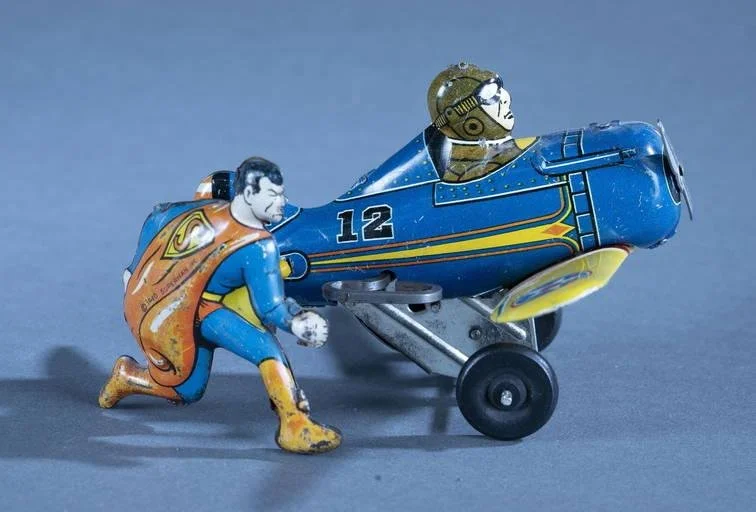
On 15 November 2023, a Superman Roll Over Plane from the Harry Matetsky Collection sold through Hake's Auctions for $3,762.90, including the buyer's premium.
The example featured a predominantly blue aircraft with yellow wings and silver tail fins. It was described as being in Fine/Very Fine condition and retained its working mechanism.
The auction attracted twelve bids.
There is something remarkable about that result.
Here is a relatively small tin toy, originally intended to entertain a child, attracting a price that could purchase a respectable collection of graded comic books.
But what exactly were collectors paying for?
Was it the age of the toy?
Its condition?
The fact that it featured Superman?
Or was it the opportunity to own a surviving piece of merchandise from the earliest years of superhero popularity?
Probably some combination of all four.
And we shouldn't overlook provenance. The toy came from a recognised collection, which may have contributed to buyer confidence and interest.
The result also demonstrates something that is easy to forget.
A collectible doesn't necessarily need to have a direct connection to a significant first appearance to become valuable.
The Superman toy didn't introduce a character or contain an important storyline.
Its importance lies in its place within Superman's early commercial history.
It represents a time when comic book characters were beginning to become household names.
For collectors interested in Golden Age comics, that connection can be particularly appealing.
But here's the caution.
A sale of $3,762.90 doesn't mean every surviving example is worth that amount.
Condition, originality, colour variation, provenance, and the level of competition between bidders can all influence the final result.
As with comic books, understanding the particular example being sold is essential.
The Batman Lunchbox: Collecting Something Nobody Thought Worth Keeping
Now let's move forward to 1966.
Batman was enjoying enormous popularity following the introduction of the television series starring Adam West and Burt Ward.
The programme helped introduce Batman to an audience that extended far beyond regular comic book readers.
Naturally, manufacturers wanted to capitalise on the character's popularity.
Among the numerous licensed products was a Batman and Robin metal lunchbox produced by Aladdin.
For a child in 1966, carrying a Batman lunchbox to school was probably more exciting than carrying an ordinary one.
For parents, it was simply another school item that would eventually need replacing.
Fast-forward to February 2018.
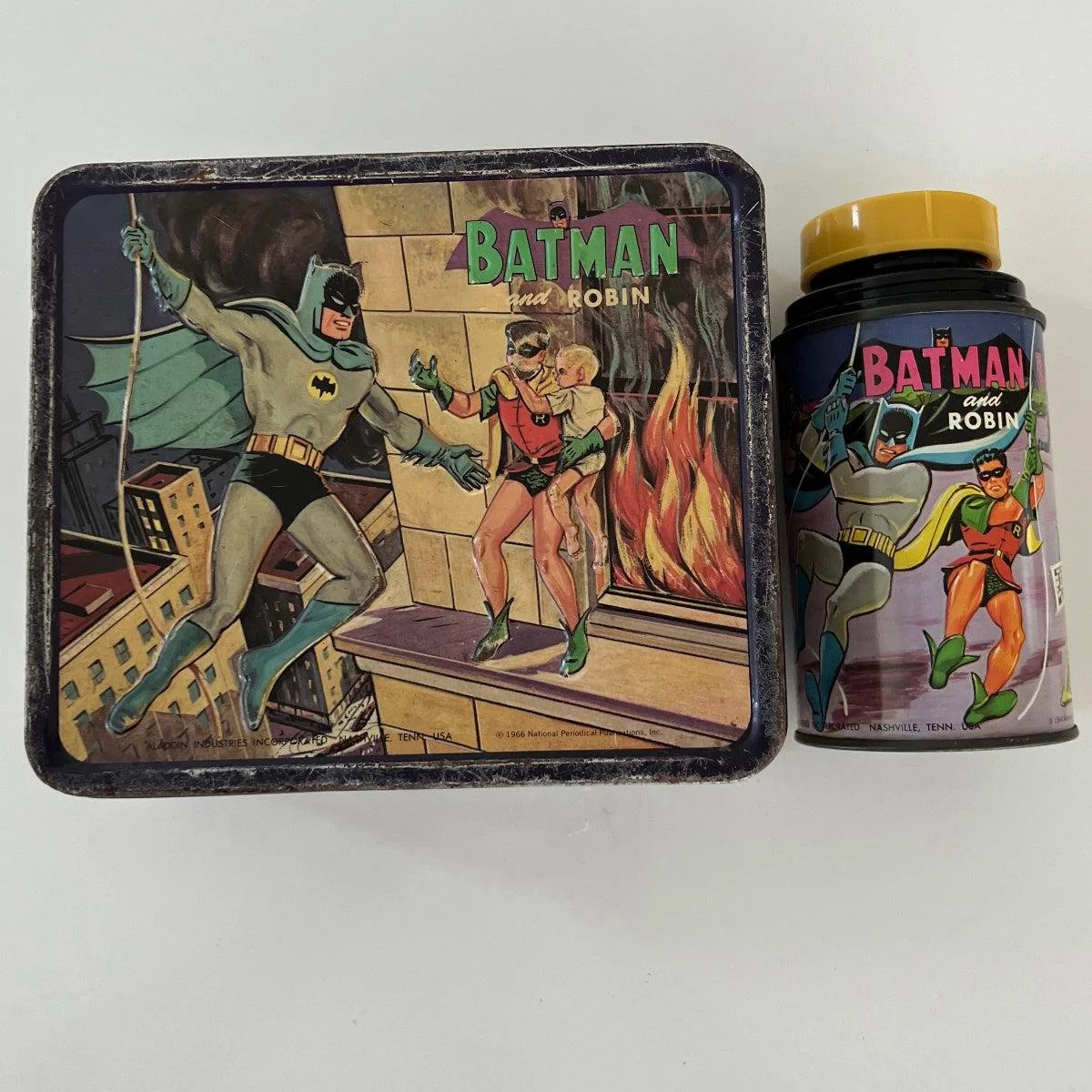
A 1966 Batman and Robin lunchbox, complete with its original thermos, sold through Heritage Auctions for $776.75.
The auction listing described a particularly well-preserved example, retaining original stickers and showing relatively little evidence of use.
Even the thermos appeared to have received minimal handling.
Think about that for a moment.
A metal lunchbox originally designed to transport sandwiches and a drink became desirable enough to attract a price approaching $800.
Why?
The answer isn't particularly complicated.
Batman is an enduringly popular character. The 1966 television series occupies an important place in popular culture. The lunchbox is visually appealing, and surviving complete examples in attractive condition can be difficult to find.
But there is another factor that doesn't appear in most auction descriptions.
Nostalgia.
Imagine a collector who carried a similar lunchbox to school in 1966.
Perhaps it was a treasured possession for several years before being damaged, discarded, or simply forgotten.
Decades later, finding another example might evoke memories that no modern Batman collectible could reproduce.
How much is that experience worth?
For one person, very little.
For someone else, considerably more.
And therein lies one of the more fascinating aspects of collecting.
The financial value of an object is often influenced by emotions that are difficult to quantify.
From Disposable Advertising to Valuable Memorabilia
Comic book merchandise wasn't limited to products sold directly to consumers.
Publishers and entertainment companies also produced large quantities of advertising material.
Posters, counter displays, promotional signs, catalogues, retailer advertisements, and giveaways all played a role in bringing comic book characters to wider audiences.
Most of this material had a limited useful life.
Once a promotion ended, the advertising was often removed and discarded.
Nobody was expected to preserve it indefinitely.
Today, however, surviving promotional material can be surprisingly desirable.
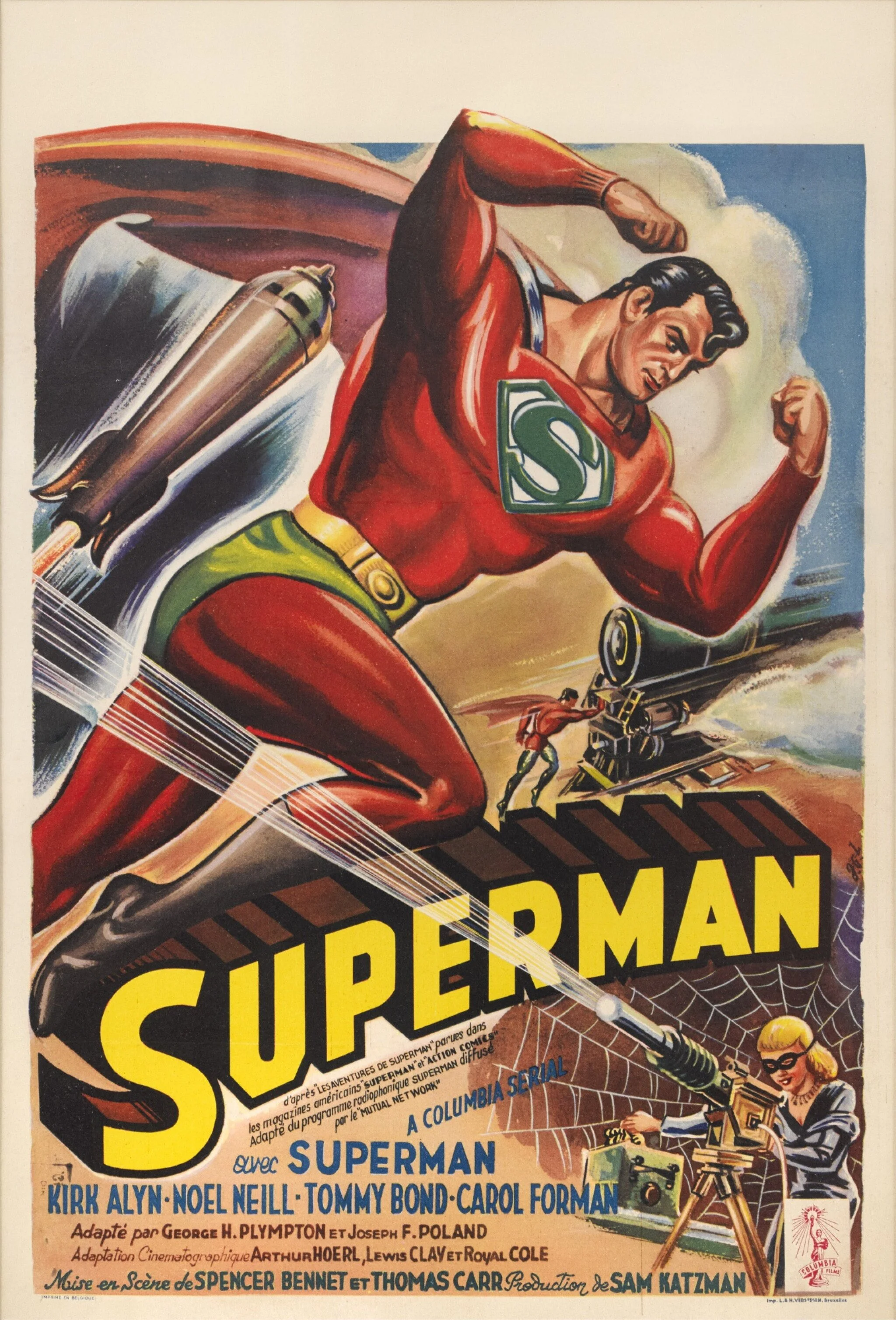
Consider a poster produced in 1948 to promote the Superman movie serial starring Kirk Alyn.
The poster was designed as a retail tie-in, featuring imagery associated with Superman comic books and encouraging customers to see the live-action serial.
It was intended to hang in locations where comic books were sold.
A functional advertising piece, nothing more.
Yet in February 2009, an example sold through Heritage Auctions for $5,676.25.
According to the auction description, approximately five examples were known at the time.
That is an extraordinarily small reported surviving population, although it is important to distinguish known examples from the actual number that may exist.
What makes this particular transaction even more interesting is that the poster had undergone extensive professional restoration.
Paper had been replaced in several areas, and the poster had been remounted and airbrushed to address damage.
Despite this, it attracted a substantial selling price.
Why would collectors pay thousands of dollars for a restored advertising poster?
Because its appeal extends beyond its physical condition.
The poster represents Superman's transition from comic book character to live-action film star.
It is a surviving piece of the commercial history surrounding one of the most influential comic book characters ever created.
For some collectors, that historical connection may be more important than having an entirely unrestored example.
There is also a useful lesson here.
Comic book collectors often associate restoration with a significant discount compared with an unrestored book.
But different collecting categories have different expectations.
Rare posters, vintage toys, and historical advertising material may be evaluated differently depending on the nature and extent of restoration.
Understanding those differences is important before applying comic book collecting assumptions to another market.
The Collectible That Was Never Supposed to Be Collected
There's a particularly interesting contradiction in the memorabilia market.
Some of the most desirable objects were created without any intention of becoming collectibles.
A promotional sign might have been displayed for a few weeks.
A toy might have been played with for several years.
A comic book spinner rack might have spent decades in a newsagent before being thrown away.
These objects were designed to perform a function.
Their long-term preservation was largely irrelevant.
Compare that with modern collectibles.
A limited-edition statue might be advertised as one of only 500 produced.
A convention-exclusive action figure might be packaged specifically to encourage collectors to keep it unopened.
A commemorative trading card might be sold already authenticated and graded.
These products are often purchased by people who intend to preserve them from the moment they are acquired.
Does that make them less collectible?
Not necessarily.
But it changes the relationship between production numbers and surviving supply.
A toy manufactured in 1940 might have been produced in substantial quantities, but only a small proportion may have survived in desirable condition.
A modern limited-edition collectible might have a smaller initial production run, yet a relatively high proportion could survive in excellent condition because purchasers immediately treated the items as collectibles.
This is why announced production limits alone don't establish future rarity or value.
The number manufactured, the number surviving, the condition of those survivors, and the number of collectors who want one are four different considerations.
And all four matter.
Original Comic Book Art: The Ultimate Piece of Memorabilia?
One category deserves particular attention, although it is worth distinguishing original comic artwork from merchandise derived from comics.
Original artwork isn't simply a licensed product inspired by a comic. It is part of the actual creative process used to produce the comic itself.
Nevertheless, both are part of the broader market for objects associated with comic book characters and their history.
Original artwork has an obvious appeal that separates it from mass-produced merchandise.
A published comic book may exist in thousands of surviving copies.
The original artwork used to create a particular page is generally unique.
Consider Marvel Super Heroes Secret Wars #8, published in 1984.
The issue contains the story explaining how Spider-Man acquired his black alien costume, an important development that would eventually lead to the creation of Venom.
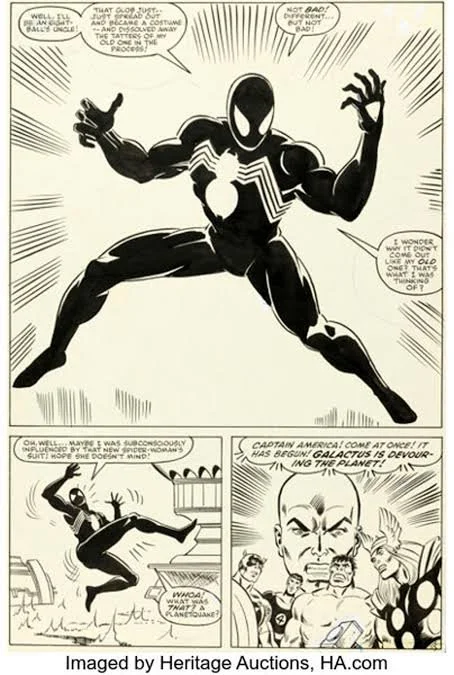
On 13 January 2022, page 25 from the issue, featuring artwork by Mike Zeck and collaborators, sold through Heritage Auctions for $3,360,000.
Three million, three hundred and sixty thousand dollars for one page.
Perhaps the most revealing comparison came from the same auction.
Page 24, which immediately precedes the famous costume sequence, sold for $288,000.
Both pages were from the same issue.
Both were associated with the same important storyline.
Yet one sold for more than eleven times the price of the other.
Why?
Because collectors were paying for the significance of the moment depicted, not simply for an original page from a particular comic book.
Page 25 captures the visual revelation of Spider-Man's black costume.
That scene has considerable importance within Spider-Man's history.
It also illustrates why some forms of comic book memorabilia have developed collecting markets that operate quite differently from the market for graded comic books.
With original art, the particular image matters enormously.
A significant cover or memorable scene may be far more desirable than an ordinary interior page from the same issue.
Even within a unique-object market, not all objects are equally desirable.
Uniqueness guarantees that no identical original production page exists.
It doesn't guarantee demand.
The $4.62 Million Batmobile: How Far Can Comic Book Collecting Extend?
Perhaps the most extraordinary demonstration of comic book characters creating value outside the printed page occurred in January 2013.
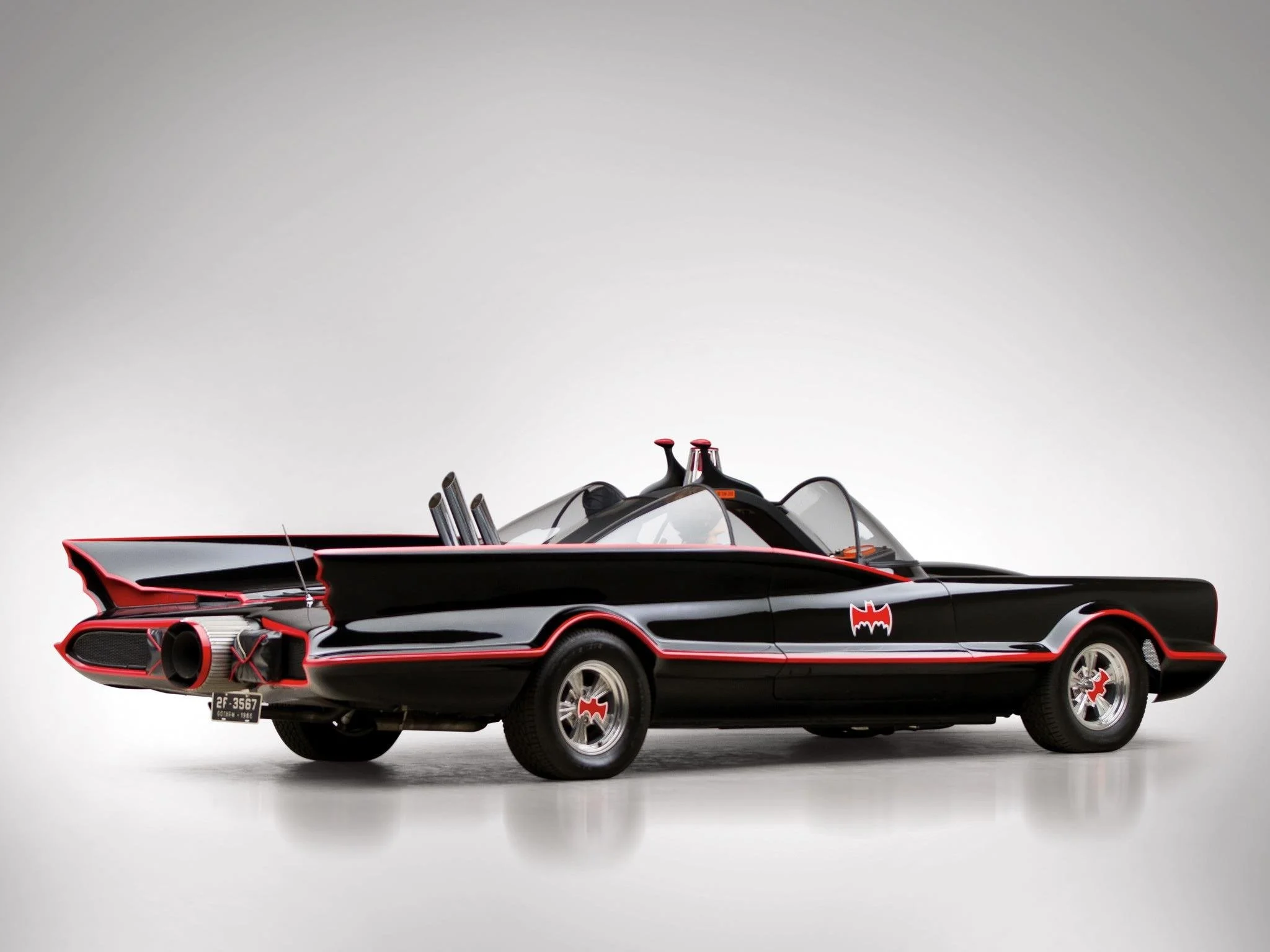
The original Batmobile used in the 1960s Batman television series was sold at Barrett-Jackson's Scottsdale auction for $4.62 million, including commission.
The vehicle began life as a 1955 Lincoln Futura concept car before customiser George Barris transformed it into the famous Batmobile.
It became one of the most recognisable vehicles in entertainment history.
But here's an interesting question.
Was the buyer purchasing a car?
A television prop?
A piece of automotive history?
Or a Batman collectible?
In reality, probably all four.
The Batmobile demonstrates how comic book characters can generate demand across several collecting markets simultaneously.
A classic car collector might appreciate its automotive significance.
A television memorabilia collector might value its connection to the 1960s series.
And a Batman enthusiast might regard it as one of the ultimate objects associated with the character.
This overlap can be extremely important.
When an item appeals to several collecting communities, the potential pool of interested buyers may be much broader than that for a collectible with only one specialised audience.
However, the reverse is also true.
An obscure promotional item associated with a minor comic book character might be genuinely rare but appeal to only a handful of collectors.
In that situation, rarity alone may be insufficient to support a substantial price.
The Batmobile's multimillion-dollar sale doesn't demonstrate that all superhero memorabilia is valuable.
It demonstrates what can happen when cultural importance, authenticity, recognisability, and demand converge around a particularly significant object.
Why Some Merchandise Becomes Valuable and Other Merchandise Doesn't
We've now considered a toy worth several thousand dollars, a lunchbox approaching $800, a promotional poster exceeding $5,000, and objects selling for millions.
What connects these examples?
And why haven't all vintage superhero products achieved similar results?
The answer is that collectible value rarely depends on a single characteristic.
Age is not enough.
There are plenty of old objects with little collector demand.
Rarity is not enough.
Something can be extremely difficult to find and still attract relatively little interest.
Condition is not enough.
An obscure item in exceptional condition may struggle to attract buyers if the character or product category has little following.
The strongest collecting markets generally develop around a combination of desirable characteristics.
Character popularity is an obvious consideration.
Superman, Batman, and Spider-Man benefit from decades of cultural recognition and substantial worldwide audiences.
Historical significance also matters.
An item associated with the early development of a character may attract greater attention than similar merchandise produced many years later.
Visual appeal shouldn't be underestimated.
An attractive promotional poster featuring iconic artwork may be highly desirable as a display piece, even to collectors who don't specialise in advertising memorabilia.
And then there is condition.
A complete vintage toy retaining its original packaging may appeal to collectors prepared to pay considerably more than they would for a damaged example.
But perhaps the most important consideration is demand.
How many people actually want the item?
And how much are they prepared to pay?
Collectors sometimes become so focused on establishing rarity that they forget scarcity doesn't create demand by itself.
It simply limits supply.
Is Memorabilia Undervalued Compared With Comic Books?
This is a question worth exploring.
Comic book collectors have become accustomed to a relatively structured marketplace.
CGC and other grading companies provide third-party assessments of condition, while population reports offer information about the number of certified copies.
GPAnalysis provides recorded sales information for CGC graded comics, helping collectors evaluate historical transactions and market behaviour.
These resources have made it easier to compare comics and establish a basis for purchasing decisions.
But the wider memorabilia market is not nearly as consistent.
Original comic artwork has an established specialist auction market, as do many categories of vintage toys.
However, less familiar promotional items, advertising displays, and unusual pieces of merchandise may appear for sale only occasionally.
There may be few recorded transactions.
There may be no reliable population estimates.
And determining whether a particular example is original, complete, or restored can require considerable specialist knowledge.
Does this make memorabilia undervalued?
Possibly in some cases.
But it also makes valuation more difficult.
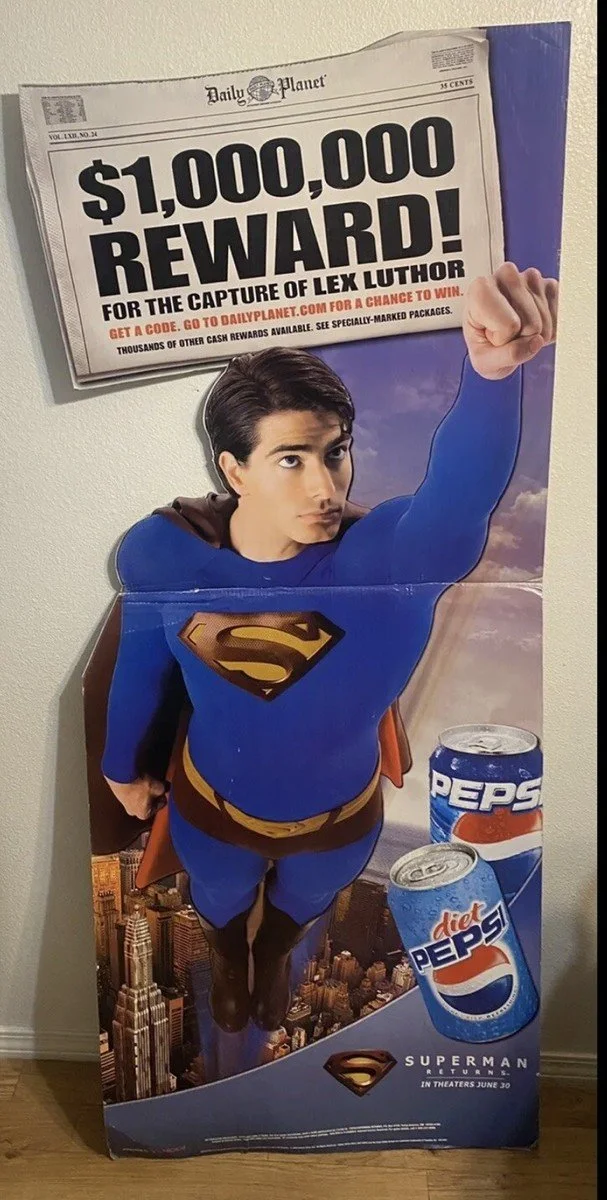
A collector might discover an unusual Superman promotional item priced at $500.
If no comparable examples have sold recently, is that a bargain?
Or is the seller asking five times what anyone else would realistically pay?
Without supporting market evidence, it's difficult to know.
The lack of recorded sales can indicate scarcity, but it can also indicate a lack of market activity.
And those are very different things.
One of the advantages of collecting established comic book keys is that there may be sufficient sales activity to help establish a reasonable market range.
With obscure memorabilia, that information may simply not exist.
The opportunity to find something overlooked is appealing.
But the possibility of overpaying is equally real.
Could Comic Book Memorabilia Be the Next Major Collecting Opportunity?
It would be easy to examine a handful of extraordinary auction results and conclude that comic book memorabilia represents an overlooked investment opportunity.
After all, a small tin Superman toy sold for nearly $4,000.
A promotional poster sold for more than $5,000 despite extensive restoration.
And the original Batmobile achieved a multimillion-dollar price.
But these results shouldn't be confused with evidence that the wider market is appreciating at the same rate.
They are examples of successful individual transactions.
To establish whether a particular category is increasing in value, we would ideally need repeated sales of comparable objects across an extended period.
We would also want to consider condition, rarity, buyer participation, and changing demand.
A single exceptional result can be misleading.
Imagine an unusual promotional poster appearing at auction after many years in a private collection.
Two determined collectors compete to acquire it, producing a final sale price of $10,000.
Does that mean another example will achieve the same result?
Perhaps.
But if one of those collectors has now satisfied their desire to own the item, the number of potential buyers at that price may have decreased.
The next example might sell for considerably less.
This is particularly relevant in small, specialised collecting markets.
High prices can sometimes reflect competition between a very limited number of individuals.
The challenge is determining whether the demand is sustainable.
In that respect, comic book memorabilia presents many of the same questions as rare comic books.
Scarcity matters.
Condition matters.
Historical significance matters.
But ultimately, someone must be willing to pay the price.
Collecting the Character Rather Than Just the Comic
One of the more appealing ways to approach memorabilia is to build a collection around a particular character rather than a single category of objects.
Imagine a collector specialising in early Superman appearances.
Their collection might include Golden Age Superman comics, a 1940s tin toy, original advertisements, promotional material, and vintage merchandise associated with the character's early years.
Each object contributes something different.
The comics document Superman's fictional adventures.
The advertisements demonstrate how publishers promoted those adventures.
The toys illustrate the character's popularity among children.
And the promotional material provides evidence of Superman's expansion into other forms of entertainment.
Together, the items tell a much broader story than the comics alone.
A Batman collector could approach the hobby in much the same way.
Golden and Silver Age comics might form the foundation of the collection, complemented by vintage Batmobile toys, television merchandise, trading cards, promotional posters, and other objects associated with the character.
For collectors who enjoy researching comic book history, this approach can be particularly rewarding.
It also provides an alternative for those who cannot afford certain significant comic books.
A collector may never own a copy of Detective Comics #27, but they might be able to acquire an interesting piece of early Batman merchandise.
Likewise, someone unable to purchase Action Comics #1 could pursue objects representing Superman's earliest commercial popularity.
Of course, the rarest pieces of merchandise can also be prohibitively expensive.
But there are numerous categories and price levels available.
And unlike the pursuit of a particular CGC grade, collecting memorabilia often provides opportunities to discover objects that are unfamiliar to much of the comic book collecting community.
When Nostalgia Becomes a Financial Consideration
We've discussed rarity, condition, and historical significance, but nostalgia deserves special attention.
For many collectors, the attraction of vintage merchandise is closely connected to personal experience.
Someone who grew up reading Spider-Man comics in the 1970s might remember owning a Mego action figure.
A Batman enthusiast might remember watching the television series while playing with a toy Batmobile.
Another collector might remember spending their pocket money at a local newsagent, searching through the comic books displayed on a rotating spinner rack.
Years later, these memories can influence what collectors are willing to purchase.
Interestingly, the buyer of the original 1966 Batmobile, Rick Champagne, was reported to have wanted the vehicle since childhood.
That tells us something important.
Even at the highest levels of the memorabilia market, collecting decisions can be influenced by the same childhood attachments that encourage someone to spend a few hundred dollars on a vintage toy.
But nostalgia can also change over time.
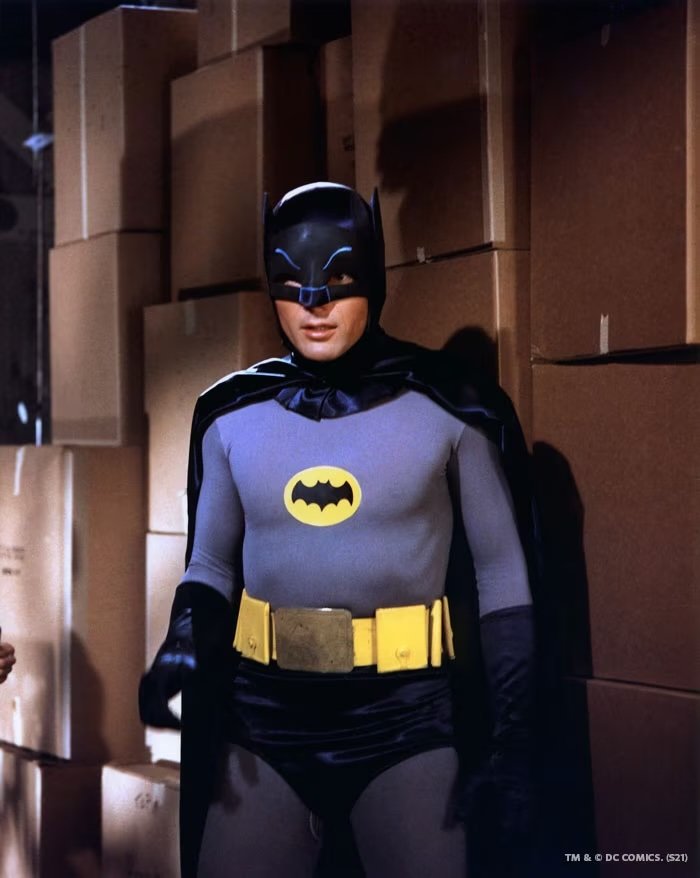
The generation that grew up with the original Batman television series may have different collecting interests from those who discovered Batman through the films of the late 1980s, the animated series of the 1990s, or more recent adaptations.
As collecting audiences change, demand for particular categories of memorabilia may change with them.
Some objects may retain their appeal because of their enduring historical significance.
Others might depend more heavily on the memories of a particular generation.
This is an important consideration for anyone purchasing memorabilia with future resale value in mind.
An object that evokes strong memories for today's collectors may not necessarily have the same emotional significance for collectors twenty or thirty years from now.
And without that demand, scarcity alone may not sustain its price.
The Difference Between Collecting and Investing
There is a danger in approaching every collectible as a potential investment.
We hear about the multimillion-dollar auction results, the rare toys, and the unexpected discoveries.
But we hear far less about the merchandise purchased for substantial amounts that later struggles to find another buyer.
Not every old superhero toy is valuable.
Not every limited-edition statue will appreciate.
And not every promotional item described as rare will attract meaningful demand.
Comic book memorabilia can be a rewarding area of collecting, but it requires research and an understanding of the particular market.
For someone considering a significant purchase, it is worth asking a few questions.
Is the item authentic?
How many comparable examples have been offered for sale?
Does it retain its original components?
Has it been restored?
Is there evidence of genuine collector demand?
And, perhaps most importantly, would I still be happy owning this item if its market value never increased?
That final question can be particularly revealing.
A collector who genuinely enjoys an item may derive considerable satisfaction from owning it, regardless of future financial performance.
Someone purchasing solely because they expect the price to rise may have an entirely different experience.
There is nothing wrong with considering the financial aspects of collecting.
But enjoyment and investment returns are not necessarily the same thing.
Final Thoughts: Sometimes the Merchandise Tells the Bigger Story
Comic book collecting has traditionally focused on the printed comic.
We discuss first appearances, significant storylines, condition, census populations, rarity, and recorded sales.
And understandably so.
The comic books are where these characters and stories began.
But the merchandise that followed provides another perspective on comic book history.
A Superman wind-up toy from 1940 demonstrates how quickly the Man of Steel became commercially popular.
A Batman lunchbox from 1966 reflects the character's expansion into mainstream television and popular culture.
A promotional poster from 1948 captures an important moment in Superman's transition to live-action entertainment.
And the original Batmobile illustrates how a fictional character created for comic books could eventually inspire an object worth millions of dollars.
Some of these items have become valuable.
Others may never be worth very much.
But all contribute to the history surrounding the comics we collect.
The remarkable auction prices are certainly interesting, particularly when considering the relatively modest original purpose of many of these objects.
Yet the lesson isn't simply that old comic book merchandise can be worth money.
It's that the cultural influence of comic books extends far beyond the pages themselves.
The characters we collect have been part of children's toys, advertising campaigns, television programmes, films, and everyday life for generations.
And the objects associated with that history have become collectibles in their own right.
Perhaps the next time we're looking through a comic book collection, we should pay a little more attention to the vintage toys, promotional posters, or unusual merchandise sitting alongside the comics.
Because while a first appearance may establish where a character began, the merchandise can tell us something equally interesting.
Just how far that character travelled beyond the comic book page.
And sometimes, the item sitting next to the comic might be worth more than the comic itself.