What Comic Book Collectors Are Actually Buying in 2026
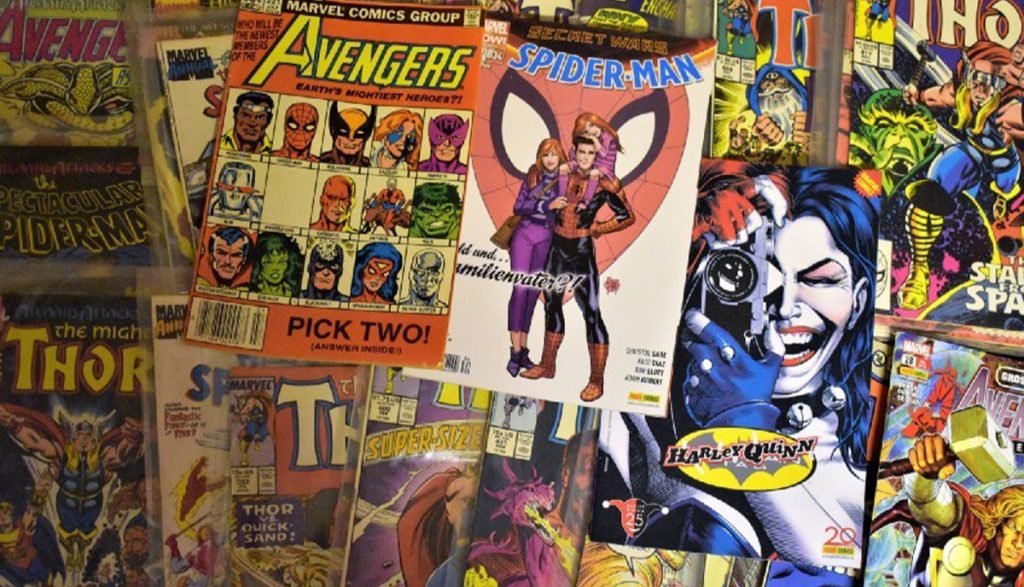
Have you noticed the hobby feels confusing right now?
One collector says the market is dead. Another just watched a Golden Age book break another record. A third person is buying Absolute Batman variants before their local shop can put them on the wall. Everyone is looking at the same hobby, but they are not looking at the same part of the hobby.
That is probably the first lesson of 2026: there is no single comic book market.
There is a reader market. There is a slab market. There is a Golden Age market. There is a modern variant market. There is a manga and graphic novel market. There is also a “I bought this in 2021 and would prefer not to talk about it” market.
So, what are collectors actually buying?
1. They are buying books they understand
This sounds obvious. It is not.
During the 2020–2021 boom, many buyers were not really buying comic books. They were buying momentum. A character was rumoured for a show, a YouTuber mentioned a book, three copies sold on eBay, and suddenly a $40 comic became a $400 comic.
That game still exists, but fewer serious collectors are playing it.
In 2026, the better buyers are asking quieter questions:
Is this book historically important?
Is it genuinely difficult to replace?
Is the character demand durable?
Is the grade desirable for the issue?
Am I buying the book, or am I buying someone else’s sales pitch?
That mindset lines up with the best advice from previous Collector Hub pieces: buy what you know and understand, because many collectors “don’t know what they don’t know.”
2. They are buying Golden Age scarcity
Golden Age remains the grown-up table.
That does not mean every Golden Age book is a great buy. Plenty are obscure, ugly, common enough, or simply not in demand. But when high demand meets true scarcity, buyers are still showing up with serious money.
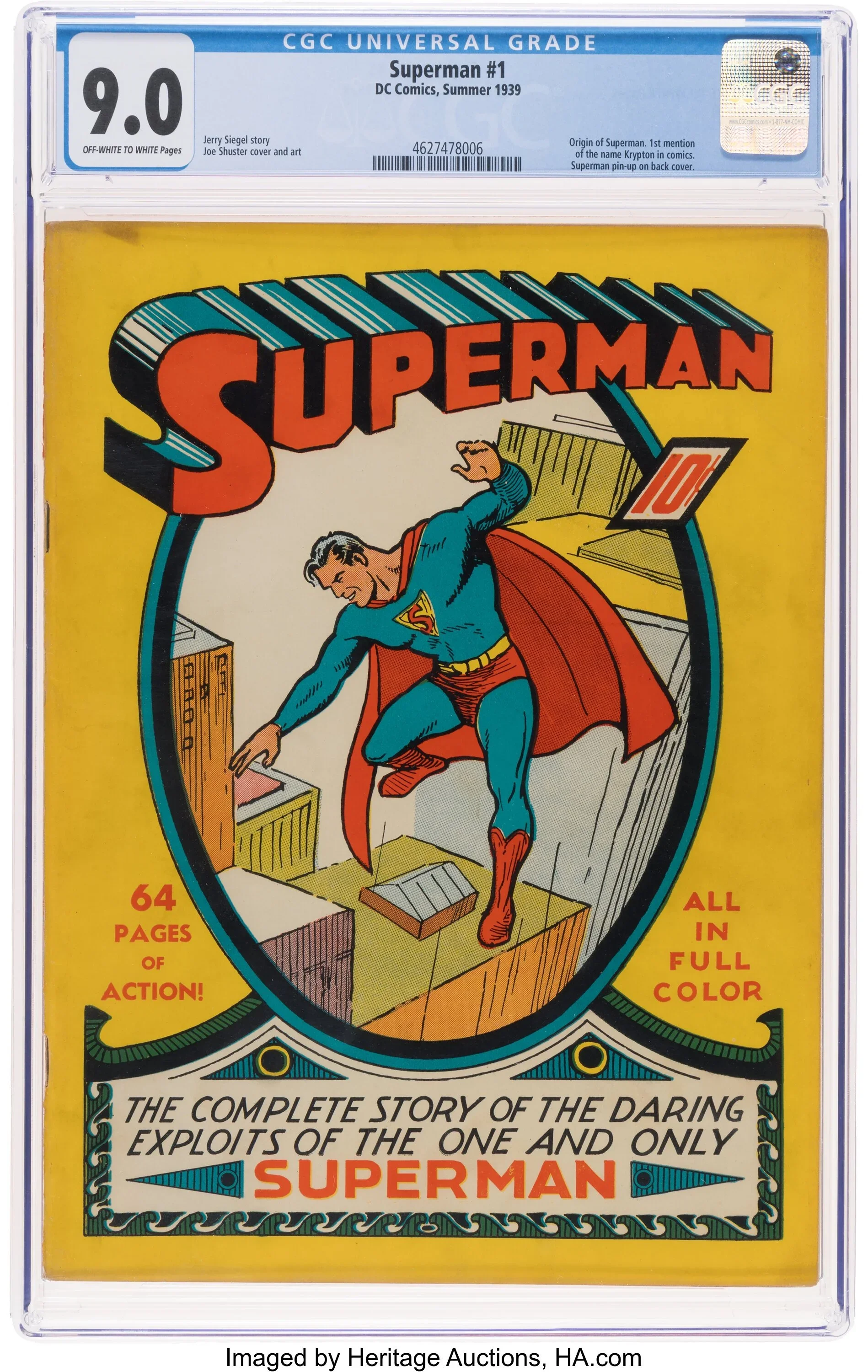
The clearest public example was the CGC 9.0 copy of Superman #1 selling for $9.12 million in November 2025, becoming the most expensive comic book ever sold.
That sale does not mean the average collector is buying million-dollar books. Of course not. What it does show is that the very top of the hobby still believes in vintage comic books as cultural artefacts, not just collectibles.
The same logic applies further down the ladder. Pre-1950 superhero, horror, science fiction, good girl art, classic covers, Schomburg covers, Baker covers, and scarce war-era books are still attracting attention when the price is sensible.
The word “rare” is abused constantly in comics. A modern ratio variant may be uncommon. A warehouse find may look scarce until 200 copies appear. But true Golden Age scarcity is different. As The Collector Hub has previously noted, rarity is driven by print run, attrition, and market availability — not just a seller typing “RARE!!!” in the listing title.
3. They are buying affordable alternatives to first appearances
Not everyone can buy Amazing Fantasy #15, Fantastic Four #1, X-Men #1, Showcase #4, or Hulk #1.
Actually, let’s be more honest: most collectors cannot.
So, what do they buy instead?
They buy second appearances. Early appearances. Classic covers. First solo stories. Origin retellings. First team-ups. Important villain covers. Books that feel connected to the character without requiring a second mortgage.
This is one of the healthiest parts of the market because it is based on collecting intelligence rather than pure wallet size. A collector who cannot afford the first appearance may still build a wonderful run of meaningful books around the same character.
That approach mirrors the logic in “What If I Can’t Afford the First Appearance?”, which argues that many classic covers featuring favourite superheroes can be acquired for a fraction of the price of the major Golden and Silver Age first appearances.
In 2026, this is not just a budget strategy. It is a taste strategy.
Collectors are realising that owning the most obvious book is not the only way to collect well.
4. They are buying current books again — but selectively
The new comic market is not dead. In fact, it has been surprisingly strong.
ICv2 reported that U.S. and Canadian comics and graphic novel sales reached a new high in 2025, with direct-market comic sales up 30% year over year and graphic novel sales up 28%.
That matters because it shows actual readers and shop customers are still participating. The hobby is not only people trading slabs back and forth.
In early 2026, DC has had real momentum. ICv2 reported DC held a 34.7% comic-store market share in Q1 2026, ahead of Marvel at 29.4%.
Collectors are buying titles that feel like events, but the word “event” has changed. They are less interested in bloated crossovers and more interested in books with a clean hook, strong art, and a sense that other readers are genuinely excited. That helps explain attention around books like Absolute Batman and other modern titles appearing in current market chatter and sales-tracking reports. CovrPrice’s April 2026 content, for example, highlighted collector focus on Absolute Batman exclusives, a McFarlane key, and renewed interest in Static.
Modern buyers are still buying heat. They are just less willing to pretend all heat lasts.
5. They are buying graded books where the math still works
CGC books remain central to the market, but the easy-money slab era is over.
In 2026, buyers are more cautious about modern 9.8s, especially books with large print runs, thin demand, or no reason to exist beyond being “the variant.” The question is no longer, “Is it a 9.8?” The question is, “Who is the next buyer, and why would they care?”
For older books, slabs still provide confidence. For rare books, they help establish grade, restoration status, and comparability. For modern books, they only help when demand is strong enough to justify the grading cost and premium.
This is where GPAnalysis, CGC Census data, and actual recorded sales matter. As The Collector Hub has previously argued, rare books can be difficult to price because sales data may be sparse, meaning collectors need to understand grade movement, comparable books, and the limits of extrapolation.
The good buyer in 2026 is not just asking, “What did the last copy sell for?”
They are asking, “Was that sale normal?”
6. They are buying books with eye appeal
Eye appeal has always mattered, but 2026 buyers seem less robotic about the number on the label.
A poorly wrapped 9.4 may lose to a beautiful 9.2. A fresh-looking 4.0 Golden Age book may beat a technically higher copy with brittle pages, stains, or a weak presentation. A lower-grade key with strong colour and complete pages may be easier to love than a higher-grade copy with distracting defects.
This is especially true in Golden Age and early Silver Age, where no two copies feel exactly the same.
The slab gives the grade. The book still has to make you want to own it.
7. They are buying some restored books — carefully
The purple label is not being embraced by everyone. It probably never will be.
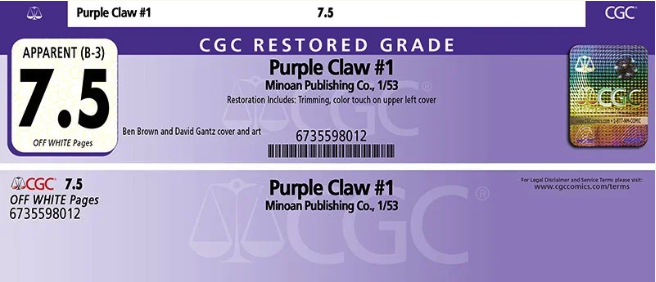
But the smarter conversation in 2026 is more nuanced. Restored books are not automatically bad purchases. Surprise restoration is bad. Undisclosed restoration is bad. Paying blue-label money for a heavily restored book is bad.
But a disclosed restored copy of a major Golden Age grail may be the only realistic path for some collectors.
The Collector Hub’s purple label article put it well: the purple label is “only deadly when it comes as a surprise,” and restored grails can make sense when the buyer is fully informed and the price reflects the work done.
In other words, 2026 buyers are not necessarily rejecting restored books. They are rejecting lazy pricing.
8. They are buying graphic novels, manga, and collected editions
Not every comic buyer is hunting slabs.
A large part of the market is simply reading. Graphic novels and manga remain important, and the data supports that. ICv2 reported that manga sales in the book channel grew in 2025, with dollars up 4.6% and units up 8.1%, returning to growth after declines in 2023 and 2024.
This matters for collectors because readers often become collectors. Not always, and not immediately. But today’s reader of a collected edition may become tomorrow’s buyer of a first appearance, original art page, signed book, or high-grade key.
The hobby needs readers. Without readers, collectors eventually end up trading nostalgia with each other in a shrinking room.
9. They are buying niches
This may be the most interesting part of 2026.
Collectors are not all chasing the same 50 keys. Many are going deeper into niches:
Canadian price variants.
Newsstand editions.
Mark Jewelers inserts.
Golden Age horror.
Romance comics.
Baker covers.
Schomburg airbrush covers.
Pre-code crime.
Foreign editions.
Pedigrees.
Signed books.
Low-census oddities.
Original-owner collections.
This is where expertise matters. A generalist may miss what a specialist sees immediately. The best collectors often become experts in a narrow lane rather than pretending to know every comic ever printed.
That idea appears in The Collector Hub’s discussion of advanced collectors: nobody is truly an expert across all comic books; rather, serious collectors often become experts in particular niches, books, or eras.
That is exactly where many 2026 buyers are heading.
What they are not buying
Collectors are still buying plenty, but they are more suspicious of certain things.
They are less excited by common modern books in average grades.
They are more careful with movie-rumour speculation.
They are less willing to overpay for manufactured scarcity.
They are wary of books that only matter because someone said they were “heating up.”
They are cautious with slabs where the grading fee created more value than the comic itself.
The rookie mistake in 2026 is not buying a bad comic. We all do that occasionally.
The rookie mistake is buying a comic without understanding why the previous owner wants out.
Final thoughts
So, what are comic book collectors actually buying in 2026?
They are buying quality.
They are buying scarcity.
They are buying affordability.
They are buying current books with real reader demand.
They are buying niches they understand.
They are buying books that still feel good after the hype has moved on.
That last point matters most.
A good comic purchase should survive silence. No trailer. No rumour. No influencer video. No auction countdown. Just the book, sitting in your collection, still making sense.
That is the 2026 market in one sentence:
Collectors are still buying, but they are asking better questions before they do.