In the March 10–23, 2026 GPAnalysis Top of the Stack data, the Silver Age did not just perform well — it gathered around one franchise with unusual force. Fantastic Four (1961) led the 1960s in dollar sales at $808,154, ahead of Amazing Spider-Man (1963) at $280,593, while Fantastic Four #48, #49, and #52 all landed among the decade's most traded issues. That is not random churn. That is the market leaning hard into one of Marvel's deepest and most historically loaded runs.
What makes this especially interesting is that the Fantastic Four story here is doing two things at once. First, it is carrying real dollar weight. Second, it does so through a cluster of issues that collectors instantly recognise as myth-building. This was not a one-book spike. It was a concentrated show of strength around a title that still sits close to the foundation of the Marvel Universe.
Source: GPAnalysis.com, sales recorded from March 10–23, 2026.
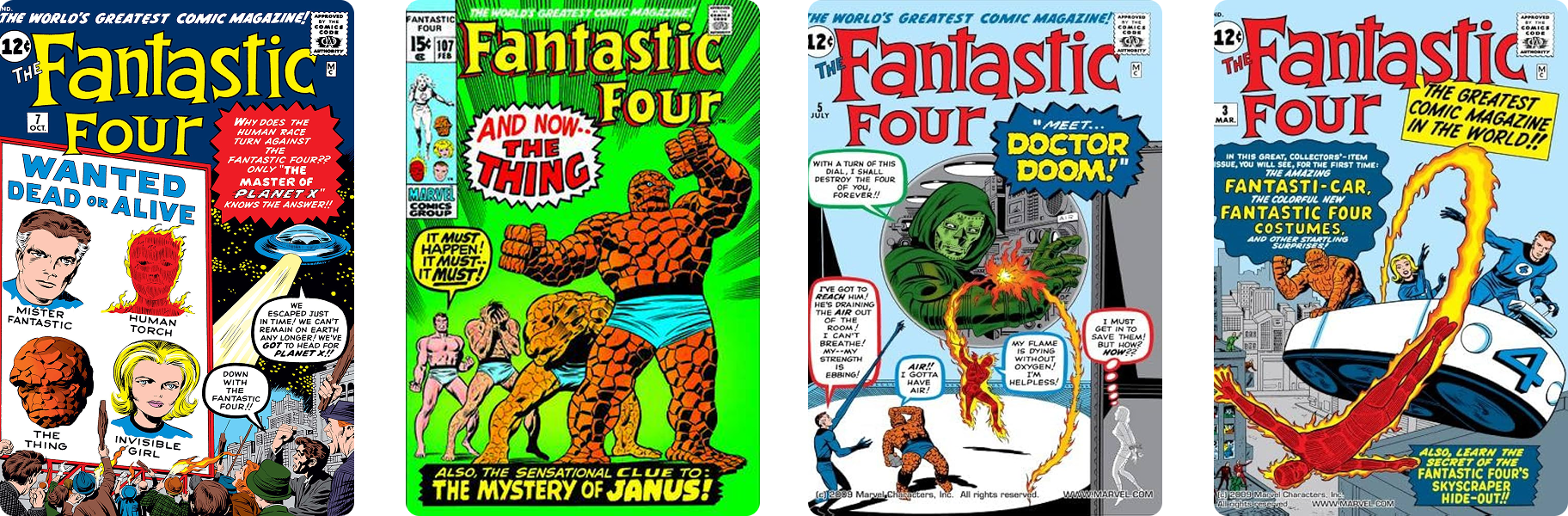
The Silver Age was broad, but Fantastic Four was the centre of gravity.
The 1960s leaderboard was packed with heavyweights. Amazing Spider-Man, Amazing Fantasy, X-Men, and Avengers all contributed meaningful sales. But Fantastic Four stood clearly above the field in dollar terms, which matters because this is one of the few Silver Age titles that can compete on several collector fronts at once: first appearances, cosmic mythology, historical importance, and deep character legacy.
That matters in a fortnightly dataset because not every strong title wins the same way. Some titles win on copy count. Some win because one giant sale distorts the line. Fantastic Four won here because it has a bench of issues that collectors continue to come back to — books that do not just matter in continuity, but in the broader history of Marvel storytelling.
Marvel itself still frames Fantastic Four #48–50 as one of the defining Lee and Kirby collaborations and a pivotal shift in the series, marking the arrival of the Silver Surfer and Galactus and pushing the title into a larger cosmic mode.


Why this cluster matters so much
Look at the issues that surfaced:
Fantastic Four #48
Fantastic Four #49
Fantastic Four #52
That list alone tells you why the title hit so hard.
Fantastic Four #48 is the opening chapter of the Galactus trilogy and the debut window for the Silver Surfer, with Marvel describing it as the beginning of one of the greatest storylines in comic-book history.
Fantastic Four #49 sits in the middle of that same cosmic event, making it part of the same collector gravity well, with Marvel continuing to treat #48–50 as a single landmark arc built around the Surfer and Galactus arriving on Earth.
Then Fantastic Four #52 brings an entirely different kind of power: the first appearance of Black Panther, T'Challa, and Wakanda. Marvel explicitly identifies the issue as Black Panther's debut and one of the all-time great Marvel books.
That is why this fortnight is so revealing. Fantastic Four was not driven by one note. It was powered by cosmic mythology on one side and the weight of its historic first appearance on the other.
Fantastic Four #48 and why it keeps pulling the market back
If there is one issue to slow down on, it is Fantastic Four #48 (1966).
This is the book where the ground shifts. Marvel's own history pieces point to December 9, 1965, as the date "the world changed forever" with the coming of Galactus, and describe Fantastic Four #48 as the start of the Galactus storyline and the debut era of the Silver Surfer.
That matters because #48 is not just another first-appearance book. It is a tone-setter. It announces that Marvel's universe is about to get bigger, stranger, and more cosmically ambitious. The title stops being simply about super-powered adventure and begins to reach toward myth. The Surfer arrives as a herald. Galactus arrives as a force of nature. Earth suddenly feels small.
Collectors respond to that kind of issue differently. A book like Fantastic Four #48 does not live only on checklist significance. It lives on atmosphere, scale, and reputation. It is the kind of comic that people know even if they have never owned it. Marvel repeatedly frames it as one of the classic Lee-Kirby achievements, and that kind of institutional memory matters because it keeps the book visible across generations.
It also helps that #48 is not isolated. It belongs to a trilogy. That gives collectors multiple entry points — #48 for the opening blow, #49 for the escalation, #50 for the resolution — while still leaving #48 with the prestige of being the first door into the event. That is how a title builds repeat demand. It is not one key in a vacuum. It is a key attached to a larger, permanent story structure.

Fantastic Four #52 gave the title a second lane of importance
If #48 brings cosmic grandeur, Fantastic Four #52 brings historical weight of another kind.
Marvel identifies Fantastic Four #52 as the first appearance of Black Panther, T'Challa, and Wakanda, with Stan Lee and Jack Kirby introducing one of Marvel's most iconic heroes in July 1966. The story is built around T'Challa testing the Fantastic Four in Wakanda before the alliance forms, and Marvel continues to spotlight that debut as a landmark moment in the company's history.
That gives the title a second collector engine. One side of the run speaks to Marvel's cosmic imagination. The other speaks to one of the company's most significant character debuts. When both of those lanes are active in the same fortnight, the result is exactly what the data showed: a title that separates itself from the rest of the Silver Age field.
What this says about the market
The bigger lesson is that Silver Age strength is not always about the single most famous hero. Sometimes it is about the title with the deepest concentration of foundational moments.
Spider-Man remains the market's most dependable volume engine. But this fortnight shows that Fantastic Four can still take over when collectors lean toward books that built Marvel's architecture. Galactus. Silver Surfer. Black Panther. Wakanda. These are not side notes. These are pillars.
That is why Fantastic Four owned the Silver Age fortnight. Not because it was louder than every other title, but because it holds too many of the moments the market keeps returning to when it wants significance, legacy, and story all at once.
Final Panel
This fortnight's Silver Age data was not just a win for Fantastic Four. It was a reminder of what makes the title so durable. It is one of the rare bookshelves in the hobby where mythology, first appearances, and historic reputation all stack on top of each other. When that happens, a title does not just appear in the market. It takes command of it.