The March 10–23, 2026, GPAnalysis Top of the Stack data showed something bigger than a single hot Batman book or even a single strong Batman decade. It showed Batman stretching across the market's full timeline.
Batman-related strength appeared in the 1940s, 1950s, 1970s, 2000s, and 2020s. In the oldest lanes, Batman (1940) and Detective Comics (1937) helped anchor the Golden Age and post-Golden Age. In the 1950s, both titles were revived. In the 1970s, Batman (1940) still landed among the decade's top sellers. In the 2000s, Batman (1940) resurfaced in the top-volume titles. Then, at the newest end of the market, Absolute Batman (2024) dominated the 2020s by both volume and dollar sales.
That is what makes Batman different. Some characters dominate one era. Batman keeps reappearing wherever collectors are looking.
Source: GPAnalysis.com, sales recorded from March 10–23, 2026.
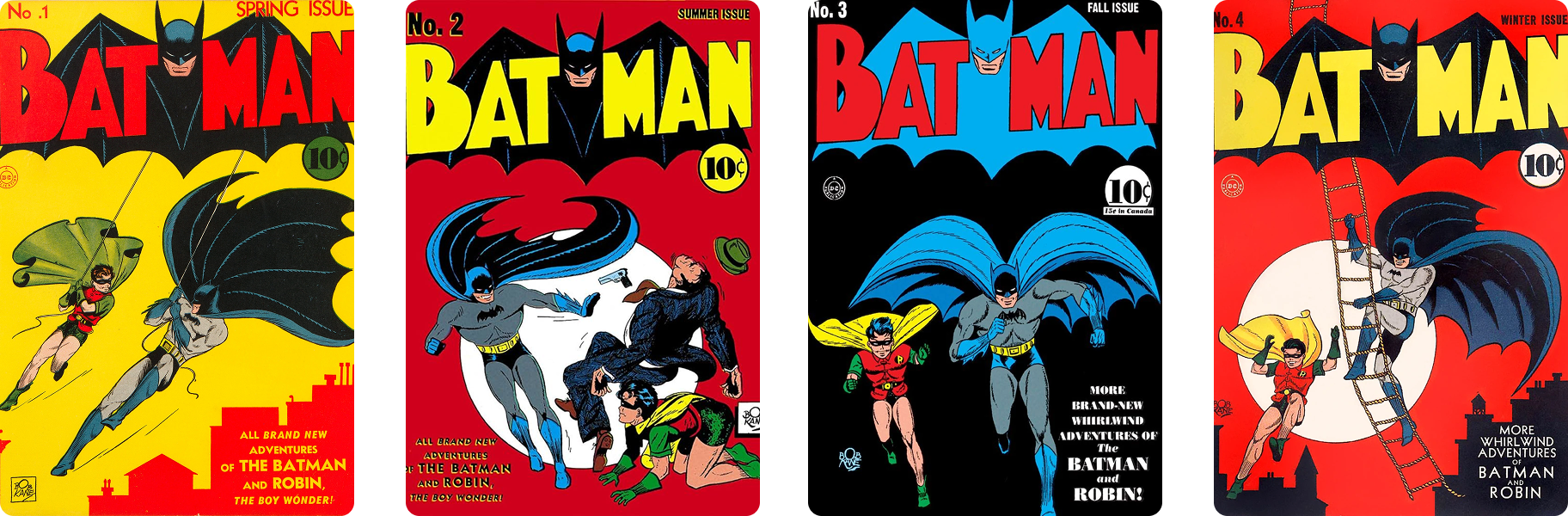
Batman is not just a title — it is a multi-era collector system
The data makes that clear, within the fortnight:
Batman (1940) led the 1940s by volume
Batman (1940) led the 1950s by volume and sales
Batman (1940) appeared in the 1970s top five by sales
Batman (1940) appeared in the 2000s top five by volume
Absolute Batman (2024) led the 2020s in both volume and sales
Detective Comics (1937) was a major force in the 1930s, 1940s, and 1950s
The top sale of the whole fortnight was Detective Comics #1 CGC 8.5, which sold for $638,250.
That spread tells us Batman's demand isn't built around a single nostalgia pocket. It is built around a franchise that keeps renewing itself while still pulling authority from its earliest foundations.
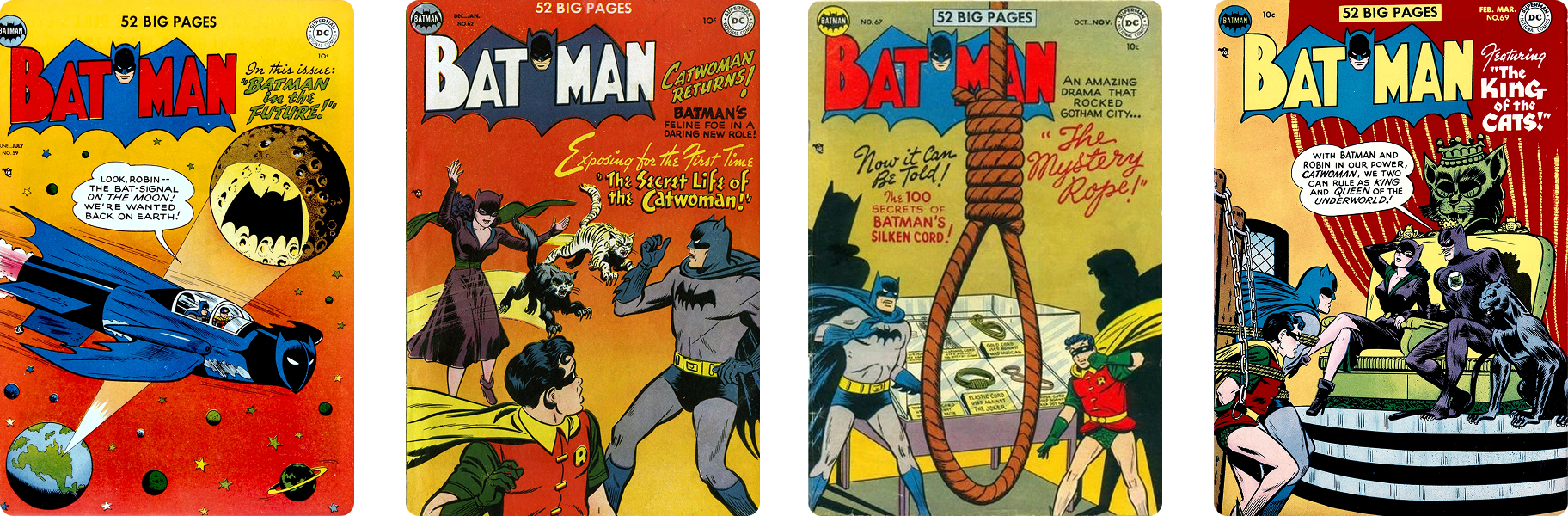
The oldest Batman lane still carries prestige: Detective Comics and Batman #1
At the oldest end, Batman's market presence still begins with Detective Comics (1937) and Batman (1940).
DC describes Batman's first solo title, Batman #1 (1940), as the book that introduced both The Joker and Catwoman, making it one of the defining cornerstones of the character's publishing history. DC also notes that Gotham City itself was first named in Batman #4 (1941).
That helps explain why Batman (1940) remains such a strong title in vintage-era trading. It is not just old. It is foundational. It carries the weight of early villain mythology, early Gotham-building, and the first true expansion of Batman beyond anthology space.
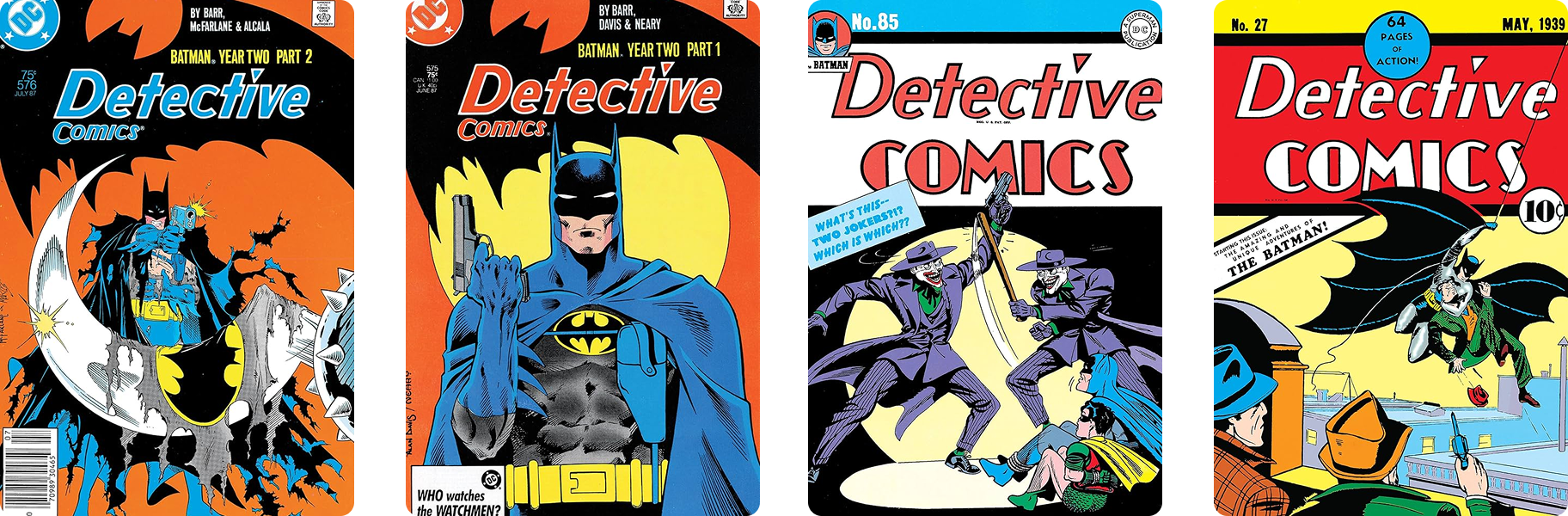
Meanwhile, Detective Comics (1937) still functions as the prestige lane. While the dataset showed it strongly in the 1930s, both in volume and sales, again in the 1940s and 1950s, and then as the top single sale of the whole fortnight with Detective Comics #1 CGC 8.5, that kind of result reinforces something the market keeps reminding us: when early Detective books surface, they still bring gravity.
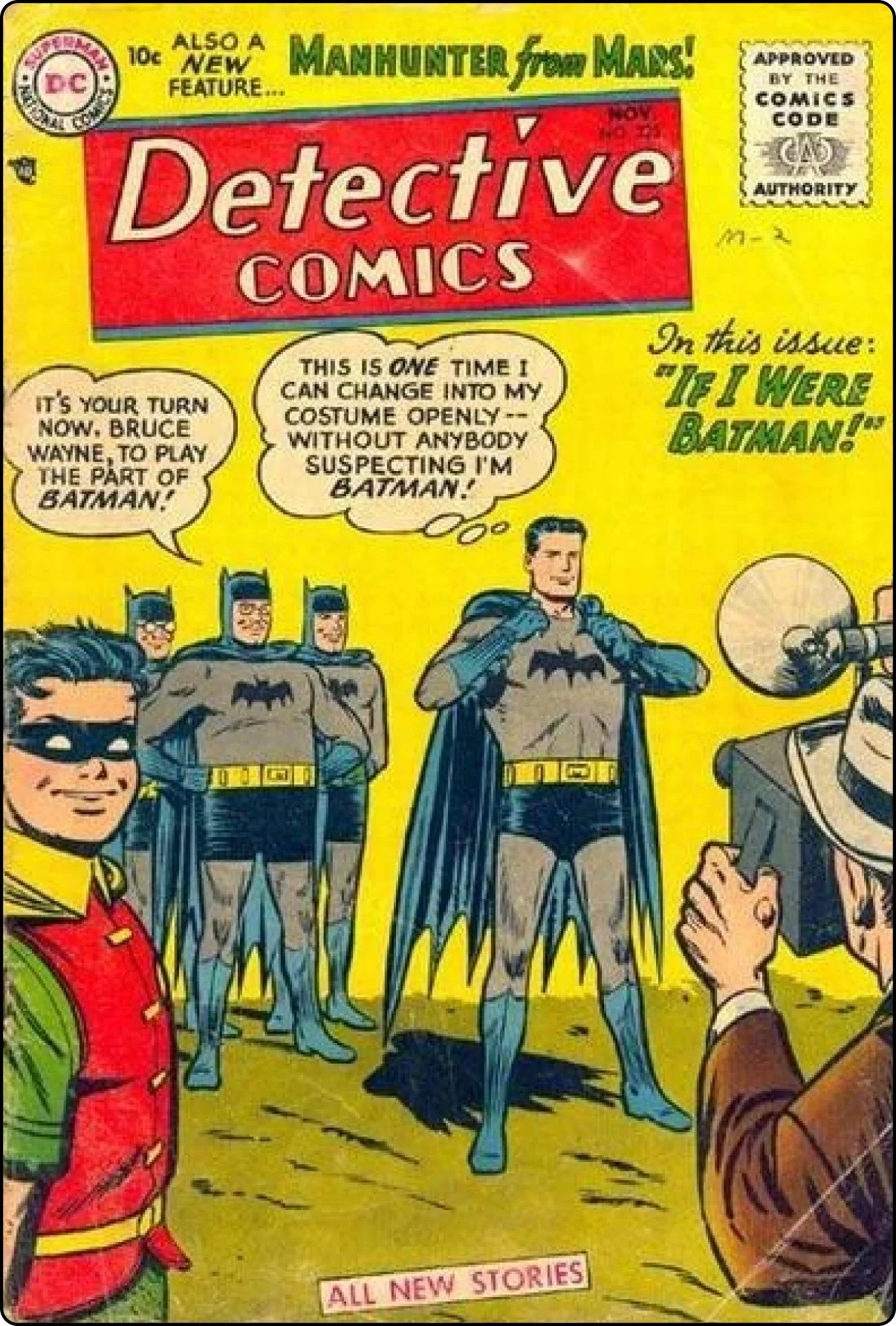
Detective Comics #225 is a reminder that Batman titles carry more than Batman
One of the most traded 1950s issues in your dataset was Detective Comics #225 (1955).
What is especially interesting about that book is that it is best known not as a Batman landmark, but as the first appearance of Martian Manhunter. The Grand Comics Database identifies "The Strange Experiment of Dr Erdel" in Detective Comics #225 as the key story in the issue, and the book has since been reprinted multiple times because of that significance.
That matters for the bigger Batman-market story because it shows how Batman-branded lanes often hold value beyond Batman himself. Detective Comics is not simply a Batman container. It is one of DC's oldest and most historically important publishing homes, and that gives it a second kind of collector relevance. When you buy into Detective, you may be buying Batman history, DC history, or both.
So when Detective Comics appears across multiple decades of the market data, it is doing more than one job at once.
The 1970s prove Batman can still matter even outside his peak-origin eras
Batman (1940) still appeared among the top five titles by sales in the 1970s.
That may look smaller next to Bronze Age Marvel heat like Hulk #181, Giant-Size X-Men #1, or Amazing Spider-Man #129, but it says something important. Batman does not disappear when the market shifts to another wave of key issues. He remains in the conversation.
This is one of the franchise's great market advantages: Batman can survive different collector moods. He can sit inside Golden Age prestige, ride through Silver and Bronze nostalgia, remain visible in later-era runs, and then reassert himself through relaunches.
The 2000s show Batman never really leaves the liquidity layer.
The 2000s list had Batman (1940) in the top five by volume.
That is easy to overlook, but it is useful. It suggests Batman is not only a high-end or nostalgia-driven property. He also remains part of the market's ongoing trading layer. Collectors keep coming back to Batman across long publication runs because there is always another entry point: key appearances, classic covers, famous story arcs, relaunch jumping-on points, and enduring villain books.
That kind of breadth is why Batman behaves less like a single title and more like a permanent part of the collecting infrastructure.
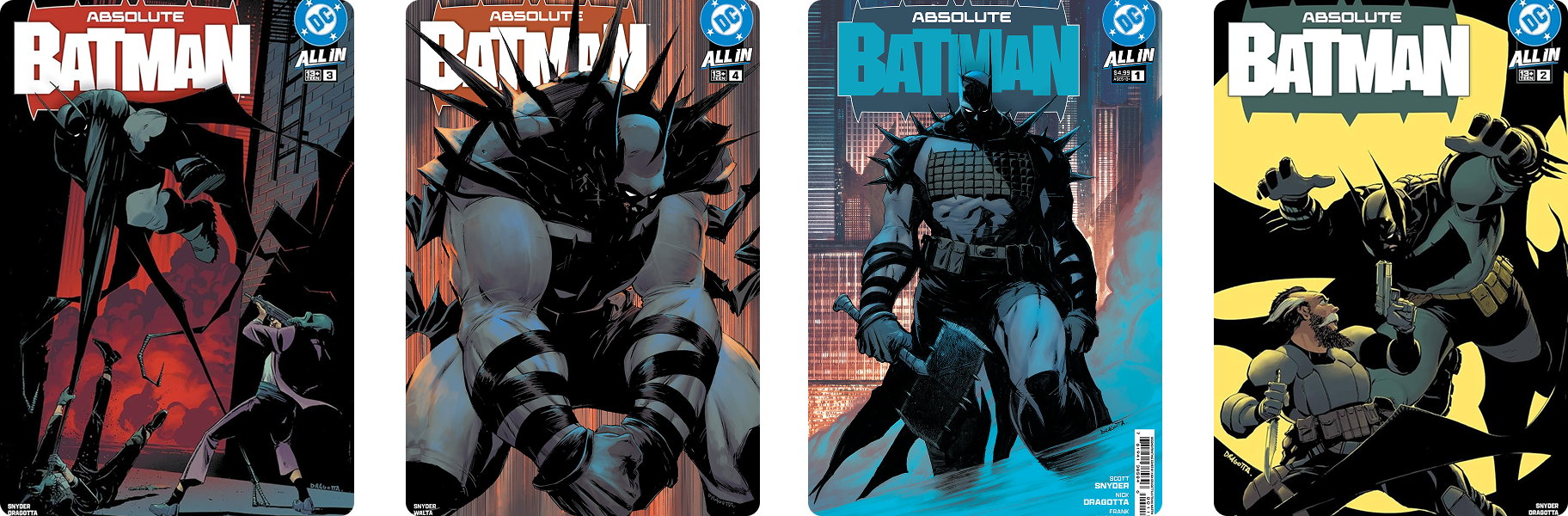
The newest proof point: Absolute Batman hit fast and hit hard
Then the modern end of the dataset drove the point home again.
In the 2020s:
Absolute Batman (2024) was the top title by volume
Absolute Batman (2024) was also the top title by sales
The most traded issues for the decade included Absolute Batman #1 and Absolute Batman #15
DC's official listing for Absolute Batman #1 positions it as a stripped-down reinvention of the character: "Without the mansion…without the money…without the butler… what's left is the Absolute Dark Knight!" The issue written by Scott Snyder with art by Nick Dragotta went on sale in 2024.
This is the other half of Batman's market power. He is not just historically important. He is endlessly relaunchable. A new Batman book can still arrive and immediately dominate a current-decade leaderboard.

Why Absolute Batman #1 matters
If you focus on one modern Batman issue, it has to be Absolute Batman #1.
The book matters because it is not just another Batman #1. DC's own history of Batman titles notes how rare true new ongoing Batman #1 launches actually are, which helps explain why fresh-number-one Batman books carry such instant collector attention.
Then there is the concept itself. DC framed Absolute Batman #1 around subtraction: remove the mansion, the money, the traditional support structure, and rebuild Batman from the ground up. That is exactly the kind of publishing move that tends to generate fast collector energy because it combines three things at once:
a familiar character
a clear new entry point
a distinct twist collectors can explain in one sentence
That is why Absolute Batman #1 becoming one of the decade's most traded issues matters. It shows Batman can still generate genuine first-wave excitement in the present, not just reverence for the past.
Batman's power is really the power of renewal
That may be the clearest lesson in this dataset.
The market did not reward Batman because of one isolated book. It rewarded him because the franchise keeps renewing itself through different titles and different collector needs:
Detective Comics for early prestige and historical gravity
Batman (1940) for long-run foundational importance
mid-century issues that pick up extra significance through the broader DC universe
later-era Batman material that remains liquid across generations
Absolute Batman as proof that a fresh reboot can still hit immediately
Few characters can do that. Fewer still can do it while remaining recognisable to collectors at almost every level, from trophy hunters to newer buyers chasing current momentum.
Final Panel
This fortnight's data suggests that Batman's market strength is not confined to a single golden moment. It is structural. He is there at the start with Detective Comics and Batman #1. He is there in the mid-century runs. He is there in the later-era liquidity. And he is still there at the newest edge, where Absolute Batman is already moving like a modern leader.
That is what makes Batman bigger than any one era. The character does not just survive the market's changes. He keeps finding new ways to own space inside them.