Comic book collectors like to think we are rational people. We study GPA sales, check the CGC Census, compare grades, calculate premiums and spend far too long staring at scans looking for colour touch, rusty staples and mysterious defects. Then we see a comic we have wanted for twenty years and immediately forget everything we know.
That is collecting.
For all the information now available to us, comic book collecting remains a surprisingly emotional exercise. Data can tell us what a book sold for, the Census can tell us how many copies CGC has graded, and a label can tell us whether a comic is a 4.0 or a 4.5. None of those things can fully explain why we want the book in the first place.
And perhaps that is what makes collecting interesting.
The best collections are rarely built by following a strict formula. They tend to emerge slowly through knowledge, patience, taste, mistakes, nostalgia, opportunity and, every now and then, a decision that makes very little financial sense. Over time, all of those things combine to create something that feels personal.
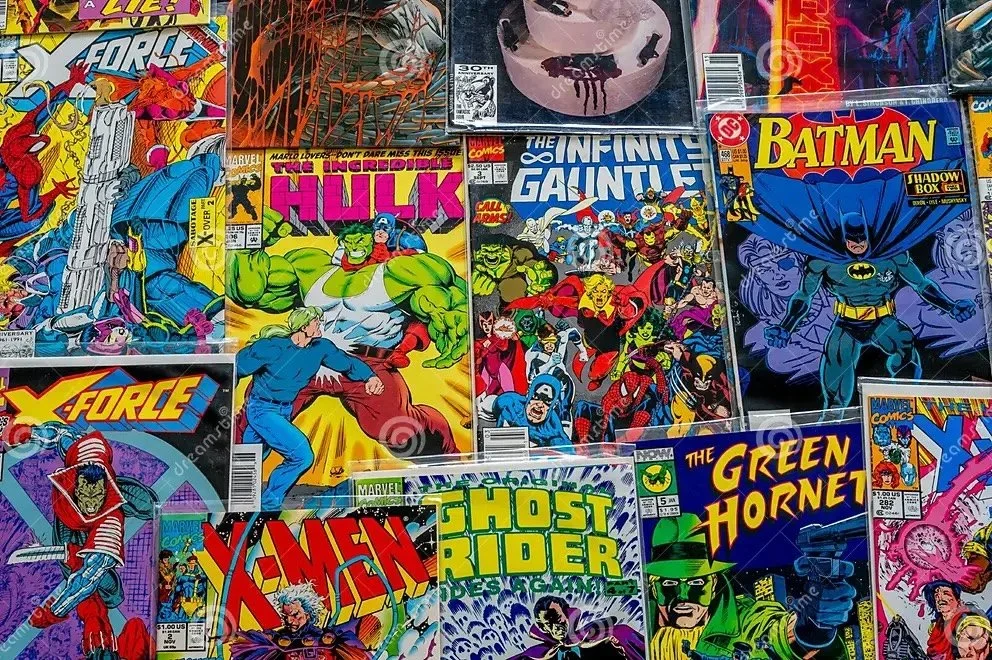
The Collection Should Look Like You
One of the easiest traps in the hobby is building the collection we think we are supposed to own. We are constantly told that first appearances matter, major keys matter, blue labels matter and higher grades are always better. Then there are the endless lists of books we apparently need to buy now before everybody else discovers them.
There is nothing wrong with collecting that way, but if everybody followed exactly the same advice, every collection would eventually look the same.
The most interesting collections usually have some personality. One collector might love Golden Age superheroes, while another prefers horror covers, pre-code crime, Silver Age Marvel, Canadian price variants or the work of one particular artist. Some collectors want every appearance of a favourite character. Others end up building collections around themes that probably make no sense to anyone else.
That is where the fun starts.
Money can buy expensive comics, but it cannot automatically build an interesting collection. A collection becomes memorable when it reflects years of choices rather than a checklist of obvious books.
In fact, limitations often make collections better. Most of us do not have unlimited money, so we cannot simply buy every grail, every high-grade key and every book we admire. We have to choose. Sometimes we compromise on grade. Sometimes we buy a later appearance instead of the first. Sometimes we discover a book we had never considered because the one we originally wanted was out of reach.
Those decisions give a collection its character.
Buy What You Love, But Know What You Are Buying
“Buy what you love” is probably the most repeated piece of advice in collecting, and it is good advice. It is just not complete advice.
I would add one more part to it: buy what you love, but understand what you are buying.
Loving a comic will not stop you from overpaying for it. Nostalgia will not make restoration disappear. A dramatic auction description will not make a common book rare, and the word “KEY” written in capital letters does not automatically make an issue important.
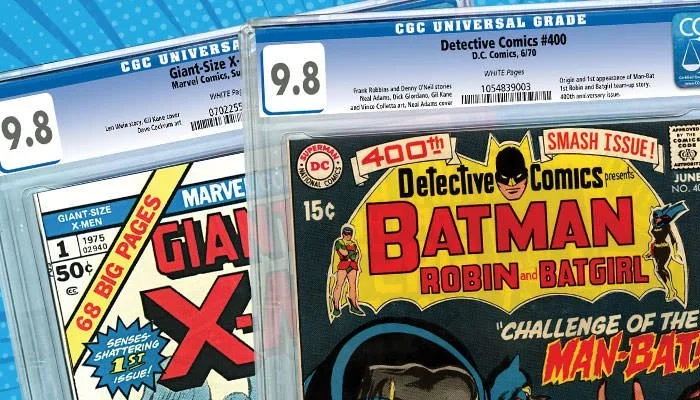
Before spending meaningful money on a comic, it helps to understand the book and the market around it. Look at recent sales, compare grades, check how often copies come to market and spend some time with the CGC Census. Ask yourself whether the book is genuinely difficult to find or simply popular at the moment.
GPA recorded sales and Census data are incredibly useful because they give collectors context. They help us see beyond the asking price and give us some idea of whether a comic is reasonably priced, unusually scarce or simply caught in a wave of excitement.
But the numbers are not perfect.
A recorded sale tells you what somebody paid. It does not tell you whether that person made a good decision. The Census tells you how many copies CGC has graded, but it does not tell you how many copies remain raw, how many may have been resubmitted or how many are sitting quietly in private collections.
The numbers matter, but they are not the whole story.
Rarity Needs Context
Collectors love the word “rare”. Dealers might love it even more.
RARE. SCARCE. HARD TO FIND.
Those words have been used so often in comic book advertisements that they have almost lost their meaning.
Real scarcity is more complicated.
A comic might have a low Census count and still be relatively easy to buy because the people who own it are happy to sell. Another comic might have more graded copies but appear on the market only once every few years. Then there is demand, which changes the equation again.
A book with 100 surviving copies and thousands of interested collectors may have a much stronger market than a book with 25 surviving copies and hardly anyone looking for one.
That is why rarity by itself does not determine value. Scarcity becomes interesting when it is combined with demand, historical importance and collector interest.
The ideal comic is not simply rare. It is rare and wanted.
Unfortunately, those books are usually not cheap.
The Hunt Is Part of the Collection
One of the strangest things about collecting is that finding a comic can sometimes be more enjoyable than owning it.
Anyone who has searched for the same book for years probably knows exactly what I mean. You watch auctions, check dealer inventories, walk convention aisles and lose copies to other buyers. At some point you probably pass on one you should have bought, which is usually the copy you remember most clearly.
Then eventually the right book appears. The grade works, the presentation looks good and the price is somewhere within the boundaries of what you told yourself you were willing to spend.
You buy it.
For a few days, everything feels complete.
Then you start looking for something else.
Collectors are peculiar creatures.
The hunt is what gives many books their story. You remember the comic you found buried in a dealer box, the auction you won by ten dollars, or the collector who finally agreed to sell after months of discussion. Those details do not appear on a CGC label, but years later they may mean more to you than the grade itself.
That is why slowly building a collection can be so satisfying. The difficult books become milestones, and the process of finding them becomes part of what you are collecting.
Condition Matters, But Context Matters More
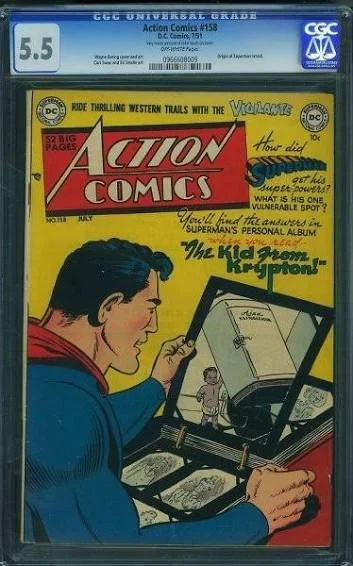
Comic collectors spend an enormous amount of time discussing condition, and understandably so. A 9.8 is better than a 9.6, white pages are preferable to off-white, and a well-centred copy usually looks better than one with an obvious miswrap.
The problem starts when the number on the label becomes more important than the comic itself.
Two books can have exactly the same numerical grade and look completely different. One might have strong colours, clean presentation and excellent centring. Another might have staining, writing or an ugly production defect sitting right where your eye does not want it.
Both might say 5.0, but they are not the same comic.
That is why eye appeal matters so much, especially with older books. An attractive lower-grade copy can easily be more appealing than an ugly example graded slightly higher. The label is useful information, but your eyes are useful too.
High-grade collecting can also become expensive very quickly. Suppose an 8.0 costs $2,000 and a 9.0 costs $7,500. The 9.0 is the better copy, of course, but whether it is $5,500 better is a much more personal question.
Some collectors would happily pay the premium. Others would rather own the 8.0 and use the remaining money to buy two or three other books.
Neither approach is wrong. It simply depends on what kind of collector you are.
The useful part is working that out before the auction ends.
Imperfect Comics Can Still Be Great Comics
Collectors often create rules for themselves. No restoration. No low grades. No writing on the cover. No missing pieces. Blue labels only.
Rules can be useful because they create discipline and stop us from buying everything that catches our eye. The problem comes when the rule starts becoming more important than the book.
Would you rather own no copy of a major Golden Age key, or an attractive restored example at a sensible discount? Would you reject an important comic because somebody wrote their name on the cover eighty years ago? Would you rather own a pristine but common book, or a battered survivor that almost never appears?
There is no universal answer to any of those questions.
Restoration matters. Defects matter. Grade matters. Price matters. But imperfection does not automatically make a comic undesirable.
In some cases, the flaws are part of the history. Older comics survived because people actually used them. They were read, folded, traded, repaired, written on and occasionally treated terribly. The fact that they are still here at all is sometimes remarkable.
A 2.0 copy of an important comic is still the same comic.
For many collectors, low grade is what makes ownership possible. The real choice is not always between a 2.0 and a 9.4. Sometimes it is between owning the 2.0 or never owning the book at all.
That is a much more realistic way to think about it.
You Do Not Always Need the First Appearance
Comic collecting places enormous importance on first appearances, and for good reason. Owning the first Superman, Batman, Spider-Man or Wolverine has a historical significance that later appearances simply cannot replicate.
The problem is that many of those books are now financially out of reach for most collectors.
Fortunately, collecting does not end there.
If the first appearance is impossible, there are usually plenty of other interesting directions to take. You might buy an early appearance, an iconic cover, the first issue of a solo title or a favourite storyline. You might decide you would rather own a beautiful cover by a major artist than stretch for a very low-grade copy of the bigger key.
None of those books replace the first appearance, but they do give you another way to collect the character.
And sometimes that is more interesting anyway.
If everybody could afford every major key, collecting would become remarkably easy. You would just buy everything.
Where is the fun in that?
Price Is Not the Same as Value
One of the great advantages of modern collecting is the amount of price information available to us. If several comparable copies have recently sold between $4,000 and $4,500 and somebody wants $7,000, that tells you something useful.
But market price and personal value are not the same thing.
A comic might be worth $50 on the open market and still be impossible for you to sell because your father gave it to you when you were eight. Another comic might be worth $5,000 and mean very little to you beyond its financial value.
Collectors understand that difference instinctively.
Investment value asks what somebody else will pay you.
Collecting value is more about what somebody would have to pay before you were willing to let the book go.
Those answers are often very different.
There is nothing wrong with thinking about investment. Comic books can represent serious amounts of money, and collectors should understand what they are paying and why. But if profit becomes the only measure of success, collecting starts to change.
Instead of asking whether you want the comic, you start asking whether somebody else will want it more later.
That is a different game.
FOMO Is Expensive
Every collector eventually feels pressure to buy something immediately.
A comic suddenly jumps in price. Everyone starts talking about it. Recent sales climb and dealers increase their asking prices. Before long, it feels as though the book is disappearing forever and you are the only collector who does not own one.
Then six months later there are fourteen copies available.
Markets move, but excitement often moves faster.
Buying into momentum is not always wrong. Sometimes a book genuinely does get repriced because demand has changed or collectors have reassessed its importance. But fear is rarely a good reason to buy anything.
A useful question is whether you would still want the comic if nobody talked about its price for the next five years.
If the answer is yes, you probably want the book.
If the answer is no, you might be more interested in the price chart.
Sometimes Paying More Makes Sense
Generally, overpaying is a bad idea. You should study recent sales, understand the market and set sensible limits.
But there are situations where being too rigid about price can work against you.
Imagine an obscure Golden Age comic that appears once every four years. The previous sale was $2,000 three years ago, and today a particularly attractive copy appears at $2,500.
Is that overpaying?
Possibly.
But maybe the old sale is no longer especially relevant.
Thinly traded comics do not behave like highly liquid assets. Sometimes there is no replacement available if you walk away. For genuinely scarce books, availability itself has value.
Paying a modest premium for the right copy can make sense when the alternative is waiting another three or four years.
The difficult part is knowing when that logic applies.
It probably does not apply to the comic with 67 copies currently listed online.
Learn to Walk Away
Knowing when not to buy is one of the most useful skills a collector can develop.
It sounds easy until you are actually bidding.
By the time an auction ends, you may have researched the book, followed it for a week and mentally decided where it will sit in your collection. At that point, losing can feel strangely personal.
But nothing has actually been taken away from you. You never owned the comic.
Sometimes the right decision is simply that the book is too expensive. Other times the copy is wrong, the timing is wrong or you already have too much money tied up elsewhere.
Walking away preserves both your money and your discipline.
And if another copy does not appear for a while, that is fine too. You still have the money.
Collectors occasionally underestimate how useful that can be.
At Some Point, Stop Accumulating and Start Curating
Most collectors begin by buying almost everything that interests them.
That is part of the excitement.
Eventually, though, the boxes multiply and the collection starts to change. Quantity becomes less important and selection becomes more important.
You start selling books you no longer care about. You upgrade certain copies. You consolidate. Five average books become one excellent book, and then five excellent books somehow become one comic you once promised yourself you would never spend that much money on.
That is probably progress.
A mature collection is often defined as much by what the collector chooses not to buy as by what they own.
There is no prize for having the greatest number of boxes.
Although if there were, comic collectors would turn it into a very serious competition.
The Best Collections Have Stories
Ask collectors to show you their favourite comics and the conversation usually drifts away from price eventually.
They will tell you where they found a book, how long they searched for it, who they bought it from or why it matters to them. They will tell you about the copy they sold and regretted, the book they paid too much for or the comic that started the entire collection.
Those stories are impossible to capture in a Census.
They do not appear in GPA data, and there is no label notation for nostalgia.
Yet those stories are often what separate a collection from inventory.
A sales database can tell us what happened in the market. It cannot tell us what happened to the collector.
Both matter.
So, What Is the Art of Collecting?
I think the art of collecting is probably balance.
You want enough research to make sensible decisions, but not so much that the hobby turns into a spreadsheet. You want to understand rarity, condition and price, but you also need to know when those things matter less than simply liking the comic in front of you.
It is about knowing when to buy and when to walk away. Sometimes the lower-grade copy is the right one. Sometimes paying a little more makes sense because another example may not appear for years. Sometimes the sensible thing is to leave the auction alone and spend the money somewhere else.
And occasionally, after checking the data, looking at the Census and convincing yourself that you are behaving rationally, you will still buy a comic because you simply have to have it.
That is probably healthy.
There will always be someone with deeper pockets, higher grades and a better collection. Someone will own the 9.8 while you own the 9.6. Someone bought the book twenty years ago for one-tenth of what you just paid.
Let them.
Collecting does not have to be a competition.
The goal is not to own the comics somebody else thinks you should own. It is to build a collection that reflects the things you find interesting, the choices you have made and the stories you have accumulated along the way.
If, after enough years, your collection could only really belong to you, you are probably doing it right.
And if there is one comic in there you paid slightly too much for because you simply had to have it, even better.
That sounds like collecting to me.