“Never” is a dangerous word.
Industries change. Publishers disappear. Comic shops close. Characters are rebooted, renumbered, killed, resurrected and occasionally replaced by someone who looks suspiciously similar but has a more complicated costume.
And yet comic books remain.
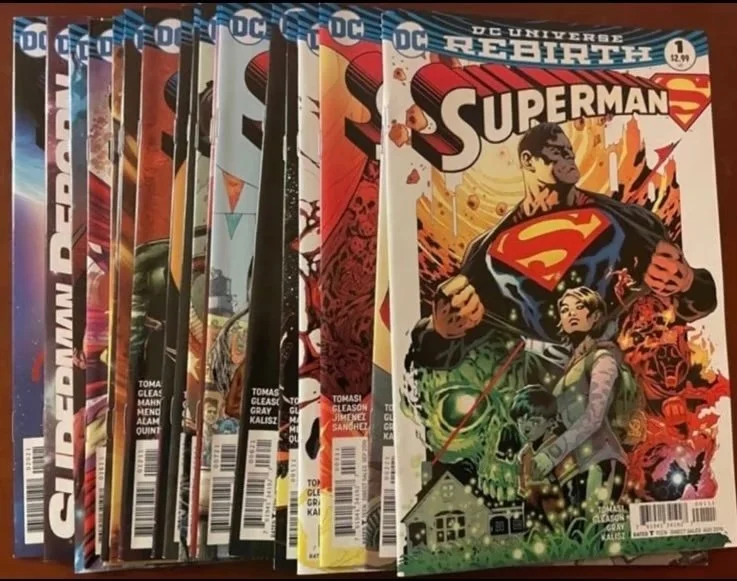
Every few years, someone declares that comics are dying. Usually, what they mean is that one particular part of the business is struggling. Perhaps monthly superhero sales are soft. Perhaps a distributor has failed. Perhaps younger readers are buying manga rather than traditional American comic books. Perhaps collectors have finally refused to purchase the 47th variant cover of the same issue.
Those may be genuine problems. But they are not the death of comic books.
Comic books will survive because they are not merely products. They are stories, historical objects, pieces of art, childhood memories, investment vehicles, conversation starters and, in certain cases, highly effective devices for emptying a collector’s bank account.
Most importantly, comic collecting is not one hobby. It is hundreds of overlapping hobbies wearing the same cape.
The Numbers Do Not Look Like a Funeral
Let’s start with the business itself.
ICv2 estimated that consumers in the United States and Canada spent approximately $2.2 billion on comics and graphic novels in 2025, surpassing the highs reached during the pandemic. Sales through the direct market—primarily comic shops—reportedly grew by nearly 30%, bringing that channel close to $1 billion.
That followed an estimated $1.94 billion in sales during 2024, up 4% from $1.87 billion in 2023. More significantly, the 2024 market was estimated to be 73% larger than it had been in 2019.
These figures cover the United States and Canada rather than the entire world, and they combine comic books with graphic novels. They should not be interpreted as proof that every publisher, shop or title is thriving.
Nevertheless, $2.2 billion is an unusual shape for a corpse.
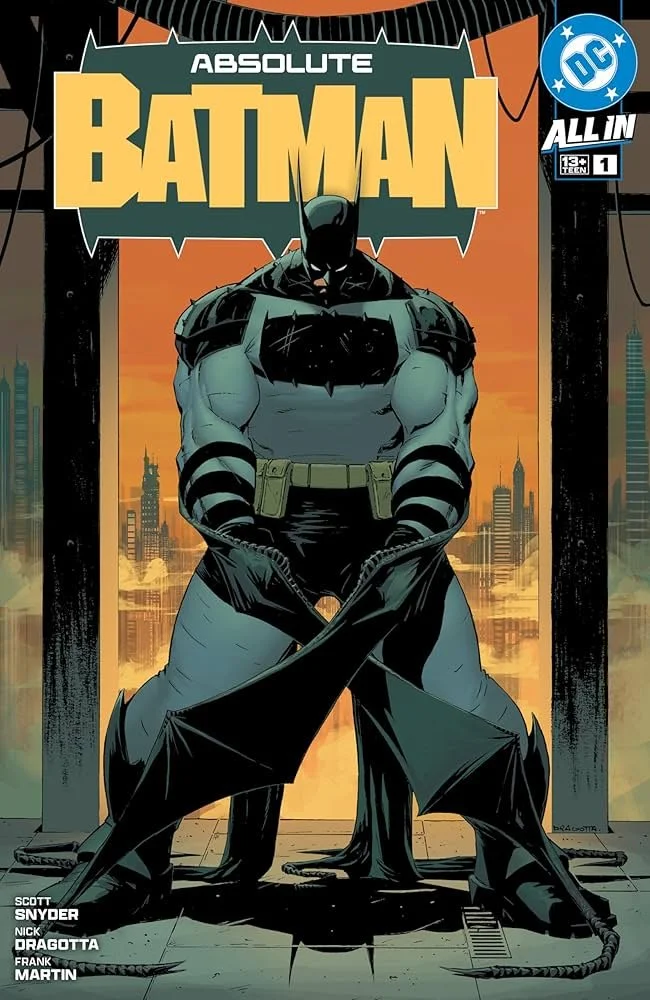
New comic books can still capture the market’s attention as well. DC described Absolute Batman #1 as the bestselling comic book of 2024, and demand carried the issue through multiple printings. A fourth printing was announced shortly after release.
Collectors may complain about modern comics—and collectors do enjoy a good complaint—but they continue to buy them.
There Is No Single Comic Book Collector
Ask ten collectors why they collect and you may receive fifteen answers.
One collector wants every appearance of Batman. Another only wants Neal Adams covers. Someone else is building a run of inexpensive Bronze Age horror books. One collector will not touch anything below CGC 9.8, while another thinks sealing a comic inside plastic is roughly equivalent to locking a sandwich in a bank vault.
There are collectors of:
first appearances;
final issues;
classic covers;
pedigrees;
newsstand editions;
Canadian Price Variants;
foreign editions;
printing errors;
recalled comics;
signed books;
restored books;
low-grade “presentable” copies;
complete runs;
single characters;
favourite artists;
and comics they remember buying with pocket money.
This variety makes the hobby extraordinarily difficult to kill.
When one area cools, another becomes interesting. When a major first appearance becomes unaffordable, collectors move towards second appearances, early covers, important storylines or later issues featuring the same character. A collector who cannot afford the first appearance of Superman does not automatically stop liking Superman. The target simply changes. Classic covers and early appearances can offer a meaningful connection to a character for a fraction of the price of the premier key.
Collectors adapt because the objective is not always to own the theoretically “best” comic. The objective is to build a collection that feels personal.
That is a much more durable motivation.
Demand Creates Keys, but Emotion Creates Collectors
Comic book values are often discussed as though they are produced by a tidy formula:
Rarity + importance + condition = value.
It is a useful starting point, but comic collectors are not calculators.
Nostalgia matters. Character popularity matters. Cover art matters. Timing matters. A film announcement can matter. So can a childhood memory that means absolutely nothing to anyone else.
A comic does not need to be rare to be desirable. Many highly valuable Silver and Bronze Age keys have substantial surviving populations. Collectors want them because they represent important moments involving characters with enormous cultural followings.
The opposite is also true. A comic can be extremely rare and attract limited demand. Rarity alone does not create a market. As one Collector Hub analysis observed, rare books become explosive when absolute scarcity is combined with strong demand; however, collectors should remain sceptical when the word “rare” is used as little more than marketing decoration.
This distinction will continue to fuel collecting. There will always be another argument about which book is undervalued, which appearance counts as the “true” first appearance, or whether a particular variant is genuinely scarce or merely manufactured to look scarce.
Collectors do not simply purchase comics.
They investigate them.
Real Scarcity, Manufactured Scarcity and Everything Between
Older comics became scarce largely by accident.
They were read, folded, traded, written on, cut apart, left in attics and occasionally used for purposes that would make a modern collector physically ill. Few children reading comics in the 1930s and 1940s treated them as future museum pieces.
Modern scarcity is often more deliberate.
Publishers produce retailer incentives, ratio variants, convention exclusives, foil editions, virgin covers and limited printings. A 1-in-100 variant may be scarce, but that scarcity was engineered before the comic reached the shelf. As one Collector Hub article puts it, ten-cent comics are often genuinely rare, twelve-cent comics are frequently scarce, while some modern variants are “manufactured to be rare.”
Does manufactured scarcity make a comic illegitimate?
Not necessarily.
Collectors have always enjoyed categories, distinctions and treasure hunts. The danger appears when manufactured scarcity is confused with organic demand. A scarce comic with five interested buyers is not necessarily healthier than a common comic wanted by 50,000 collectors.
Once again, the quirks keep the hobby alive. Even when collectors disagree about what matters, the disagreement itself creates attention.
The Trophy Books Continue to Break Records
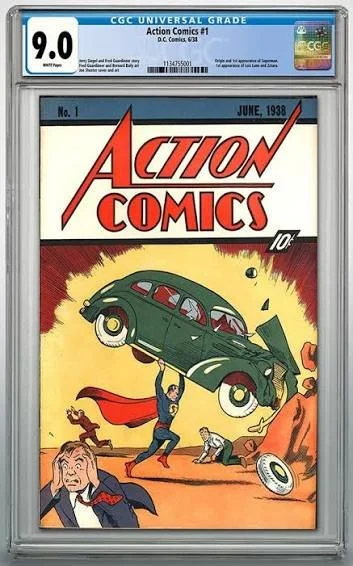
At the top of the hobby, comic books have become serious cultural assets.
In January 2026, a CGC 9.0 copy of Action Comics #1 reportedly changed hands privately for $15 million, establishing a new comic book record.
Only two months earlier, a CGC 9.0 copy of Superman #1—discovered in a California attic—sold through Heritage Auctions for $9.12 million. That sale had broken the previous record of $6 million, set by a CGC 8.5 copy of Action Comics #1 in April 2024.
These are exceptional books and exceptional prices. They should not be treated as a reliable guide to what an ordinary collection will do.
But they reveal something important.
The greatest comic books are no longer viewed merely as old magazines. They are recognised as surviving artefacts from the creation of modern popular culture. Superman, Batman and Spider-Man are global characters. Their earliest appearances represent the beginnings of stories that have travelled through film, television, animation, games, toys and almost every other form of entertainment.
A $15 million sale does not mean every comic is valuable.
It means the world has decided that at least some comics are historically important.
The CGC Census Reveals Another Collector Quirk
At the beginning of 2024, the CGC Census contained 10,212,987 graded comics. At that time, GPAnalysis had recorded 5,766,497 sales, involving 4,053,288 different CGC serial numbers.
In other words, approximately 39.7% of the comics represented on the Census had at least one sale recorded by GPA. Of the individual serial numbers with recorded sales, 61.2% had appeared only once in GPA’s data between 2000 and 2023.
That is interesting.
Despite the attention given to flipping and speculation, many graded comics do not appear to circulate repeatedly through publicly recorded venues. Some are purchased and kept. Others are submitted by collectors who never intended to sell them.
Naturally, the numbers have complications.
One CGC-graded comic can sell several times. Private transactions may not be recorded. A book may be removed from its holder without the label being returned, leaving it on the Census. It may later be resubmitted and counted again. The Census is therefore best understood as a maximum population rather than a perfect inventory of currently encapsulated books.
This is classic comic collecting: even the population count has a backstory.
Canadian Price Variants Prove That New Categories Can Emerge
For years, many Canadian Price Variants were overlooked or incorrectly recorded as regular editions.
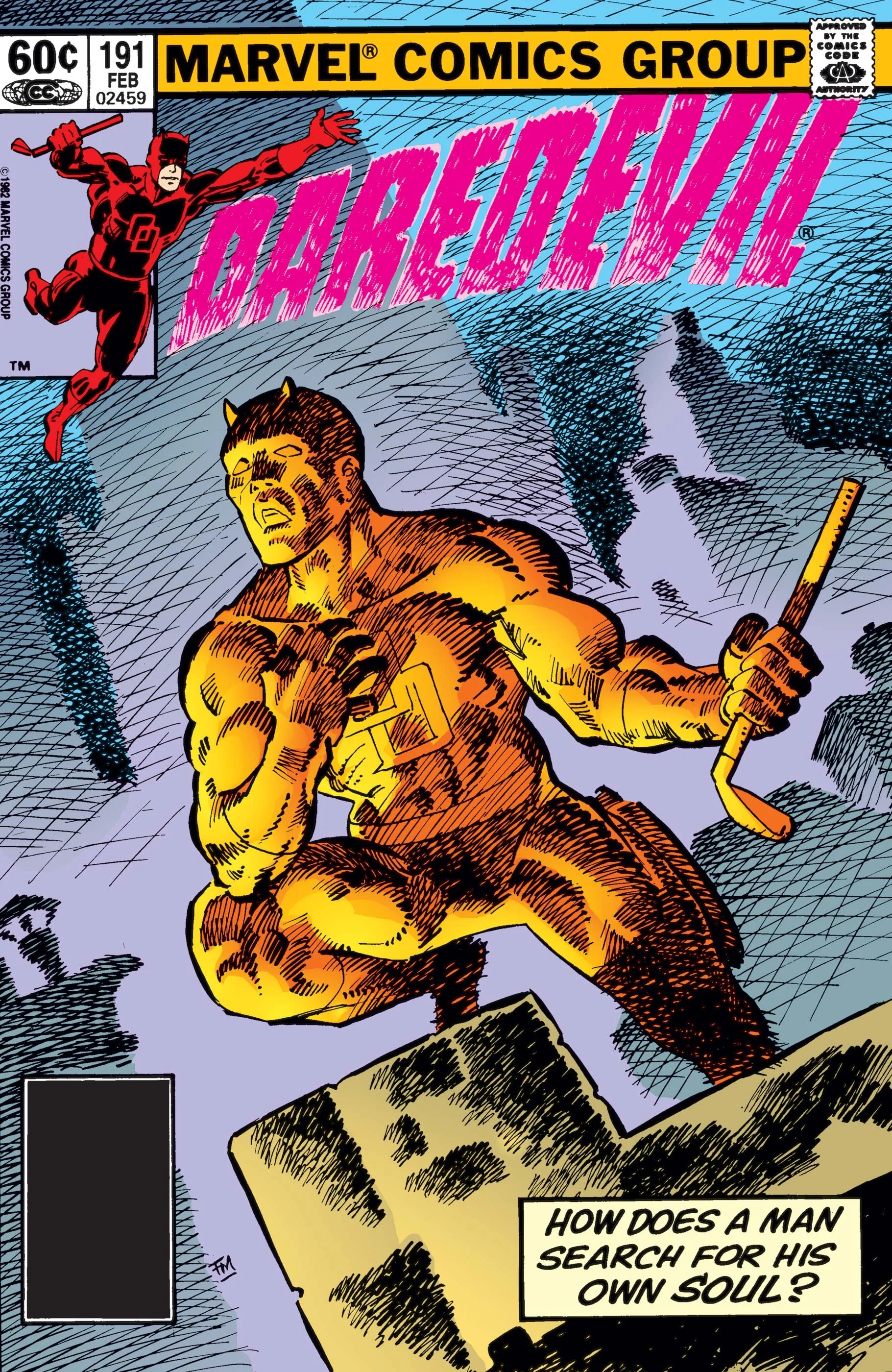
GPA’s earliest identified CPV sale was a CGC 9.8 copy of Daredevil #191 with a 75-cent cover price, which sold for $71 in July 2002. By mid-October 2021, GPA had recorded 645 CPV sales for that year, and more than 80% of the 3,662 CPV sales then recorded had occurred since January 2019.
The comics had not suddenly been created in 2019. Collectors had simply started paying closer attention.
That is another reason the hobby will endure. Comic books already sitting in collections can be re-examined through a new lens. Price variants, regional editions, inserts, printing differences and distribution markings can turn a familiar comic into a fresh research project.
The supply of old comics is finite.
The supply of ways to collect them appears limitless.
Then There Is the Purple Label
Few objects produce an emotional reaction quite like a CGC purple label.
Restored comics traditionally sell at significant discounts from unrestored copies in equivalent grades. For many collectors, discovering undisclosed restoration in a raw book is a painful and expensive experience.
But a disclosed restored comic is not radioactive.
Restoration has degrees. Slight professional colour touch is not the same as extensive reconstruction. A visually attractive restored Golden Age key may allow a collector to own a book that would otherwise be completely unaffordable. The appropriate discount depends on the comic, its apparent pre-restoration condition, the quality and extent of the work and the available comparable sales. A universal percentage discount is too simplistic.
The purple label demonstrates a central truth about collecting: collectors create rules, then spend years arguing about the exceptions.
Some want only unrestored blue labels. Some happily buy restored grails. Some crack graded books out of their holders. Some collect low-grade copies because they enjoy seeing evidence that a comic was actually read.
There is room for all of them.
Comic Collecting Is Now Global
Comic collecting once depended heavily on geography. A collector was limited by local shops, conventions, classified advertisements and whatever happened to appear at a weekend market.
That world has disappeared.
Collectors can now compare sales, examine Census populations, bid in international auctions and communicate with specialists on the other side of the planet. A book purchased in the United States can be sold to a collector in Australia, Canada, Germany, Japan or the United Kingdom without either party leaving home.
Free Comic Book Day confirms the international reach at the retail level: its organisers state that comic shops in Canada and other countries participate, and that any comic shop in the world can take part.
More importantly, “comic books” no longer means only American superhero comics. Manga, Franco-Belgian albums, British comics, Australian publications, underground comics, independent books and regional editions all have their own histories and collecting cultures.
The global hobby does not require every collector to want the same thing.
It thrives because they do not.
The Real Threats
Comic books are not invulnerable.
High prices can exclude new collectors. Excessive variants can create fatigue. Poor-quality stories can reduce reader interest. Speculative bubbles can hurt buyers who mistake short-term excitement for lasting demand. Distribution failures can damage retailers. Preservation, restoration disclosure, counterfeiting and manipulated sales remain legitimate concerns.
There is also a danger in treating every comic as an investment.
Most comics will not fund a retirement. Many will not keep pace with inflation. Some carefully protected “future keys” will eventually become very well-preserved reminders of a forgotten crossover event.
Collectors should study sales, understand condition, check population data and buy within their means. GPAnalysis and the CGC Census are powerful tools, but neither removes the need for judgement. Sparse data, repeated sales of the same copy and differences in eye appeal can make apparently simple comparisons misleading.
The healthiest collection is usually one the owner would still enjoy if the market closed tomorrow.
Final Thoughts
Comic books will change.
The traditional monthly floppy may become less dominant. Digital reading may grow. Manga may continue attracting younger audiences. Publishers will experiment with formats, prices and distribution. Some comic shops will close, while new ones will open. Characters will be reinvented for generations that have not yet been born.
But comic books will not disappear.
There will always be readers who want to hold the story in their hands. There will always be historians chasing the earliest surviving examples. There will always be cover collectors, bargain hunters, completionists and investors. There will always be someone searching a box at a convention because the next comic might be the one they have wanted for twenty years.
And there will always be a collector examining two nearly identical copies, staring intently at the upper-left corner and insisting that one of them is clearly superior.
The format may evolve. The market may rise or fall. The labels, platforms and preferred characters may change.
The collector will remain.