One Sale Can Rewrite a Decade

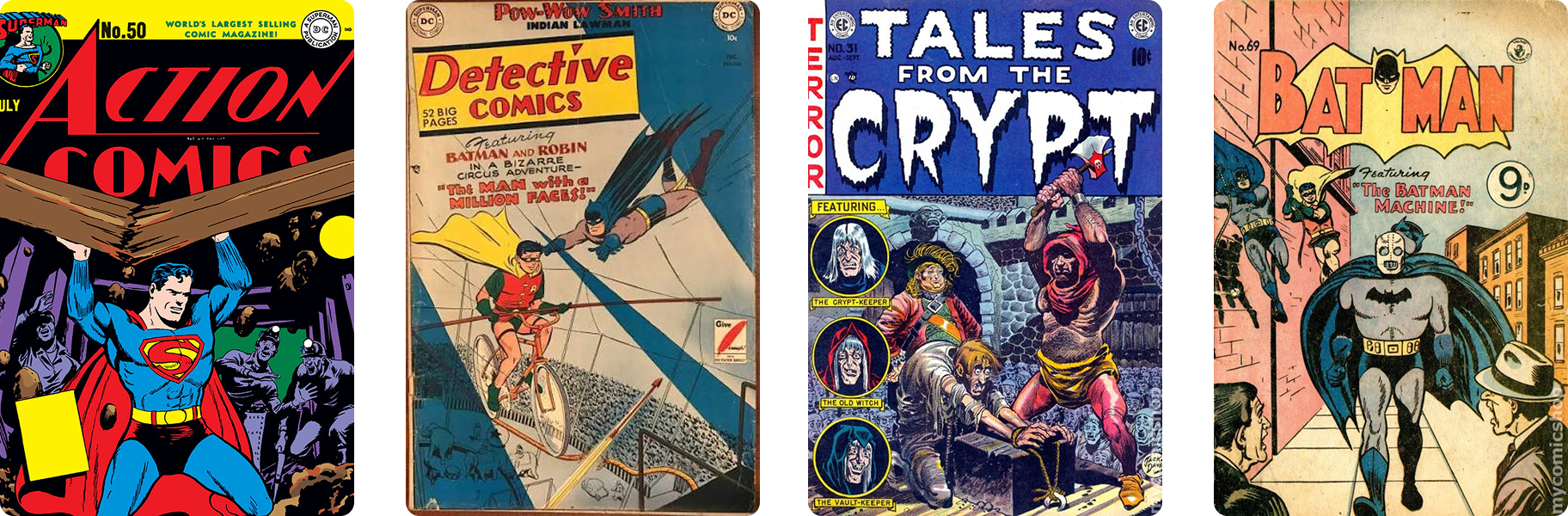
During the August 11–24 window, the trading charts for 1950s issues looked exactly like you’d expect. Superman led the pack, followed by Batman, Tales from the Crypt, Detective Comics, and Action Comics. It’s a murderer’s row of vintage heavyweights.
Then you look at the actual sales revenue, and the entire board flips.
Sitting right at the very top is Sports Illustrated.
It wasn't a close race, either. Sports Illustrated pulled in $91,256 over the period, while Batman—the runner-up—managed $17,609. It’s the kind of wild disparity that makes you do a double-take, and it all comes down to a single book completely rewriting the leaderboard.

The $85,400 Outlier
When you look across the entire graded market for that two-week stretch, the single biggest transaction didn’t belong to Action Comics, Amazing Fantasy, Batman, or Spider-Man.
It belonged to a 1956 copy of Sports Illustrated #25, graded CGC 8.5, which went under the hammer at Heritage Auctions for a staggering $85,400.
That lone sale didn't just top the charts; it hijacked the entire decade’s financial picture. With Sports Illustrated totalling $91,256 for the period, this single copy accounted for about 93.6% of the title's overall dollar volume. Even wilder, that one transaction made up nearly 59% of all the money spent across the top five best-selling 1950s titles combined.
One book, one hammer fall, and more than half the revenue generated by an entire decade’s elite.
Now Strip That Out
This is where the real story reveals itself. Keep that monster sale in the mix, and the top five 1950s titles generated a combined $144,851.
Take that single $85,400 trophy off the board, and the whole decade's top-tier market collapses to just $59,451.
Sports Illustrated takes the biggest hit of all, plummeting from a towering $91,256 down to a modest $5,856 across the rest of its sales. Instead of sitting comfortably on the throne, it drops straight down the pecking order, sliding right beneath Batman, Tales from the Crypt, Showcase, and Action Comics.
Just like that, one excluded data point reshuffles the entire leaderboard.
The $85,400 Effect
One Sports Illustrated #25 sale accounted for nearly 59% of the 1950s Top Five sales total. Remove it, and the decade looks completely different. Dataset pooled during the August 11–24, 2026 reporting period.
$144,851
1950s Top Five sales
With trophy sale
$144,851
Without trophy sale
$59,451
Sports Illustrated
$91,256
Sports Illustrated led the 1950s by sales, with $85,400 of its $91,256 total coming from a single Sports Illustrated #25 CGC 8.5 sale.
Volume Tells a Very Different Story
This is why raw sales figures and trade volume have to be read side by side. When you look strictly at activity, Sports Illustrated doesn't even crack the top five for the 1950s.
That everyday collector ground belonged entirely to the usual titans:
Superman
Batman
Tales from the Crypt
Detective Comics
Action Comics
Transaction volume shows you where the market breathes, the steady hum of daily collector demand and recurring trades. Total dollars, on the other hand, show you where massive waves of capital land, even if that entire wave is kicked up by a single high-roller transaction.
Neither metric is misleading on its own. They're just shining a light on two completely different market behaviours.
The Trophy-Sale Effect
Vintage collectible markets are especially vulnerable to this kind of distortion.
Whenever a scarce, high-grade grail surfaces and changes hands, its price tag alone can completely warp the data for an entire reporting window. That spike doesn't signal a sudden, broad-based shift in decade-wide collector demand; it simply means a rare outlier passed through the room.
This two-week snapshot provides a textbook case. Look at the raw dollar totals, and the 1950s seem utterly dominated by Sports Illustrated. Pull just one $85,400 transaction out of the equation, and a completely different baseline emerges underneath.
That nuance is crucial whenever you're analysing short-term market data. Sometimes a chart maps an entire ecosystem; sometimes it captures a single, fleeting moment. Knowing which one you're looking at makes all the difference.