Spider-Man Owns the Middle of the Market
There are plenty of ways to gauge the real staying power of a comic title.
You can look at the headline-grabbing trophy sales, tally up pure transaction volume, or calculate the total capital flowing through it. But another, and arguably more telling, metric is generational staying power: how consistently a title commands attention across decades of changing collector tastes.
By that standard, one title stands in a league of its own.
Amazing Spider-Man.

During the August 11–24 reporting period, the original 1963 run proved the point yet again, leading the entire CGC-graded market with 1,695 copies changing hands for roughly $0.6 million.
The raw volume and dollar total are impressive on their own. What is far more revealing, though, is how deeply its reach extends across the decades.
The Spider-Man Footprint
Amazing Spider-Man led trading volume across four consecutive decades and also led sales across the 1960s, 1970s and 1980s. Dataset pooled during the August 11–24, 2026 reporting period.
4 decades
led by Amazing Spider-Man in trading volume
1960s
$253,262
#1 Volume + #1 Sales
Amazing Spider-Man ranked first for both trading volume and sales among 1960s titles, generating $253,262 in sales.
1960s–1980s sales leadership
$564,427
Amazing Spider-Man generated more than half a million dollars in sales across the three consecutive decades where it led both trading volume and sales.
Four Decades of Volume Leadership
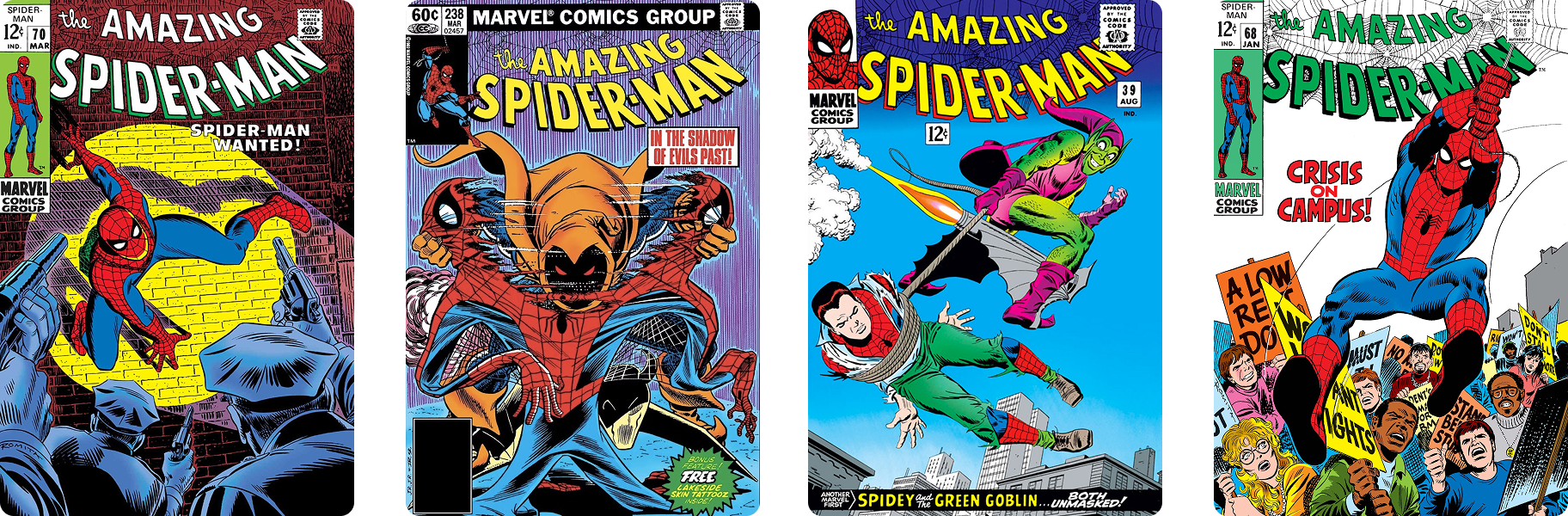
When you break down the sales data by the decade each book was published, Amazing Spider-Man didn't just compete; it swept the board. It finished as the single most-traded title across four consecutive eras:
The 1960s → The 1970s → The 1980s → The 1990s
That broad footprint shows that collectors aren't just fixated on a single nostalgic window or one isolated key.
Silver Age Spidey was trading heavily.
Bronze Age Spidey was trading heavily.
Copper Age Spidey was trading heavily.
And 1990s Spidey was doing the exact same thing.
Almost nothing else in the data shows that sort of sustained, cross-generational demand.
The individual issue charts back it up completely. Both Amazing Spider-Man #194 and #129 landed among the five most-traded books of the 1970s. Move into the 1980s, and #300 alongside #252 paced the field. Roll into the 1990s, and #361 stepped up right among the decade's top performers.
Even when you look at the 2000s, where Invincible managed to claim the top volume spot, Amazing Spider-Man still held strong in second place.
Trading Is Only Half the Story
High volume doesn't always guarantee high dollar spend. We see that disconnect crop up constantly throughout the dataset. Yet, Spider-Man managed to master both sides of the coin.
Amazing Spider-Man wasn't just moving the most units; it was the highest-grossing title across three straight decades:
1960s: $253,262
1970s: $132,030
1980s: $179,135
Across that three-decade stretch alone, Amazing Spider-Man accounted for an eye-watering $564,427 in sales among the top five titles.
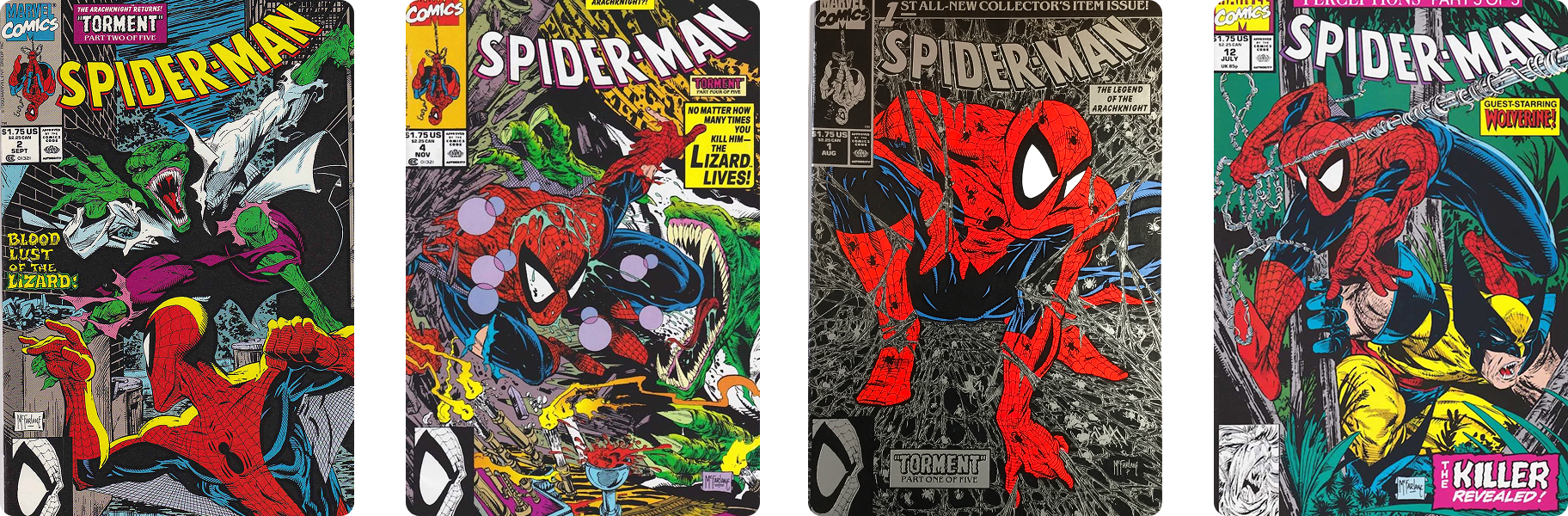
Then comes the 1990s, where an interesting shift takes place. While Amazing Spider-Man still held the crown for transaction volume, Todd McFarlane's adjectiveless Spider-Man (1990–1998) edged it out in pure sales revenue:
Spider-Man: $47,849
Amazing Spider-Man: $43,783
The character didn't lose his grip on the market; the collector capital simply split across multiple flagship titles carrying the web-slinger's banner.
The Spider-Man Footprint
This is really the crux of what makes the data so compelling. Amazing Spider-Man isn't leading the pack off the back of a single, freak auction anomaly. It isn’t perched at the top because one six-figure grail artificially warped the market averages.
Its real muscle comes entirely from depth and consistency.
During the 1960s, Amazing Spider-Man commanded roughly 32.7% of all sales generated by the decade's top five highest-selling titles. In the 1970s, it captured 29.0%. By the 1980s, that share climbed to 38.5%.
These might not be the most extreme concentration spikes you'll find in the ledger, but they point to something far rarer: genuine, uninterrupted dominance across three fiercely contested eras of comic collecting.
The Long Tail of Spider-Man
The comic market never stops chasing the next big flashpoint.
Invincible takes command of the 2000s. Ultimate Fallout captures the heavy spend of the 2010s. Absolute Batman bursts onto the scene to ignite the 2020s.
Yet through every trend cycle, Amazing Spider-Man just keeps trading in massive volume, more than sixty years after Peter Parker first swung onto the page.
That might be the real takeaway here. The flavour of the month and the headline-grabbing grail will always shift from one auction window to the next. But while some market spikes capture a passing wave, Spider-Man represents something far more foundational: an evergreen engine of collector demand built to outlast every hype cycle.