The Most Historic and Iconic Superhero–Villain Clashes in Comics
Superheroes are only as enduring as the enemies who force them to change. The greatest clashes in comic-book history are not just fights—they are arguments in costume: order against chaos, hope against envy, responsibility against obsession. Across decades, a handful of hero–villain rivalries have done more than sell issues; they have redefined genres, shifted tone, and, in some cases, changed the way comics told stories at all.
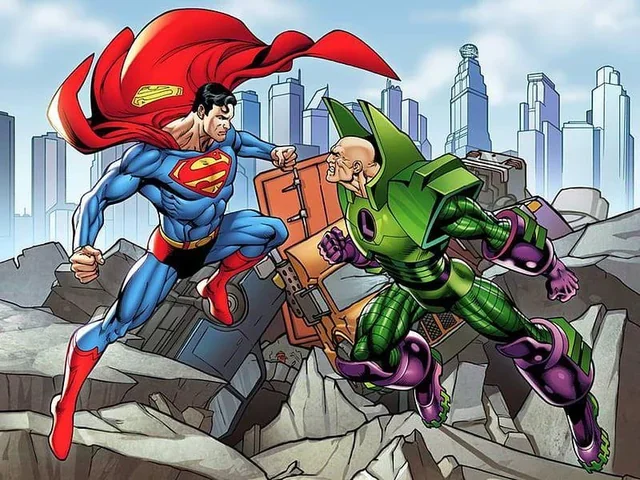
Superman vs. Lex Luthor
Key first clash: Action Comics #23 (published February 23, 1940; cover date April 1940)
If Batman and Joker are chaos and control, Superman and Lex Luthor are idealism and ego. Luthor’s first official appearance came in Action Comics #23, and his importance lies in what he represented: a villain who could challenge Superman not by matching his strength, but by weaponizing intellect, wealth, and resentment. Luthor remains one of the earliest and best examples of a villain built around philosophical opposition rather than brute force.
One of the strangest bits of comics trivia belongs to Lex: he was originally depicted with red hair. DC has noted that his now-iconic bald look is generally traced to an artist error in a 1940 newspaper strip before that look migrated into the comics. A mistake became the permanent face of Superman’s greatest enemy.
Other landmark clash issues:
Superman #4 (1940) is sometimes discussed in early Luthor chronology, but DC officially identifies Action Comics #23 as Luthor’s first appearance.
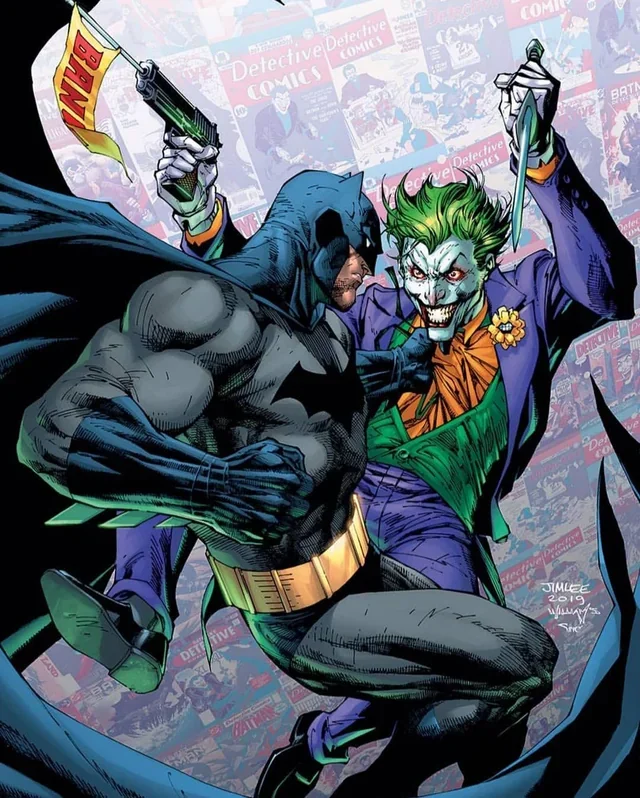
Batman vs. The Joker
Key first clash: Batman #1 (Spring 1940; on-sale April 25, 1940)
No superhero–villain rivalry is more iconic than Batman and the Joker. Their first major clash arrived in Batman #1, the same issue that introduced the Joker to readers. From the start, he was not a prankster but a theatrical murderer—a grinning killer who announced crimes in advance and treated death like a punchline. That early presentation is a big reason the feud lasted: Batman’s rigid moral code met a villain designed to mock the very idea of rules.
A lesser-known fact: the Joker was originally meant to die in that debut appearance, but editorial intervention kept him alive. That last-minute change may be one of the most important saves in comics history, because it preserved the villain who would become Batman’s defining opposite.
Other landmark clash issues:
Batman: The Killing Joke (1988) — the feud becomes psychological horror, not just crime-fighting.
Batman #427 (1988), part of A Death in the Family — while centered on Jason Todd, it cemented the Joker as a force of irreversible trauma in Batman’s world.
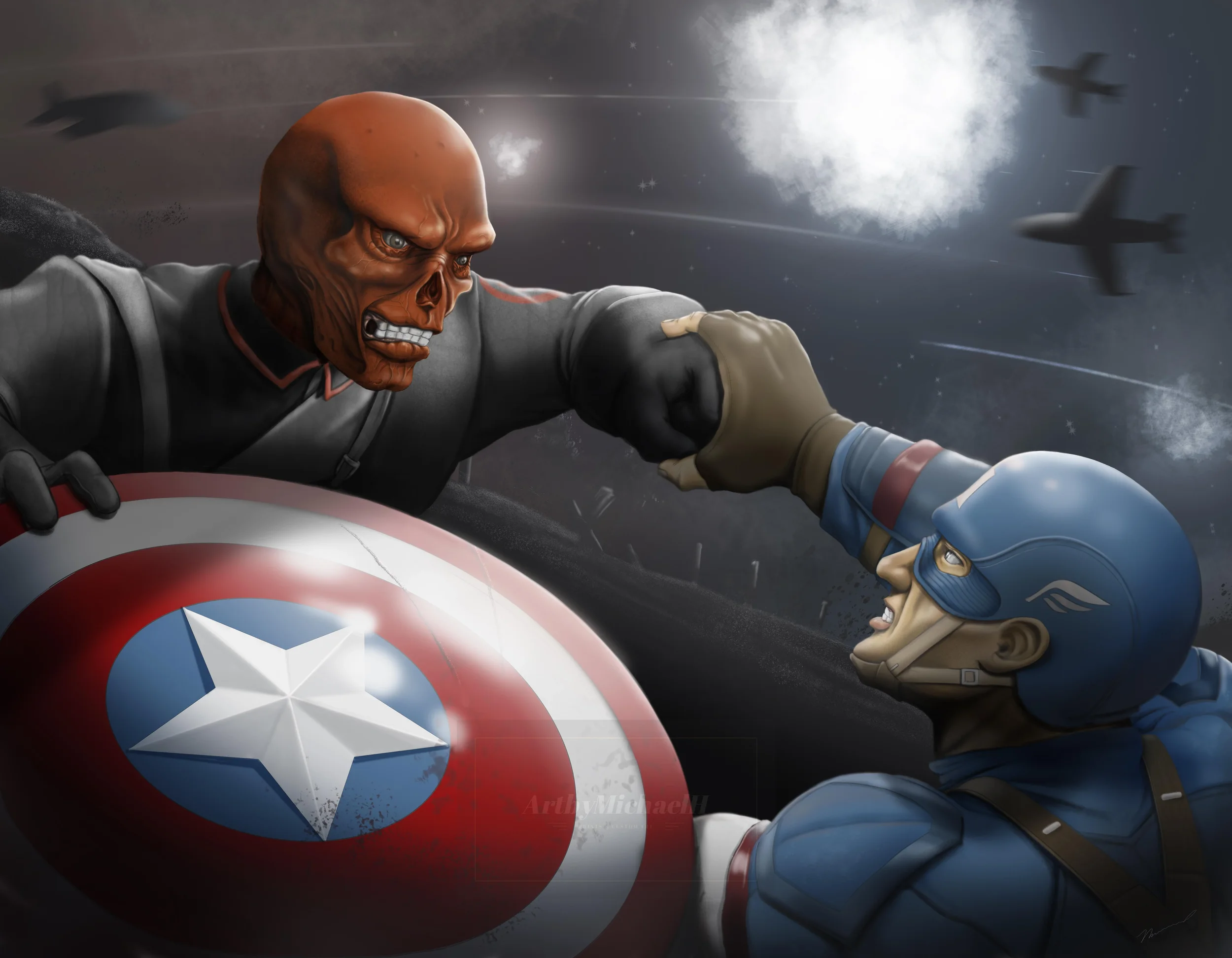
Captain America vs. Red Skull
Key first clash: Captain America Comics #1 (Published March 1, 1941; cover date March 1941)
Captain America and the Red Skull are one of comics’ most historically charged rivalries because they were born directly in the shadow of World War II. Captain America Comics #1 is famous for its cover image of Cap punching Adolf Hitler, and Marvel dates the issue to March 1, 1941—months before the United States entered the war. That made the book unusually bold for mainstream American comics at the time.
The Red Skull quickly became Captain America’s signature enemy because he embodied more than villainy—he personified the ideology Cap was created to confront. A lesser-known wrinkle: later continuity clarified that the “Red Skull” in the earliest stories involved decoy and identity complications, with Johann Shmidt ultimately established as the true enduring Red Skull.
Why it matters: this wasn’t just an iconic superhero fight; it was one of the clearest moments when comics placed a costumed hero directly inside real-world politics and war.
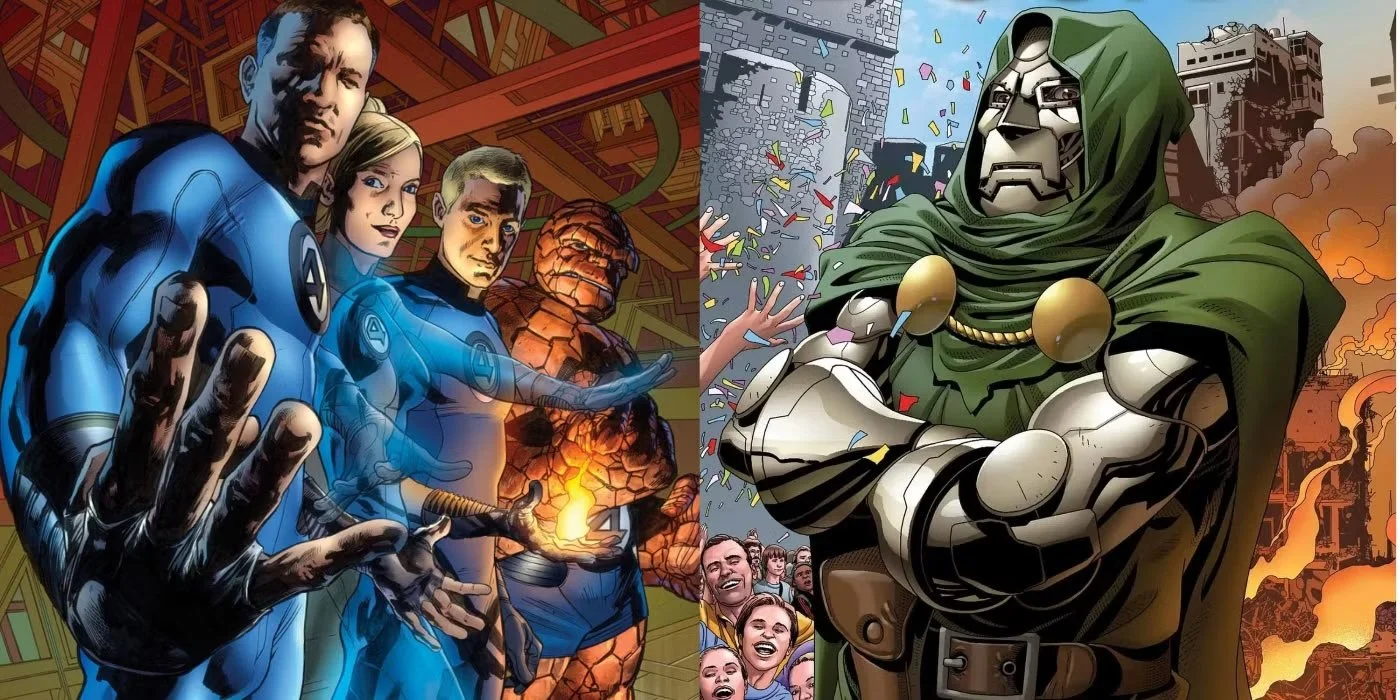
Fantastic Four vs. Doctor Doom
Key first clash: Fantastic Four #5 (Published April 10, 1962; cover date July 1962)
Doctor Doom’s debut in Fantastic Four #5 gave Marvel one of its foundational villain matchups. Doom mattered because he was bigger than a one-note threat: a monarch, scientist, sorcerer, and egotist who saw himself as the rightful superior to Reed Richards and, by extension, to everyone else. In one stroke, Marvel established a villain who could attack the Fantastic Four intellectually, technologically, politically, and personally.
That first clash became the blueprint for the team’s greatest stories. Doom wasn’t just “the bad guy of the month”; he was a recurring force who made the Marvel Universe feel interconnected and grand. His debut’s historical weight is clear in how often Marvel still positions him as one of its ultimate villains.
Key issue to know:
Fantastic Four #5 — first appearance of Doctor Doom, and the moment the FF’s central rivalry truly begins.
Thor vs. Loki
Key first clash: Journey into Mystery #85 (Published October 1, 1962; cover date October 1962)
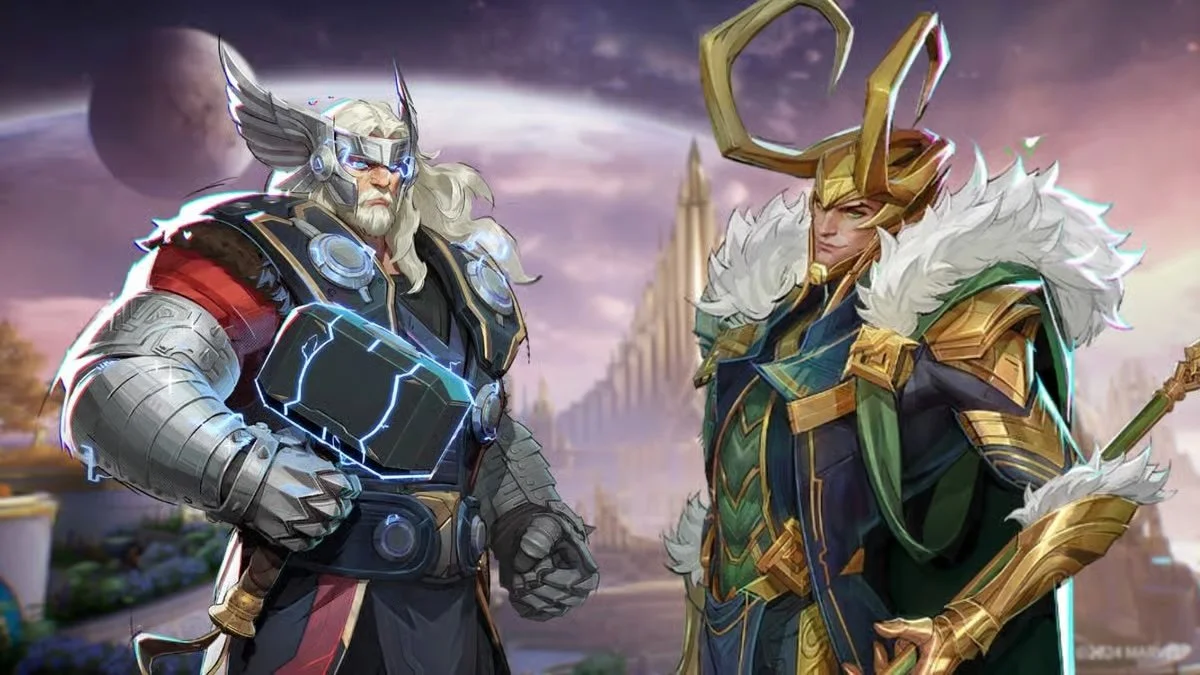
Thor and Loki are one of the most durable rivalries in superhero comics because the fight is built into myth itself: power versus cunning, nobility versus manipulation, brotherhood poisoned by rivalry. Marvel’s key early clash comes in Journey into Mystery #85, which introduces Loki as Thor’s sworn enemy in the Silver Age Marvel line.
A lesser-known fact: a version of Loki had already appeared in Timely’s Venus #6 in 1949. So while Journey into Mystery #85 is the famous “official” Marvel-era debut for Thor’s great foe, it was not technically Loki’s first appearance in Marvel’s broader publishing history.
Why it lasts: unlike many rivalries, Thor vs. Loki is rarely just hero vs. villain. It often carries family tragedy, betrayal, and a grudging mythic intimacy that keeps the feud fresh.
X-Men vs. Magneto
Key first clash: X-Men #1 (September 1963; released July 1963)
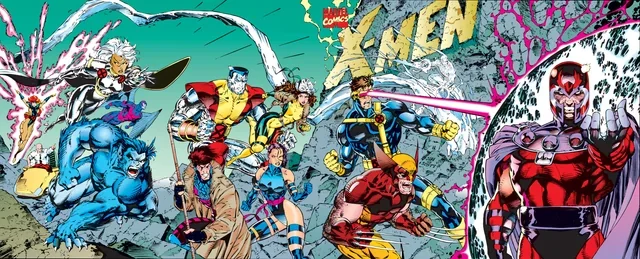
The X-Men’s first issue also introduced Magneto, and that instantly gave Marvel a more layered kind of antagonist. Magneto could function as a classic supervillain in early stories, but over time he became something richer: a rival ideology to Professor X rather than a simple monster to defeat. That complexity is part of what made X-Men stories grow with their readership.
One especially important later clash is The Uncanny X-Men #150 (October 1981), a pivotal issue in which Magneto’s worldview and history are treated with more nuance, helping push him toward the morally complicated role that defines him today.
A lesser-known but revealing detail: Stan Lee later said he did not think of Magneto as a pure bad guy; in his view, Magneto was trying to teach a cruel society a lesson, however extreme his methods. That idea helps explain why this rivalry became one of comics’ most enduring debates rather than just one of its longest fights.
Spider-Man vs. Green Goblin
Defining historic clash: The Amazing Spider-Man #121–122 (June–July 1973)
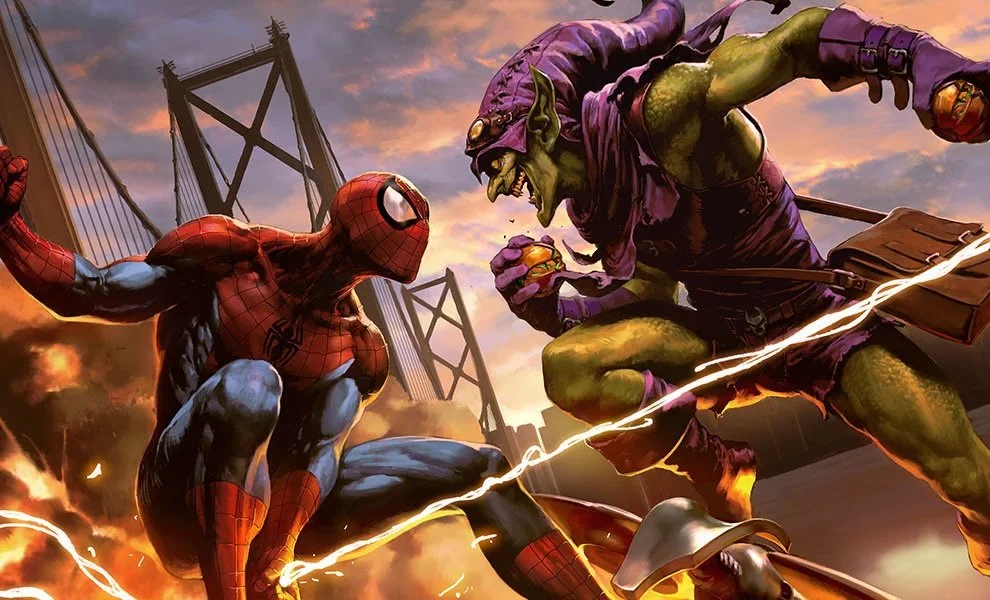
Spider-Man had many villains, but the Green Goblin became the rivalry that changed everything. The Amazing Spider-Man #121–122, often referred to as “The Night Gwen Stacy Died,” is one of the defining clashes in superhero history because it dragged superhero comics into a harsher emotional reality. Marvel’s official issue page dates Amazing Spider-Man #121 to June 1, 1973.
This was more than a dramatic battle. It became a cultural turning point for the medium: the hero did not simply win and reset by the final page. The cost of the clash permanently altered Spider-Man’s life and is often cited as one of the clearest markers of the Bronze Age’s darker storytelling.
Key issues:
The Amazing Spider-Man #121 — Gwen Stacy dies during Spider-Man’s confrontation with the Green Goblin.
The Amazing Spider-Man #122 — the immediate aftermath and the Goblin’s fall.
Why These Clashes Endure
The greatest superhero–villain clashes endure because they do more than pit powers against powers. Batman and Joker test morality. Superman and Luthor test ideals. Captain America and Red Skull turn geopolitics into pulp myth. Thor and Loki turn family into fate. The X-Men and Magneto turn prejudice into philosophy. Spider-Man and the Green Goblin turn heroism into sacrifice. And the Fantastic Four and Doctor Doom turn ego into empire.
These are the clashes that became bigger than individual panels or even individual issues. They shaped the DNA of superhero comics—and in many cases, the entire genre still echoes them.