Four Marvel titles, more than $650,000 in combined sales, and no clear runaway winner.
The latest CGC sales figures reveal a remarkably competitive Silver Age market. Some decades are defined by one title attracting most of the spending. Others have several major publications competing for collectors’ attention, with substantial money changing hands across a much broader selection of books.
The latest GPAnalysis figures offer an interesting example of the latter.
Between October 20 and November 2, 2026, the five highest-selling titles from the 1960s generated a combined $734,471, comfortably exceeding the equivalent Top Five totals from every other decade.
But that figure isn’t necessarily the most interesting part.
What makes the 1960s stand out is how the spending was distributed. Rather than one title accounting for most of the money, four major Marvel publications each generated more than $130,000 in sales.
Amazing Spider-Man, Fantastic Four, Amazing Fantasy and X-Men all made substantial contributions, creating a competitive group in which the difference between first and fourth place was relatively modest.
It’s a fascinating contrast to the modern market, where Absolute Batman accounted for almost 80% of the 2020s’ Top Five sales.
Source: GPAnalysis.com, sales recorded from October 20 – November 2, 2026.
Four Titles, One Competitive Market
The 1960s sales rankings reveal just how closely collectors’ spending was distributed among the leading titles.
The Silver Age's Biggest Sellers
Sales distribution among the five highest-selling titles from the 1960s.
| TITLE | TOTAL SALES | SHARE OF TOP FIVE |
|---|---|---|
| Amazing Spider-Man, The (1963) | $190,152 |
|
| Fantastic Four (1961) | $180,001 |
|
| Amazing Fantasy (1962-1996) | $150,600 |
|
| X-Men, The (1963-1981) | $132,202 |
|
| Avengers, The (1963) | $81,516 |
|
| COMBINED TOP FIVE | $734,471 | 100% |
Amazing Spider-Man finished first, but its advantage over Fantastic Four was just $10,151. That is a relatively small margin considering the scale of spending across both titles.
Amazing Fantasy followed with $150,600, while X-Men contributed another $132,202. Together, these four titles generated $652,955, representing approximately 88.9% of the decade’s Top Five sales.
Avengers rounded out the list with $81,516, a significant contribution in its own right. The important distinction is that no single title dominated the group. Amazing Spider-Man accounted for approximately 25.9% of the total, leaving nearly three-quarters of the spending distributed among its competitors.
For collectors, this provides an interesting snapshot of the breadth of interest in Silver Age Marvel publications.
Fantastic Four Was Closer Than You Might Think
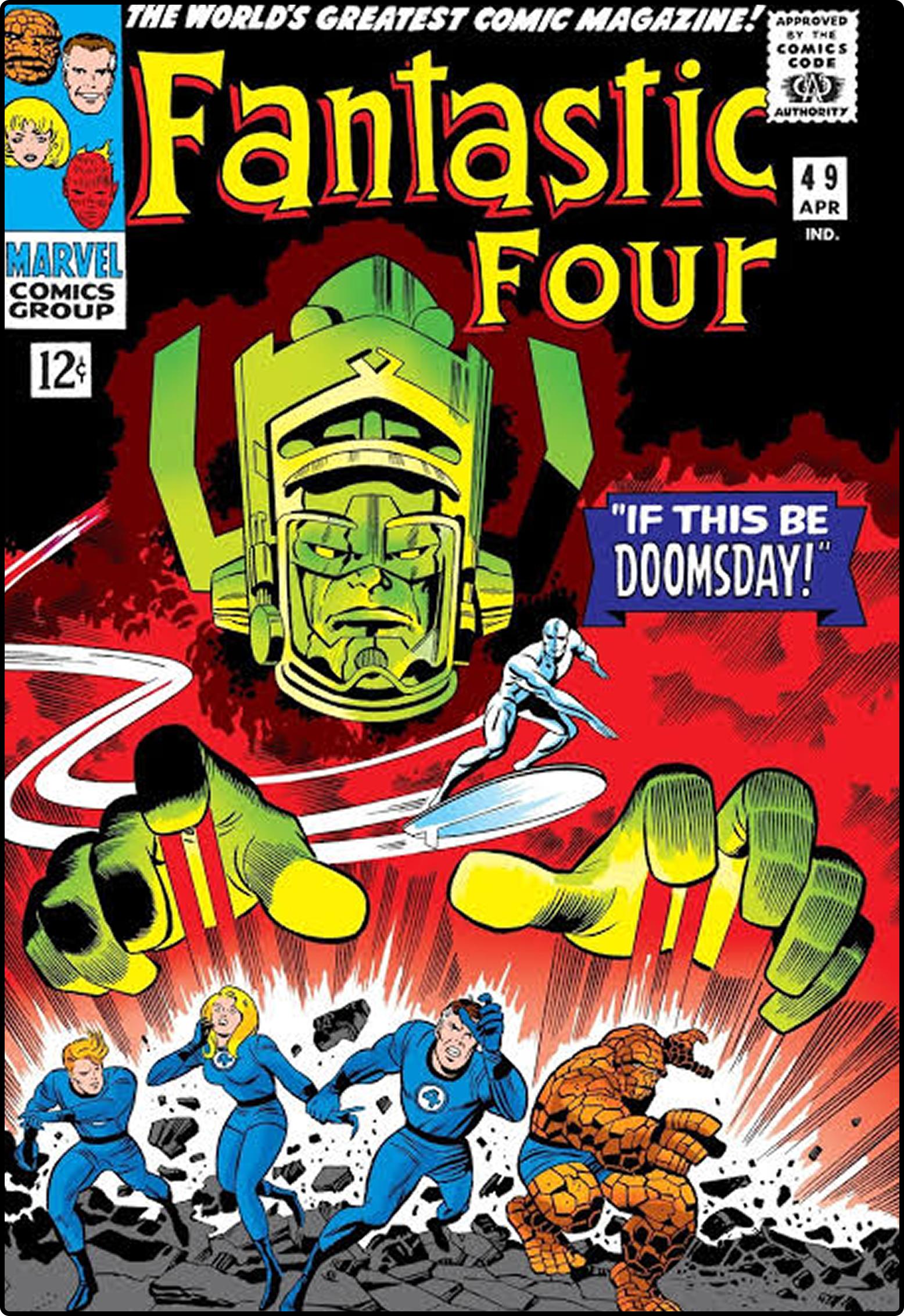
Amazing Spider-Man has an established position as one of the most recognisable titles in comic collecting, and its performance during this fortnight reinforced that standing.
It was the most frequently traded title across the entire CGC market, with 1,197 books changing hands and approximately $500,000 in total sales across its publication history.
Within the 1960s rankings, it also led both trading volume and sales value.
However, Fantastic Four’s performance deserves particular attention. The title generated $180,001, finishing just 5.3% below Amazing Spider-Man’s $190,152. That narrow difference becomes even more interesting when you look at individual issues.
Fantastic Four occupied three of the five most-traded issue positions for the decade:
Fantastic Four #49 (1966)
Fantastic Four #52 (1966)
Fantastic Four #48 (1966)
These are significant publications within Marvel’s Silver Age history.
Fantastic Four #48 introduces the Silver Surfer and begins the celebrated Galactus storyline, which continues through #49 and #50. Fantastic Four #52 introduces Black Panther, one of Marvel’s most important characters.
Their presence among the most-traded issues demonstrates that Fantastic Four’s contribution extended beyond its overall sales total.
Although Amazing Spider-Man led the decade at the title level, Fantastic Four was particularly prominent among the individual issues attracting trading activity.
It’s a useful reminder that a title can finish second in aggregate sales while still accounting for several of the period’s most frequently traded individual comics.
Amazing Fantasy and the Impact of One Exceptional Sale

The third-highest-selling title introduces another dimension to the story.
Amazing Fantasy generated $150,600 across its 1960s publications, placing it behind Amazing Spider-Man and Fantastic Four but comfortably ahead of Avengers.
However, one transaction accounted for a substantial proportion of that figure.
An Amazing Fantasy #15 (1962), graded CGC 7.0, sold through Heritage Auctions for $109,800, making it the highest individual sale across the entire reporting period. That single transaction represented approximately 72.9% of Amazing Fantasy’s 1960s title sales.
It also accounted for approximately 14.9% of the combined Top Five sales for the decade. This distinction matters when interpreting the rankings. Amazing Spider-Man and Fantastic Four led through their aggregate title sales, while Amazing Fantasy’s position was heavily influenced by one particularly valuable transaction. Without that sale, Amazing Fantasy’s remaining reported title sales would total $40,800.
Of course, removing an exceptional transaction doesn’t provide an alternative market result. The sale happened, and it belongs in the figures. But examining its contribution helps explain why a title can achieve a substantial sales total without appearing among the most frequently traded publications.
It also demonstrates how individual high-value comics can influence the financial rankings of an entire decade.
X-Men Completes the Four-Way Contest
While Amazing Spider-Man and Fantastic Four held the top spots, and Amazing Fantasy benefited from the fortnight’s largest individual transaction, X-Men made another substantial contribution.
The title generated $132,202, representing approximately 18% of the 1960s Top Five sales. It also finished third among the decade’s most-traded titles, behind Amazing Spider-Man and Fantastic Four. That combination is significant. Unlike Amazing Fantasy, which did not appear among the five most-traded titles, X-Men featured prominently in both rankings.
The result places X-Men firmly within the decade’s leading group, rather than a distant fourth-place finisher. Indeed, the difference between Amazing Fantasy and X-Men was only $18,398.
Together, the four leading titles reveal a market in which substantial spending was distributed across several recognisable Marvel properties. The Avengers’ $81,516 contribution further reinforces that breadth, even though it finished some distance behind the leading four.
The Modern Market Tells a Different Story

Perhaps the most revealing way to understand the 1960s results is to compare them with the 2020s. During the same reporting period, the five highest-selling titles from the 2020s generated a combined $274,851.
Absolute Batman accounted for $217,351 of that figure.
That represents approximately 79.1% of the decade’s Top Five sales, leaving just $57,500 distributed among the remaining four titles. The contrast is considerable. In the 1960s, Amazing Spider-Man led with a 25.9% share of the Top Five. Fantastic Four followed with 24.5%, while Amazing Fantasy and X-Men contributed another 20.5% and 18% respectively.
In the 2020s, Absolute Batman alone generated more than the other four leading titles combined. Interestingly, Absolute Batman’s $217,351 also exceeded Amazing Spider-Man’s $190,152, making it the highest-selling individual title across all ten decades.
Yet the 1960s Top Five collectively generated approximately 2.7 times the sales value of the 2020s Top Five. This is where the distinction between individual title performance and broader spending matters most.
Absolute Batman delivered the strongest individual title result, but the 1960s demonstrated a much more competitive distribution of spending among their leading publications. Neither result represents the entire market for its decade. These comparisons cover only the five highest-selling titles in each group.
Nevertheless, they reveal two very different patterns within the same fortnight of CGC trading.
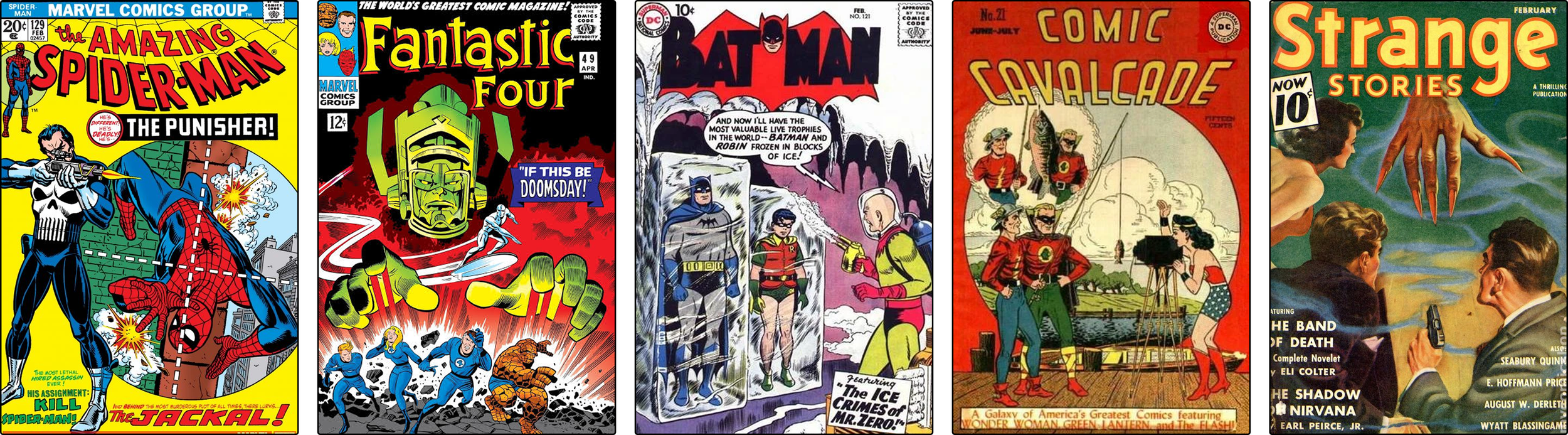
Four-Way Contest. One Clear Winner.
The 1960s spread substantial spending across four major Marvel titles. The 2020s told a different story, with Absolute Batman accounting for almost four-fifths of its decade's Top Five sales.
1960s
2020s
Spending spread across several major titles.
Spending heavily concentrated in Absolute Batman.
The 1960s generated approximately 2.7 times the combined Top Five sales of the 2020s, despite having no individual title approaching Absolute Batman's 79.1% share.
What the Rankings Really Tell Us
The 1960s results are interesting not simply because they generated the largest combined Top Five sales total, but because individual titles contributed to that figure in different ways.
Amazing Spider-Man led the rankings and remained the most frequently traded title.
Fantastic Four came remarkably close in sales while placing three issues among the decade’s five most-traded individual comics.
Amazing Fantasy showed the financial impact of a single high-value transaction, with one copy of #15 accounting for almost three-quarters of the title's sales.
X-Men added another substantial contribution, appearing prominently in both volume and sales rankings.
Together, these results paint a picture of a competitive collecting landscape, where several major Silver Age titles attracted significant spending during the same reporting period.
And that may be the most interesting takeaway.
The 1960s didn’t need one title to dominate the fortnight. Four of them generated more than $130,000 each.
While Absolute Batman showed how powerful a single modern title can be, the Silver Age rankings offered a different perspective on the CGC market: substantial spending spread across several of comic collecting’s most recognisable publications.
Sometimes the most revealing result isn’t how far the leader finishes ahead.
It’s how closely the competition follows.